Bambu Lab PLA Tough+ Review
Costs more than PLA Basic; the difference depends on seller and packaging.
Our verdict
I see it as a useful candidate for small, replaceable indoor parts that crack during handling or assembly and can tolerate some bending. Choose it to address brittle failure; its name does not establish suitability for heat, lasting loads or critical hardware.

Best atIndoor covers and connectors that need some give during handling or assembly.
Less suited toPermanently loaded springs, hot environments and parts that must stay rigid.
The Key Specs
| Impact resistance | Higher than PLA Basic in Bambu’s comparisonWorth trying for parts that crack when knocked; a laboratory result cannot promise drop survival. |
|---|---|
| Bending stiffness | 2,140 MPa; PLA Basic: 2,750 MPaMore give can help assembly, but is less useful in a rigid guide. |
| Heat tolerance | 58–61°C heat-deflection resultsThese test values are not safe continuous operating temperatures. |
| Nozzle compatibility | 0.2, 0.4, 0.6 and 0.8 mmA hardened nozzle is not required. |
| Automatic feeding | AMS, AMS lite, AMS 2 Pro and AMS HTRFID identifies the material in a compatible AMS; external spool feeding is also an option. |
Which Spool Or Refill Should You Buy?
- 1 kg with spool
- Choose this if you need a spool; start with one and check the part’s fit and grip before buying more.
- 1 kg refill
- Choose this if you already have a suitable Bambu reusable spool; the refill needs a spool.
Budget For Drying And Storage. Allow for a suitable filament dryer, sealed storage and desiccant. Support for PLA adds a second consumable when used at the support interface. Provide good ventilation.
Also consider: Bambu PLA Basic. Costs less and is stiffer: a better starting point for display pieces, drawer dividers and rigid fit-check models.
Handling, Storage And Compatibility
| Material profile | Select Bambu PLA Tough+ in Bambu Studio, not the older PLA Tough profile. |
|---|---|
| Printing settings | Nozzle: 220–250°C. Bed: 35–65°C, depending on the plate. Part-cooling fan on. |
| Filament drying | 55°C for eight hours in a suitable forced-air dryer; also specified for AMS 2 Pro and AMS HT. |
| Storage | Sealed with desiccant, below 20% relative humidity. |
| Manufacturer test preparation | Solid specimens printed at 245°C, then dried and annealed at 50°C for eight hours; untreated prints may differ. |
| Annealing caution | Parts can warp. Filament drying and annealing are separate processes; Bambu excludes kitchen ovens and microwaves for both. |
I’d consider Bambu Lab PLA Tough+ when an ordinary PLA part snaps during handling and you’d rather it bend a little. Think of a removable cover or a connector that needs to flex during assembly. I’d consider a spool for those jobs, but I wouldn’t replace all your PLA with it.
The main drawback is that resisting a knock doesn’t mean resisting bending, heat or a weight left hanging for months. Tough+ still needs careful matching to the job.
PLA Basic makes more sense when you want a rigid, inexpensive print; PETG deserves a look when warmth or outdoor use matters. And check the label: this review concerns PLA Tough+, not Bambu’s older PLA Tough or another brand’s PLA+.
What PLA Tough+ Changes Compared With PLA Basic
“Strong” can mean several different things. Before buying Tough+, think about what you need your part to survive.
Impact toughness is about taking a sudden hit. If you drop a plastic cover, you want it to absorb that knock without cracking. Bambu’s comparison lists much higher impact strength for Tough+ than PLA Basic. That makes impact resistance a sensible reason to consider it, though a lab test can’t promise that your particular cover will survive a fall.
An owner’s informal comparison offers an example: a yellow Basic ball shattered when thrown onto tile, while a gray Tough+ ball stayed intact. Both were reportedly printed at 220°C. That’s encouraging, but different colors, unmeasured throws and incomplete print settings prevent it from establishing how much tougher the material is.
Stiffness is about how much a part bends. Here, Bambu’s own figures favor Basic: its bending stiffness is 2,750 MPa, compared with 2,140 MPa for Tough+. The higher figure means greater resistance to bending in that test.
Some give may help a snap-on cover fit over an edge. It’s less welcome in a guide that needs to keep something straight.
Tensile strength is about resisting a pull. A part can bend without snapping yet still break under a lower pulling force. Tough+ shouldn’t be treated as a higher-load version of Basic just because of its name.
Layer adhesion is how well the printed layers stay joined. Bambu’s headline about up to twice the layer adhesion refers to impact strength across those layers. It doesn’t mean every upright print can hold twice the weight.
One reported independent test of black Tough+ illustrates why orientation still matters. Ten flat specimens averaged about 23.9 MPa in tensile strength; ten upright specimens averaged about 17.4 MPa. The published record leaves printing conditions unspecified, so those numbers aren’t a dependable comparison with Bambu’s figures or with PLA Basic. They do show that the Tough+ label doesn’t make print direction irrelevant.
For a part whose failure won’t cause harm, compare the same shape in the two materials. Use each material’s recommended settings, keep the print direction and wall thickness consistent, and check the behavior you actually care about.
A cover that stays intact but bends enough to fall off hasn’t solved the problem. Likewise, a rigid cover that cracks whenever you remove it may benefit from more give. That’s a more useful distinction than asking which filament is strongest overall.
Getting PLA Tough+ Ready To Print
Bambu lists Tough+ for all its printers, with 0.2, 0.4, 0.6 and 0.8 mm nozzles. A hardened nozzle isn’t required.
It also works with Bambu’s automatic filament feeders: AMS, AMS lite, AMS 2 Pro and AMS HT. These are optional; you can use the printer’s external spool holder. With a compatible AMS, the spool’s electronic RFID tag identifies the material automatically.
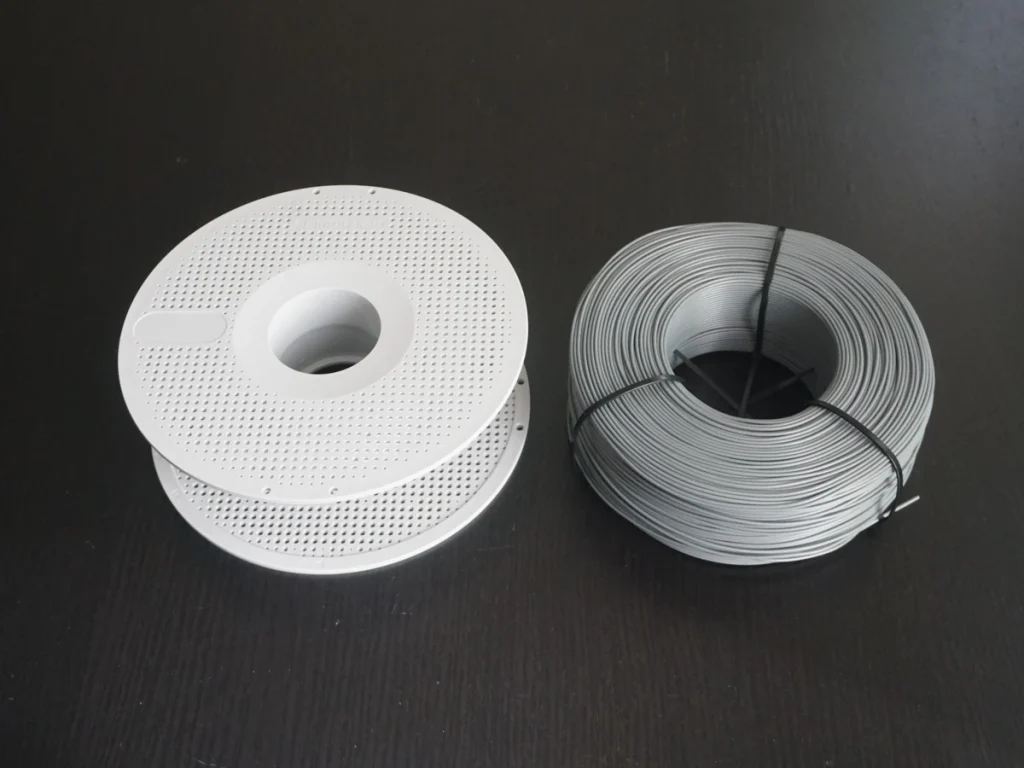
In Bambu Studio, the software that prepares your model for printing, select Bambu PLA Tough+ for your printer and nozzle. A profile is a saved group of material settings; choosing the older Tough profile isn’t the same thing.
If Studio identifies the spool as unknown or incompatible, try Help → Check for Presets Update to check for updated material settings. An owner confirmed that a preset update fixed Tough+ recognition at launch, though it won’t fix every compatibility problem. Confirm that the selected material profile says Bambu PLA Tough+ before sending the print.
The official setup guidance is:
| Setting | PLA Tough+ guidance |
|---|---|
| Nozzle temperature | 220–250°C |
| Bed temperature | 35–65°C, depending on the plate |
| Part-cooling fan | On |
| Filament drying before printing | 55°C for eight hours in a suitable forced-air dryer; also specified for AMS 2 Pro and AMS HT |
| Storage | Sealed with moisture-absorbing desiccant, below 20% relative humidity |
Bambu’s base Tough+ profile uses 245°C for the nozzle. That explains the hotter setting you may see, but use the profile for your actual setup rather than copying one temperature and leaving everything else unchanged.
Supports—the temporary structures printed beneath overhanging areas—need some thought, too. Bambu recommends a separate filament called Support for PLA where the supports touch the part, so they’re easier to remove. Using it adds a second material to the print.
Use good ventilation, as Bambu requests. An exhaust system that captures emissions near the printer can help reduce what reaches the room. Whether you notice a smell doesn’t tell you how much you’re breathing in.
How PLA Tough+ Holds Up Over Time
Tough+ isn’t a heat-resistant PLA. Bambu reports heat-deflection temperatures of 58°C under the higher test load and 61°C under the lower one. These measure bending during a specified test, not a safe continuous operating temperature for every shape.
There’s another qualification behind the official numbers: Bambu printed solid specimens at 245°C, then dried and annealed them at 50°C for eight hours. Annealing means heating the finished print to change its material properties; it’s a separate step from drying filament before printing. Those results don’t directly describe every untreated print.
For annealing, Bambu suggests 50–60°C for six to twelve hours in suitable equipment that heats evenly, with the part kept away from the heater. It warns that parts can warp and excludes kitchen ovens and microwaves for both filament drying and annealing.
I’d be careful about heat-treating a cover that needs an exact fit. A change in shape could matter more than a possible improvement in strength.
Sustained loading raises a different problem: creep, or gradual bending under a lasting load. A clip can feel firm when you fit it and lose its grip later.
In one informal owner report, compressed Tough+ filament clips became much less springy within a day or two. That’s a warning about one design, not a measured lifespan for every Tough+ spring.
Repeated flexing is different from holding a load continuously. Bambu promotes repeated bending and longer-lasting prints, but the available evidence doesn’t tell us how many bends a part can withstand or how long it will last outdoors.
Bending something by hand a few times can show that it doesn’t snap immediately. It can’t tell you how a hinge will behave after thousands of openings, or after months of sunlight and humidity.
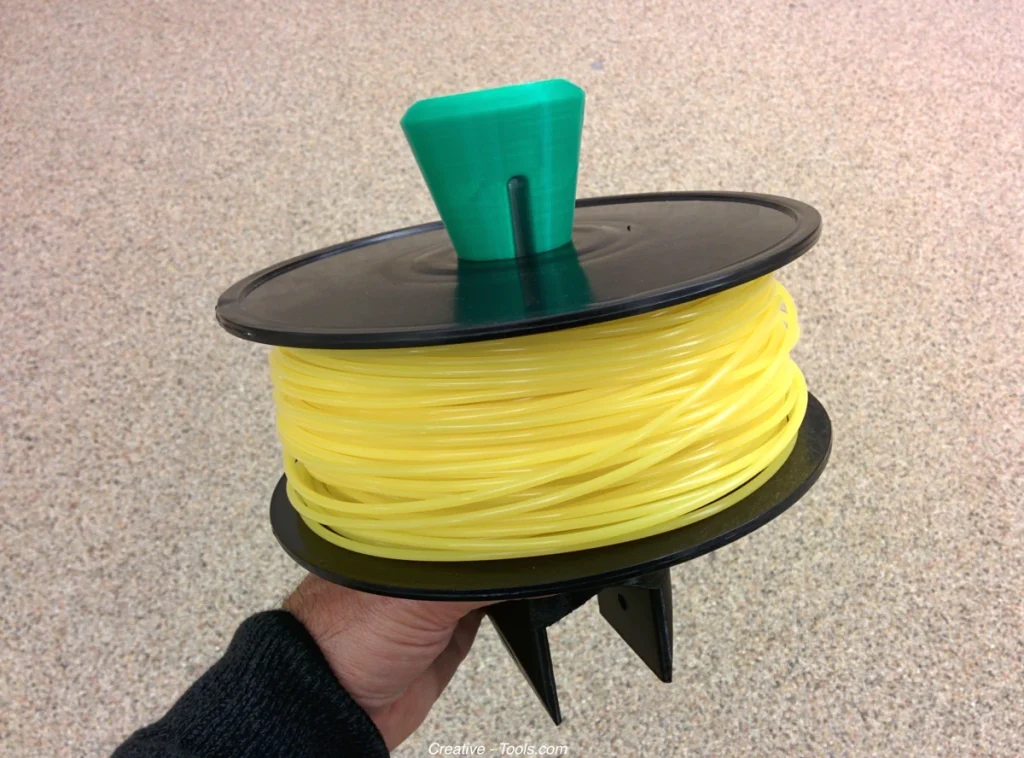
For an inexpensive, replaceable clip, trying the actual part can be reasonable. For a part whose failure could hurt someone or damage expensive equipment, these results aren’t enough to justify the choice.
Choosing Between Tough+, PLA Basic And PETG
PLA Basic is the better starting point for display pieces, drawer dividers and rigid models used to check how parts fit together. If those prints already do their job, paying more for Tough+ doesn’t address a problem you have. Comparable US listings put Tough+ above Basic for one-kilogram spools, though the difference depends on the seller and packaging.
Tough+ becomes more interesting when the same part keeps cracking as you put it together or take it apart. For a removable cover, I’d try it when a little bending is acceptable and the part stays indoors at ordinary room temperature.
Start with one spool and check the fit and grip before printing a batch. Then buy more only if the new part works better.
PETG is the closer alternative when your part needs better heat tolerance or will spend time outdoors. It’s a common filament for practical parts, with low warping and good layer bonding. That makes it worth considering for an outdoor housing, provided the particular PETG grade suits the expected temperature. It doesn’t automatically establish a safe load rating or unlimited weather resistance.
PETG brings a few printing hassles. It can leave fine strings between features, handle unsupported overhangs less neatly than PLA, and stick very strongly to the build plate. Use the chosen PETG’s drying instructions, material profile and plate guidance; don’t reuse Tough+ settings.
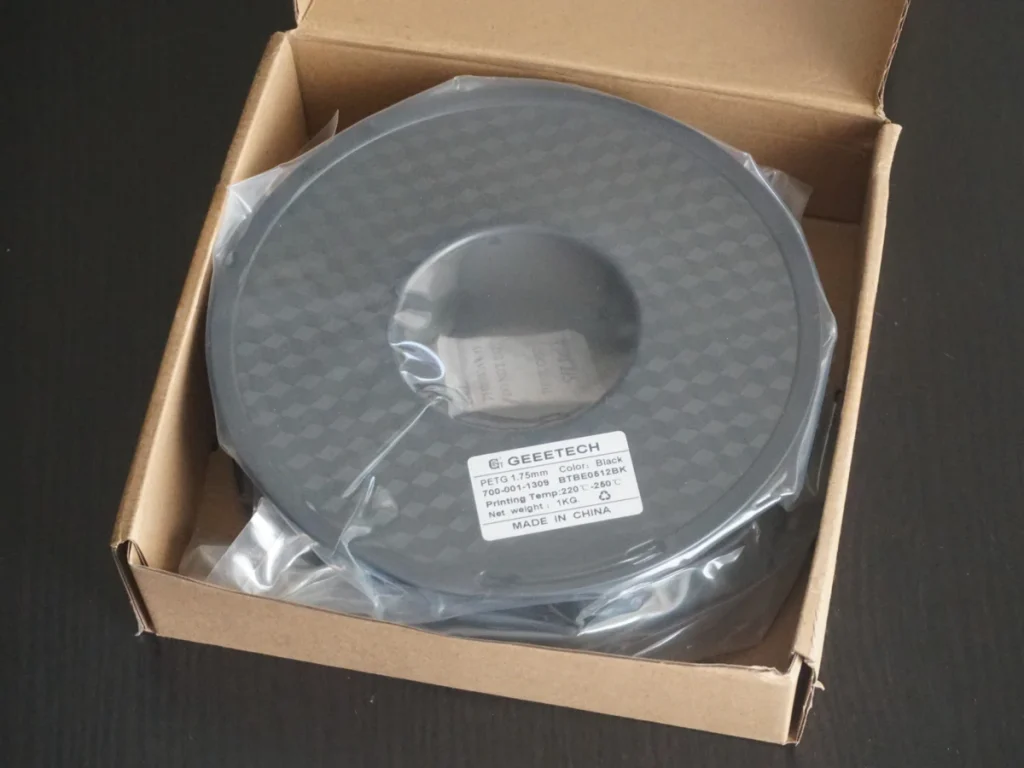
For a spring that stays compressed, neither a Tough+ flexing demonstration nor a general PETG recommendation settles the choice. You need to know whether the finished spring keeps its force over time. If you already print a suitable PETG successfully, Tough+ needs to solve a specific problem before it earns a place beside it.
Should You Buy PLA Tough+ For Your Prints?
I’d consider PLA Tough+ for small, replaceable indoor parts that need to give during handling or assembly. Its appeal is the chance to keep a useful PLA part from snapping, with straightforward Bambu printer and AMS support.
Choose PLA Basic when stiffness and cost matter more than flexing. Consider PETG when temperature or outdoor exposure changes the job. Hold off on Tough+ for permanently loaded springs, hot environments or critical hardware unless you have evidence for that exact use.
Before buying, finish this sentence: “My current part fails because…” If the answer is cracking when bent or knocked, Tough+ is a reasonable candidate. If it’s sagging, losing its grip or softening in warmth, the word “tough” isn’t enough reason to switch.


