Home / Filament And Resin
Best ABS Filament
For ABS, a suitable enclosure, ventilation and good bed adhesion matter more than small differences between brands.
Top pick
Polymaker ABS is my all-around pick, including for projects that need acetone finishing.
Large parts on enclosed Bambu printers Bambu Lab ABS · Repeat Production MatterHackers PRO ABS

| Filament | Best Fit | Price | Why It Wins | Setup Fit | Main Drawback |
|---|---|---|---|---|---|
1 |
Best overall; acetone finishing | $20/1 kg | Balanced mechanical test results, clear current documentation and broad retail… | Enclosed printer; hotter chamber for very large parts | Slow official speed guidance; still warps without heat control |
|
Polymaker ABS details
| |||||
2  |
Enclosed Bambu printers; larger parts | $20 refill, $23 with spool | Tuned profile, RFID/AMS integration and measured mechanical performance | Enclosure required; best in a warm or heated chamber | AMS Lite incompatible; acetone response varies by color |
|
Bambu Lab ABS details
| |||||
3  |
Repeat production | $52/1 kg | Batch traceability, in-line diameter and color control, 1 kg and bulk formats | Enclosed, production-oriented printers | $52 per 1 kg is hard to justify for one-offs |
|
MatterHackers PRO ABS details
| |||||
3 filaments shown
No matches. Remove a filter to see more options.
Compare filaments side by side
Choose two filaments to compare their full details. Add a third if you need it.
Select two filaments to start comparing.

For most enclosed printers, Polymaker ABS is my starting choice. It has useful tests for flatness, layer bonding and material properties.
Bambu ABS offers simpler setup on compatible Bambu printers, while MatterHackers PRO ABS suits repeated production. If you cannot provide an enclosure and suitable ventilation, PETG is usually a better choice than an ABS marketed as easy to print.
Overture ABS is a lower-cost alternative, but there is less supporting test evidence. A small saving alone would not make me choose it over Polymaker.
How To Judge ABS Filament Beyond The Label
“ABS” describes a family, not one fixed recipe. Resin ratios, pigments and modifiers can change shrinkage, stiffness, impact behavior and response to solvent.
ABS+ usually adds modifiers to reduce shrinkage or improve toughness. That can make a spool easier to print, but it can also change layer bonding, heat performance or acetone smoothing. The plus sign isn’t a quality grade.
Small test models hide the main ABS failure mode. As a broad footprint cools, contraction pulls hardest at corners; a tall wall also creates more opportunity for a cold chamber to split layers.
A useful comparison therefore needs a flat or tall stress part, measured dimensions and a stated chamber temperature. Surface quality matters, but only after the print stays attached and intact.
Consistent diameter helps the printer deliver the amount of plastic the slicer expects. Consistency across colors and batches matters too.
Polymaker publishes strength figures for different print directions. MatterHackers says it records production batches, checks diameter and roundness with lasers, and measures color with a spectrometer. These are useful manufacturing checks, but independent tests of several spools would provide stronger confirmation.
Color is not purely cosmetic, either. Pigment and filler can alter flow, layer bonding and solvent response, so a perfect black spool doesn’t prove that white or metallic stock will behave identically.
For fitted assemblies or a production run, qualify the exact color and record its batch number. Print a part that exposes your risk: a broad plate for corner lift, a tall thin wall for splitting, or a tolerance coupon for mating dimensions. Weigh and measure repeated parts only under the same profile and chamber conditions.
A maker’s ±0.02 or ±0.03 mm filament tolerance doesn’t guarantee model accuracy; extrusion calibration, shrink compensation and machine motion still matter greatly.

Different tests answer different questions. One controlled comparison tested Polymaker materials for tension, layer bonding, shear, bending, impacts, heat and gradual deformation under load. It shows how Polymaker ABS compares with those materials, not every ABS brand.
The same reviewer’s Bambu ABS-versus-ASA test is useful within that pair, but results from different printers and part shapes should not be combined directly.
Which ABS Filament Is Best For Each Kind Of Print?
There isn’t one honest winner for every machine. Chamber temperature and part geometry can outweigh the difference between two good spools, so these categories assume you can meet each manufacturer’s setup requirements.
Best Overall: Polymaker ABS
Polymaker ABS has more useful supporting information than a good-looking sample print alone. Its product page provides mechanical data for different print directions, a safety data sheet and temperature guidance. It warns that parts larger than roughly 15–20 cm may need more than a passive enclosure.
Independent tests also covered several strength and heat properties. Its price is only a little above bargain ABS.
Polymaker recommends a 245–265 °C nozzle, a 90–100 °C bed, no cooling fan and modest speed. Large parts may need a heated chamber.
Bambu ABS is a close alternative on compatible Bambu printers because its presets and AMS support reduce setup work. Skip Polymaker if your printer cannot maintain those temperatures or has no enclosure. Current tests are useful, but evidence across multiple batches remains limited.
Best For Large, Warp-Prone Parts: Bambu Lab ABS—With A Warm Chamber
Bambu ABS earns this recommendation because the material, printer presets and spool system are designed to work together. It is not shrink-free. A reviewed test covered ten mechanical and heat properties, and experienced owners report about 0.4–0.5 percent shrinkage after calibration. Use that as a starting estimate, not a guarantee for every part.
Bambu itself says large or dense models remain prone to warping and requires an enclosed printer. For a bed-filling box, an actively heated chamber is more persuasive than switching brands.
Polymaker ABS is the closest alternative and easier to source outside Bambu’s store, but its official guidance also escalates from enclosure to active chamber heat as size grows. Avoid Bambu ABS if you have an A1/AMS Lite, an open printer or no way to exhaust the enclosure. Confidence is moderate because chamber conditions dominate and the owner shrinkage measurement isn’t a laboratory comparison.

Best ABS For Acetone Finishing: Polymaker ABS
Polymaker is also my pick for acetone smoothing because the manufacturer confirms that the current standard ABS responds to it. Modified blends can behave differently. Hatchbox ABS visibly smoothed in a Prusa comparison, but its black 1.75 mm spool was sold out when checked, making it a less dependable buying recommendation.
Acetone smoothing makes surfaces glossier but can round details and change dimensions. Prusa’s tests found slightly lower tensile performance after smoothing. Bambu ABS has also produced different results by color, from successful black prints to azure parts that barely changed.
Avoid this finish on fitted or load-bearing parts, and follow appropriate precautions for flammable solvents. Results depend on the formula, color, exposure and part shape.
Best For Consistent Repeat Production: MatterHackers PRO ABS
MatterHackers PRO ABS is worth considering when a failed batch would cost more than a premium spool. MatterHackers documents diameter control of ±0.02 mm, measurements on several axes at 40 samples per second, saved production records and color checks during manufacturing.
It sells 5- and 10-pound spools and ten-spool packs, so larger jobs need fewer spool changes. PRO ABS has appeared in a hands-on comparison, and long-term owners report consistent colors between orders.
At $52 per kilogram, none of that makes sense for casual brackets. Polymaker is the closest alternative and saves about $32 per spool; it’s better when you can qualify one batch yourself and buy enough at once.
Avoid PRO ABS if price matters more than traceability or if stock gaps would halt production—some colors showed estimated restock dates when checked. Evidence is moderate, not high: the process controls are unusually specific, but the strongest current claims come from the seller rather than a recent independent multi-lot audit.
Cheapest ABS Filament Worth Buying: Overture ABS
Overture’s $17.99 direct price sets a sensible budget floor. It has a current product page, published settings and mechanical figures, an SDS route, U.S. stock and a 30-day defect warranty.
Independent project documentation compared it with MatterHackers and MakerBot options and considered it one of the three viable choices. That is enough to call it serviceable, not enough to call it the easiest or most consistent.
Polymaker is the better alternative for only about two dollars more, with broader testing and clearer size-specific chamber advice. Choose Overture when every dollar matters and you can qualify the exact color before a long job.
Avoid it for a deadline-critical production run or an acetone-finished commission; reports on its solvent response conflict. Confidence is moderate-low because current, multi-spool performance testing is limited.
One ABS Filament To Skip For Now: ESUN ABS+
Check which formula you are buying with eSUN ABS+. Older reviews reported weak bonding between layers despite attractive prints. eSUN announced a revised formula in 2026 and says it improves that weakness. Older praise and criticism may not describe the spool currently on a seller’s shelf.
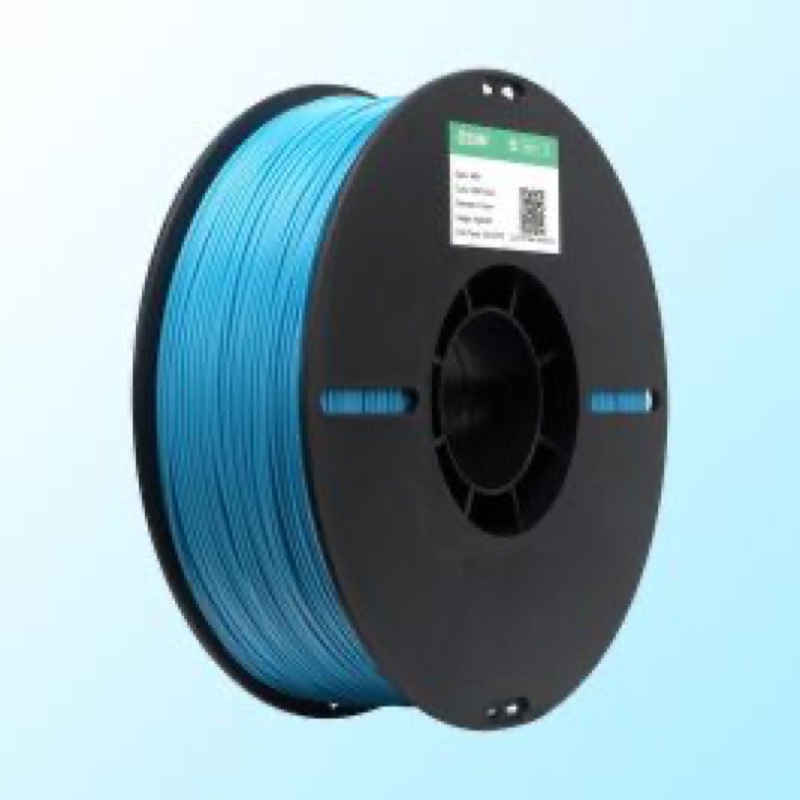
This is not a claim that the revised ABS+ is bad. It’s a stock-identification problem: unless the seller can confirm the new formulation, you may not know which evidence applies.
Polymaker ABS is the safer current alternative; Overture is cheaper. If eSUN adds an unmistakable revision marker and the tests I reviewed validate the new formula, this verdict should change. Confidence is moderate in the reason to wait, but low on the revised material’s actual performance.
What Your Printer Setup Changes About The Best ABS Choice
An enclosure stops drafts; a heated chamber reduces the temperature gradient that drives internal stress. They are not interchangeable.
Polymaker says fist-sized models may work unenclosed, larger ones need roughly 40–50°C surroundings, and parts beyond about 15–20 cm may need 70°C-plus active chamber heat. Bambu simply requires an enclosed printer and tells users to slow down, raise bed heat and avoid oversized, dense models when warping appears. Follow the selected spool’s current range instead of copying one universal ABS profile.
Check that the spool fits the whole feeding system. Bambu ABS supports the standard AMS but not AMS lite. MatterHackers’ roughly 200 × 70 mm PRO spool may be too large for some dry boxes.
Cardboard reels may need an adapter or external holder. Even compatible 1.75 mm filament will have problems if its spool rubs or cannot turn freely.
Bed adhesion can hold a corner down, but it can’t cancel stress through the part. Start with the maker’s supported plate and release layer, keep the chamber closed, and reduce part cooling unless a difficult bridge requires it. If layers split higher up, suspect chamber or nozzle temperature before buying stronger glue.
Moisture shows up differently: popping, bubbles, rough extrusion and inconsistent flow. Drying may fix those symptoms—Polymaker specifies 70°C for six hours and Bambu 80°C for eight—but it won’t cure a cold draft or greasy plate.
Finally, an enclosure contains emissions; it doesn’t necessarily remove them. Workplace-safety guidance recommends source ventilation, and Bambu explicitly calls for a well-ventilated area.
When Even The Best ABS Filament Is The Wrong Material
ABS earns its trouble when an indoor part needs useful heat resistance, impact tolerance, machining, solvent welding or acetone finishing. It’s often a good fit for printer components, tool housings and fixtures that would soften too early in PLA.
But “strongest filament” is the wrong question. Strength changes with load direction, print orientation, temperature, time and failure mode. Bambu’s own filament guide splits toughness, flexural strength, stiffness, layer adhesion and heat resistance into separate figures; no single number answers every load case. Pick for the actual stress.
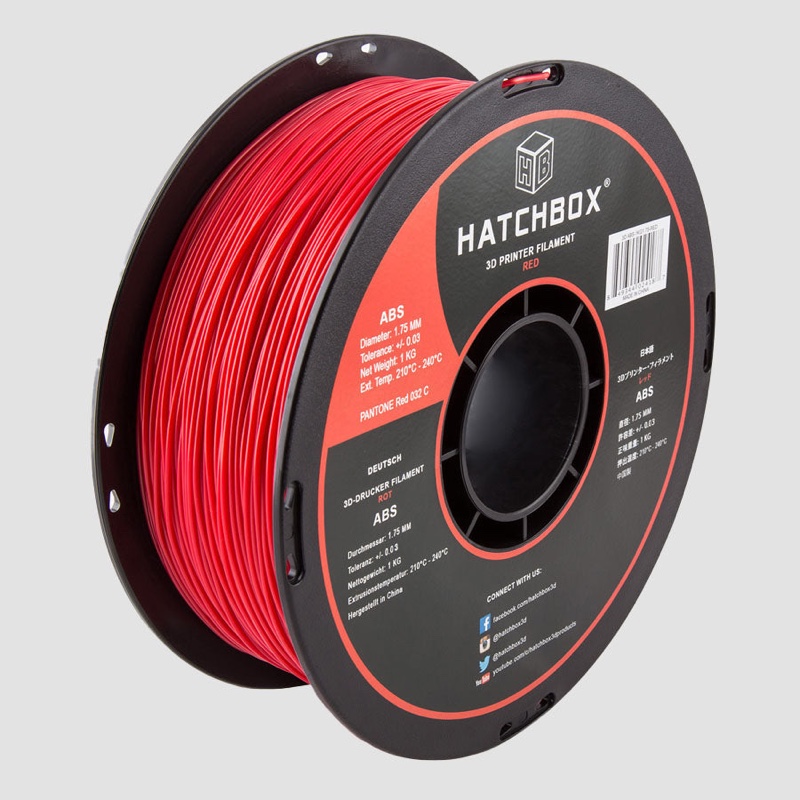
Choose PETG when the part doesn’t face sustained heat and you value low warping, strong layer bonding and an open-printer workflow. It’s usually the better choice for a large indoor organizer, lightly loaded bracket or first functional print. PETG can string and creep under long-term load, but it avoids the warm-chamber requirement that makes ABS frustrating.
If ventilation is poor, that alone can decide the question: research consolidated by emissions research lists ABS among higher-emitting filament families.
Choose ASA for outdoor parts. Prusa’s material guidance says ASA resists UV better, warps less and smells less than ABS while retaining similar temperature-oriented uses. It still needs an enclosure and ventilation, so it isn’t an escape from setup discipline; it’s the better trade when sunlight and weather would age ABS.
Neither label makes a part food-safe, electrically safe or suitable for a critical load without application-specific validation.
The main ABS downside is therefore bigger than odor: the material couples useful heat performance and finishability to shrinkage, directional strength and emission control. If you don’t need those advantages, paying in failed large prints and room setup makes little sense.
Questions About Choosing ABS Filament
How Is ABS+ Different From Standard ABS?
ABS+ is a manufacturer-specific modified blend, not a standard performance class. A modifier may reduce shrinkage, change toughness or lower odor, but it can also alter heat behavior, layer strength and solvent response. Read the exact current TDS and seek tests of that revision; don’t transfer results from standard ABS or an older ABS+ formula.
Should I Dry A New Spool Before Rejecting It?
Dry it when you hear popping or see bubbles, rough walls or erratic flow, using the maker’s stated temperature and time. Don’t use drying as a ritual explanation for corner lift. If extrusion looks clean but a broad part curls, inspect chamber stability, bed cleanliness, part cooling and the product-specific temperature range first.
For most enclosed printers, buy Polymaker ABS. Choose Bambu ABS for a compatible Bambu workflow, MatterHackers PRO ABS when traceability pays for itself, and Overture only when price leads. Without enclosure and exhaust, choose another material.


