Elegoo ABS-Like 3.0 Review
Standard resin may cost less; compare the same quantity and color.
Our verdict
I’d try a small bottle of base ABS-Like 3.0 for detailed figures that will be handled carefully. I would avoid choosing it chiefly to protect thin weapons and ankles from repeated falls; the ABS-like label is not enough to recommend it for load-bearing or hot parts.

Best atDetailed tabletop figures, display pieces and appearance or fit prototypes that receive careful handling.
Less suited toFrequent drops, repeatedly flexing clips, load-bearing parts, hot enclosures or water-only cleanup.
The Key Specs
| Exact grade | ABS-Like Resin V3.0, without a suffixPlus, Pro, 8K and Ultra are separate materials; match the bottle to its settings. |
|---|---|
| Printer compatibility | Elegoo specifies 405 nm LCD and DLP resin printersCheck your printer’s material restrictions; this liquid cannot be used in a filament printer. |
| Fine detail | A reported yellow-resin comparison found comparable visible detail at 0.05 mm layersTry the features and joints you need; this does not establish identical results in every color or at finer layers. |
| Handling durability | Reportedly harder to break than standard resin, with limited flexibilityContinue protecting delicate parts during handling and transport. |
| Finishing | Cleaner washing, drying and UV post-curingAllow workspace and supplies for the full cleanup routine; follow the bottle’s instructions. |
Which Bottle Should You Buy?
- 1 kg bottle
- I’d start here to check the chosen color, settings and finishing routine before buying more.
- 2 kg bottle or multiple bottles
- Choose more material once a representative model prints, cleans and cures well on your setup.
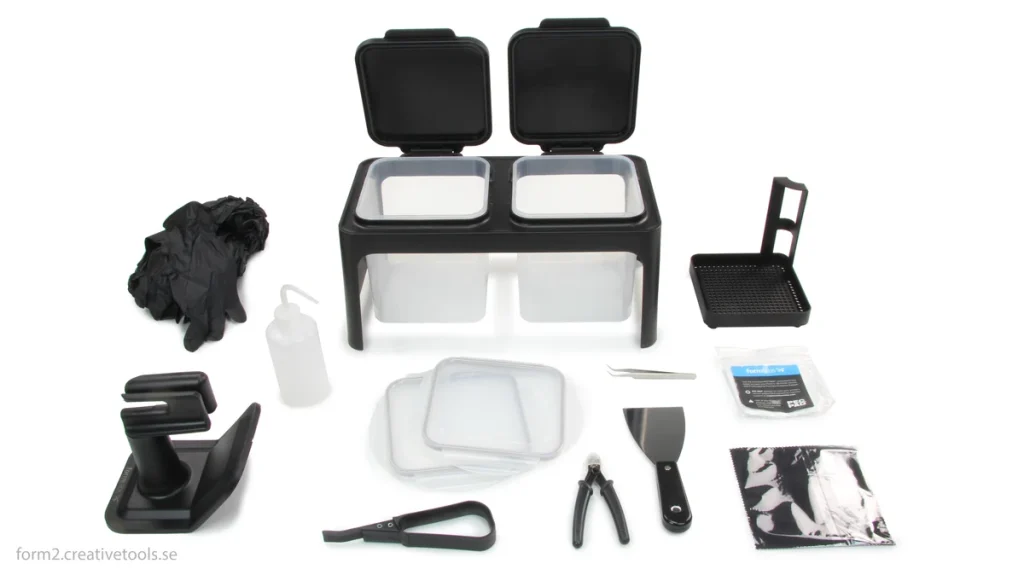
Budget Beyond the Resin Bottle Allow for IPA or the cleaner specified for your bottle, suitable chemical-resistant gloves, eye protection, wash containers, UV curing equipment, ventilation and labeled containers for contaminated waste.
More Handling and Compatibility Details
| Material identity | A light-curing photopolymer; ABS-like does not mean liquid ABS plastic. |
|---|---|
| Calibration | Start with guidance for the exact printer, base 3.0 and color, then check a small representative print. |
| Post-curing | Dry washed prints fully before UV curing; follow guidance for the resin and curing equipment. |
| Waste handling | Collect leftover resin and contaminated wash liquid; keep them out of drains and check local disposal arrangements. |
| When standard resin makes sense | For display pieces that are rarely touched, keep a standard resin that already prints well if it costs less for the same quantity and color. |
I’d consider Elegoo ABS-Like 3.0 for detailed figures you’ll pick up, paint and move around. I’d put it on your shortlist for handled models, with one clear limit: don’t buy it expecting thin weapons and ankles to survive repeated falls. Reported testing points to a modest durability improvement over standard resin without an obvious loss of detail.
That makes base 3.0 a reasonable material to try for tabletop figures and display pieces. Small practical prints need a closer look at what they’ll actually do. A model used to check a shape is one thing; a bracket holding something valuable is another. The ABS-like name alone doesn’t settle that choice.
Make Sure You’re Buying Base ABS-Like 3.0
Look for ABS-Like Resin V3.0, without an extra suffix. Elegoo still lists the base formulation in its US store. Its range also includes 3.0+—often written as Plus—along with Pro, 8K and Ultra products. Treat those as separate materials when choosing settings or judging performance.
Elegoo advertises changes to heat resistance and flow for 3.0+, and emphasizes flexibility for Ultra. Those claims don’t establish how base 3.0 behaves. Match the full product name on the listing, bottle and settings guidance before you pour it into the printer.
An 8K screen doesn’t require an 8K-labeled resin: Elegoo lists base 3.0 as compatible across its LCD printer families. Check the printer’s resin requirements, explained below, rather than matching the number in its screen description to the bottle’s name.
“ABS-like” also doesn’t mean this is ABS plastic in liquid form. It’s a photopolymer: a liquid that hardens when exposed to suitable light. ABS is a different plastic, used in molded products and filament printing. The name describes an attempt to offer some similar properties, not a guarantee of the same flexibility, heat tolerance or impact resistance.
How Much Detail Can You Expect From 3.0?
For miniature painting and decorative models, base 3.0 looks like a sensible candidate. In a reported comparison of seven Elegoo resins supplied by the manufacturer, yellow 3.0 printed successfully on a Mars 5 Ultra at 0.05 mm layers. Removal and finishing caused no reported problems, and visible detail looked comparable to the other tested materials.
That’s encouraging if you’re worried that choosing an ABS-like material automatically means soft, indistinct models. But it isn’t a measurement of the smallest feature the resin can reproduce. It also doesn’t establish equal results at finer layers or in every color.
Layer height is the thickness of each slice the printer builds. The 0.05 mm setting, also called 50 microns, describes those slices; it doesn’t tell you whether a tiny face, shallow inscription or narrow gap will come out correctly.
Exposure settings control how long the printer shines light on each layer. Too much light can make features larger than intended and close small gaps, while too little can leave weak or incomplete features.
When you try 3.0, choose a small model with the details you care about. For a painting project, inspect the face, fabric texture and recessed lines after washing and curing. For a model kit, check whether its separate pieces fit together. A surface that looks sharp and a joint that fits properly answer different questions.
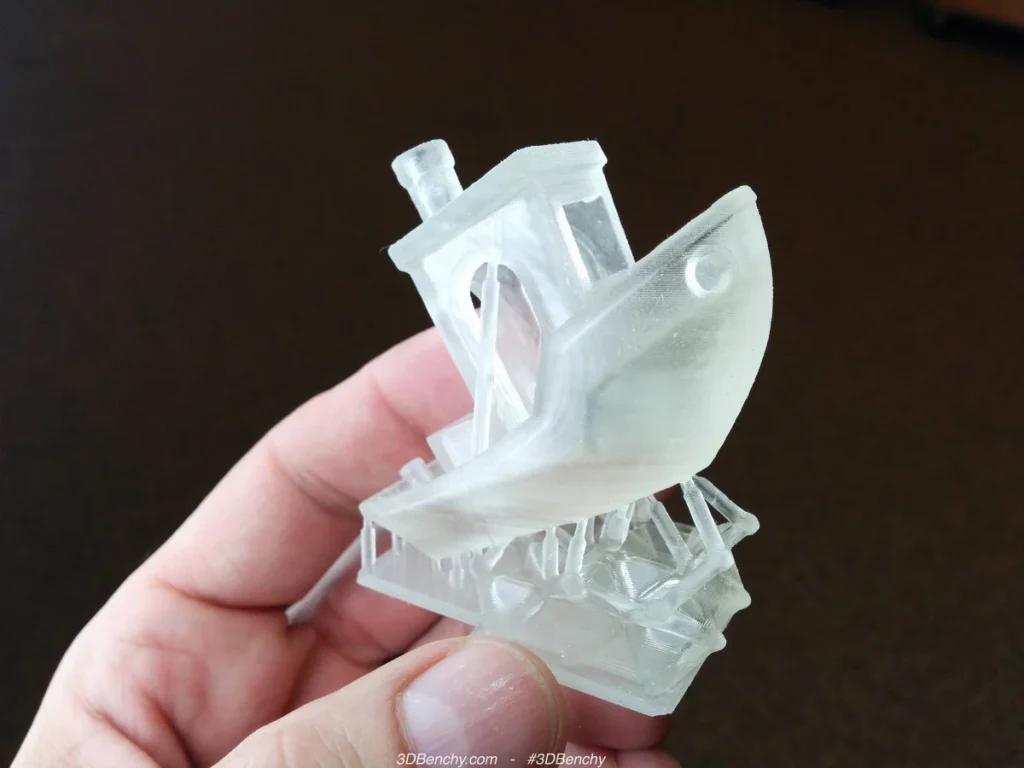
I wouldn’t switch away from a resin that already gives you the detail you want just because 3.0 promises high precision. The useful reason to try it is that you also want your models to tolerate handling. If your current prints look good and rarely break, there may be little for this change to solve.
How Well Does 3.0 Handle Knocks And Drops?
The same comparison used two 32 mm figure designs with thin parts sticking out, manual bending and repeated drops from 73 cm. Base 3.0 reportedly needed more force to break than standard resin but showed limited flexibility.
Every tested resin eventually suffered breakage in repeated drops. The report didn’t give enough information about the floor, number of samples and drops, temperature, full settings, washing or post-curing to predict your results.
I’d therefore treat 3.0 as an option for careful handling, not as protection against a miniature hitting the floor. If you paint figures at a desk and move them by their bases, it’s a reasonable candidate. If you regularly transport an army with exposed spears and swords, I’d still use storage that keeps those parts from being knocked or squeezed.
Stiffness, flexibility and impact resistance describe different needs: holding a shape, allowing a part to bend, and surviving a sudden hit. You might want a sword to bend slightly when bumped, but a small stand needs to hold its shape. A resin that suits one job doesn’t automatically suit the other.
The model’s shape matters as well. Don’t assume that a chunky figure tells you how a long, thin weapon will behave. Where a sculptor offers sturdier weapon options or thicker connections, I’d consider those alongside a material change. There’s no verified minimum thickness here that makes base 3.0 safe from breakage.
For practical prints, I’d consider it for a prototype you use to check appearance or fit, then inspect the finished part. Without tests that match the job, I wouldn’t recommend it for a bracket that holds weight, a hot enclosure, a clip that must bend repeatedly or anything whose failure could hurt someone.
That doesn’t mean base 3.0 can’t do those jobs; it means you need more than the product description to choose it. A claim that a resin can make mechanical parts doesn’t tell you how much weight your part can hold.
Getting 3.0 To Print On Your Setup
Elegoo specifies compatibility with 405 nm LCD and DLP resin printers, including its Mars, Saturn and Jupiter LCD families. Here, 405 nm is the wavelength of light used to harden the resin. LCD printers use a screen to control where light reaches the resin; DLP printers use a projector.
That covers many hobby resin printers, but check your printer’s material requirements. This liquid cannot be used in a filament printer, which feeds solid plastic into a heated nozzle. A matching wavelength alone doesn’t override restrictions on which materials a printer accepts.
Start with Elegoo’s settings guidance for your exact printer, base 3.0 and color. The product page points to an official settings sheet. If your combination isn’t listed, get matching guidance from Elegoo before committing to a large print.
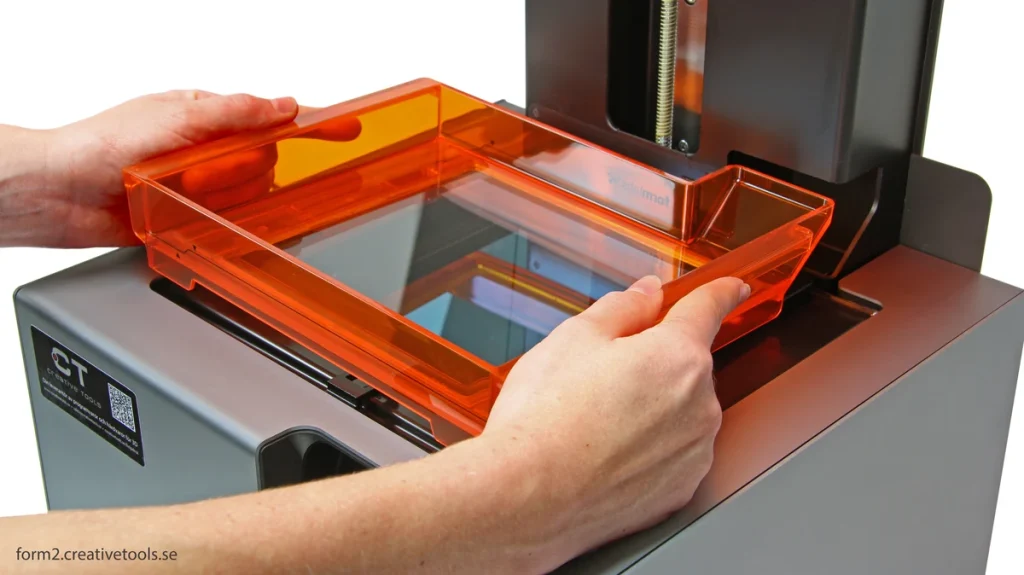
A profile is a collection of printing settings. Use it as a starting point for calibration: checking and adjusting those settings with a small test print. This lets you check detail and fit before spending resin on a larger model.
The reported yellow sample used a three-second normal exposure on the Mars 5 Ultra at 0.05 mm layers. Normal exposure applies to the layers after the initial ones, which have separate settings. The printer also needs time to release each printed layer from the bottom of the resin tank and prepare for the next one. Those three seconds alone don’t tell you the total print time.
Use a calibration model that checks small features and fit, and follow its instructions. Then print one representative figure before filling the build plate. Keep a record of the printer, full resin name, color, layer height, room conditions and settings that worked. Recheck when you change the material or layer height.
Washing And Curing Your 3.0 Prints
You’ll need space to wash and cure your base 3.0 prints. Budget for washing liquid, protective equipment, containers and UV curing as well as the bottle itself. I wouldn’t choose it if your main goal is water-only cleanup.
Elegoo’s general resin instructions use isopropyl alcohol, usually shortened to IPA, or resin cleaner to wash uncured resin off a print. Use the cleaning instructions supplied with your base 3.0 bottle to choose the cleaner and washing conditions.
Let the washed print dry fully before UV post-curing—the further ultraviolet light exposure used to finish hardening it. Curing a print while it’s still wet from washing can leave white residue on the surface.
For curing, follow guidance that matches the resin and your curing equipment. If the bottle doesn’t give enough information, ask Elegoo for that combination. A general recommendation to cure for a few minutes doesn’t establish the right time for every model, color and lamp.
Don’t shorten curing just to make a part feel more flexible. Post-curing continues the hardening reaction, so an under-cured part may bend more without having the strength it should reach after proper curing.
Keep uncured resin off your skin and protect your eyes from splashes. Use chemical-resistant gloves suitable for both the resin and cleaner, and replace contaminated gloves promptly.
Provide ventilation during printing, washing and curing; the printer’s cover isn’t a substitute for controlling emissions. Keep wash containers closed when you aren’t using them, and use curing equipment with its protective cover in place.
Plan waste handling before the first print. Keep leftover resin and contaminated cleaner out of sinks, toilets and storm drains. Collect them in suitable labeled containers and ask your local household hazardous-waste service how to dispose of them, along with contaminated wipes and gloves.
Switching to a water-washable resin wouldn’t make resin-contaminated wash water safe to pour away. If you can’t accommodate that cleanup routine, changing resin formulas won’t solve the workspace problem.
Is ABS-Like 3.0 Worth Buying For Your Prints?
I’d try a small bottle of base 3.0 if you want detailed figures that will be handled carefully and you’re comfortable calibrating and finishing resin prints. It’s a less convincing choice when your main requirement is surviving frequent drops. For that, look for a tougher material with documented tests on similarly delicate models, rather than assuming another ABS-like label guarantees the improvement you need.
For display pieces that are rarely touched, standard resin is the closest useful alternative. If a standard resin already prints your models well and costs less for the same quantity and color, there’s little reason to pay more solely for the ABS-like name. If the prices are close, your handling needs are a better deciding factor than the label.
If you need a part to bend and return to shape, compare materials designed for flexibility. If it must hold weight or work near heat, look for relevant mechanical and thermal data, including how the test pieces were cured. Those are different requirements from making an attractive miniature.
Before buying several bottles, confirm that your chosen color prints, cleans and cures well on your setup. Judge the result on the models you actually want to make, especially their most fragile parts.


