Elegoo Standard Resin Review
Budget resin
Our verdict
I’d choose original Elegoo Standard for detailed figures to paint and display at a budget material cost. I would avoid it for load-bearing or repeatedly flexed parts: its drop and bending durability remains uncertain, and every print still needs washing, drying and UV curing.

Best atDetailed display figures that you can handle carefully.
Less suited toParts that must withstand knocks, carry weight or bend repeatedly.
The Key Specs
| Reviewed grade | Original Standard / V1.0Check the bottle and selected version; Standard 2.0, 8K and Water Washable are separate choices. |
|---|---|
| Printer compatibility | 405 nm resin for compatible LCD printersConfirm third-party resin support and use settings for your printer and color. |
| Miniature detail | Beige examples at 32 mm and 75 mmReported fine features and clean support removal make display figures a useful starting point; other colors and setups may differ. |
| Durability | Drop and repeated-bending resistance uncertainProtect thin projections and choose a suitably tested material for demanding parts. |
| After printing | Wash, dry fully, then UV cureAllow workspace, cleaning supplies and curing equipment as well as the bottle. |
Which Bottle And Color Should You Buy?
- 1 kg original/V1.0
- I’d start here and print a representative model before buying more. Beige matches the miniature examples discussed in this review.
- 2 kg original/V1.0
- Choose the larger bottle once your chosen color and working settings meet your needs.
- Another color
- Choose it for the appearance you need, then recalibrate; the Beige examples do not establish identical results across colors.
Budget Beyond The Resin Bottle. Allow for suitable gloves, splash goggles, alcohol or another suitable cleaner, wipes, wash containers, ventilation, UV-curing equipment and waste disposal. Supports and unsuccessful prints also consume resin; a wash-and-cure machine does not replace cleaning liquid or a place to handle wet prints.
Also consider: Elegoo ABS-Like 3.0. I’d consider it when handling matters more. It is designed for toughness, but the limited comparison discussed here used Standard 2.0, not original Beige Standard, and does not guarantee drop-proof figures.
More Compatibility And Handling Details
| Exposure settings | Printer light output, color, layer thickness and temperature affect exposure. Calibrate a small print and save working settings. |
|---|---|
| Assembly fit | Visible detail does not establish dimensional fit. Try a small assembly before committing to a large multipart model. |
| Finishing | Allow for support touch-ups; clean removal in one setup does not promise every surface will be ready for paint. |
| Waste handling | Keep liquid resin and contaminated wash liquid out of drains. Collect them in suitable labeled containers and check local hazardous-waste acceptance. |
I’d consider Elegoo Standard Resin if you want detailed figures to paint and display. Reported Beige prints captured small features and came away from their temporary printing supports without visible damage. The main uncertainty is durability: attractive results don’t tell you whether a thin sword will survive a fall or repeated handling.
For gaming pieces that get knocked around, I’d consider Elegoo ABS-Like 3.0 first. Either way, your budget needs to cover washing, ultraviolet curing, protective equipment, and waste disposal as well as the bottle.
Which Elegoo Standard Resin Does This Review Cover?
This review covers the original, unversioned Standard Photopolymer Resin. Elegoo’s US store now identifies that option as V1.0, alongside V2.0. It still lists the original in 1 kg and 2 kg bottles, with Beige among the color choices. The detailed miniature results discussed here concern Beige specifically.
When ordering, match three things: Standard Photopolymer Resin, the original/V1.0 option, and your chosen color. Standard 2.0, 8K Standard, Water Washable, and ABS-Like are separate product choices. Their settings and performance shouldn’t automatically be applied to this bottle.
“Rapid” makes identification trickier. Elegoo uses that word in the original Standard product description, but the wording alone doesn’t establish that a separately reviewed Grey Rapid Standard bottle matches the beige formulation. Nor does it establish identical behavior across colors.
Check the selected version and bottle label rather than relying on a search-result title or a shared product-page image.
How Much Detail Can You Expect From Standard Resin?
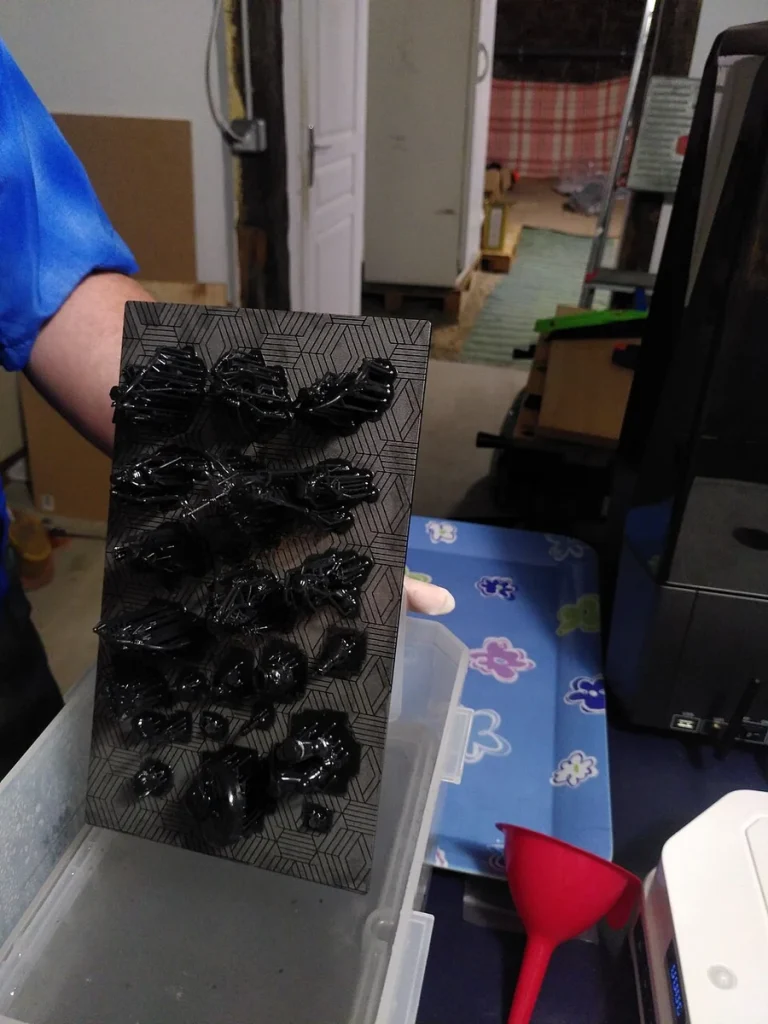
The most useful reported example used Beige Standard resin on an Elegoo Mars 2 Pro. Three 32 mm Loot Studios miniatures and their bases were printed together. Small features, including a dragon’s teeth, came through clearly, and the supports—the temporary structures holding parts of the model during printing—detached without reported damage to the figures.
A 75 mm Crossbowman also retained fine textures, including torn shirt fabric and arrow feathers. Support removal reportedly left those surfaces intact.
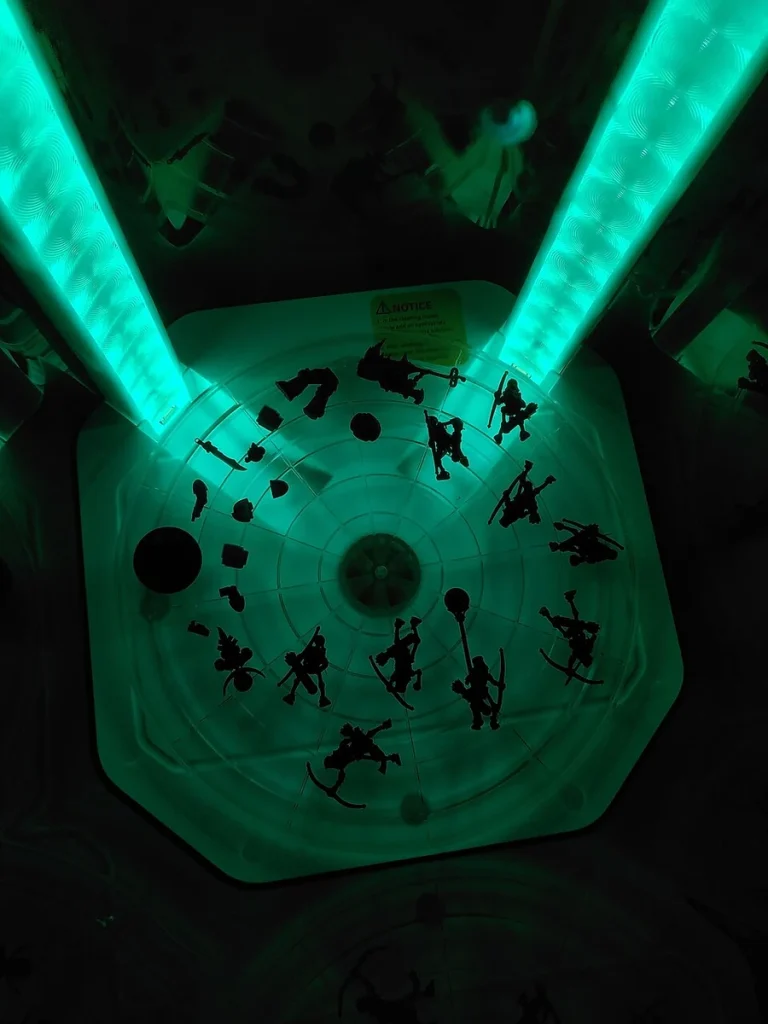
The models were washed in 91% isopropyl alcohol in a Mercury X wash station, allowed to air-dry fully, then cured in the matching curing station.
Those are encouraging results for display figures at two useful miniature sizes. They don’t tell you how closely the prints match the digital model’s measurements, whether other colors perform equally well, or how often prints succeed. Exposure and curing durations weren’t supplied with the reported results.
For your own models, separate two questions: can you see the sculpted detail, and do assembled pieces fit? A clearly printed buckle answers the first. It doesn’t tell you whether a peg will fit its hole after washing and curing. Try a small assembly before committing to a large model with several fitted parts.
Also leave room for finishing work. Clean support removal in one setup doesn’t promise that every surface will be ready for paint without touch-ups. Support placement and the shape of your model still matter.
If you’re already happy with Standard’s detail, an “8K” label alone isn’t a reason to replace it; look for a visible improvement on the kind of model you actually print.
Will Standard Resin Hold Up When You Handle It?
I wouldn’t choose original Standard for parts that need to survive knocks and falls. Its resistance to drops and repeated bending remains uncertain. You can get a good-looking model without knowing how well it’ll stand up to rough handling.
Thin features deserve the most caution. A figure may have a sturdy body but a narrow ankle, bow, or sword that gets caught while you move it. For display pieces, you can reduce that handling by picking them up by the base and protecting projecting parts during storage. For gaming miniatures, think about how often those same features will be touched, packed, and knocked over.
The clean support removal described above only concerns detaching the small connections touching the figure. It doesn’t establish how easily a print comes off the build plate—the printer’s metal platform—or how well the cured model survives a fall.
For pieces you’ll handle often, ABS-Like 3.0 is a useful alternative to consider. In a reported test, 32 mm figures printed in Yellow ABS-Like 3.0 took more force to break by hand than Grey Standard 2.0 figures. The printer was a Mars 5 Ultra, set to 0.05 mm layers. That doesn’t establish a direct comparison with original Beige Standard.
The ABS-Like 3.0 figures still broke after two drops from a 73 cm table height. Curing conditions weren’t reported, so the result gives only a limited picture of durability.
Parts that carry weight need stronger evidence still. I wouldn’t use original Standard for a bracket holding something valuable or a clip that must bend repeatedly. Choose a material tested for that job, then check that your finished part can withstand the weight or movement you need it to handle.
Setting Up And Cleaning Up Standard Resin
Standard hardens under 405 nm light; that number identifies the wavelength the resin needs. It’s intended for compatible resin printers, especially LCD models, which use a screen to control where light reaches each layer. Elegoo lists support for its Mars, Saturn, and Jupiter LCD families. For another printer, confirm that it accepts third-party 405 nm resin.
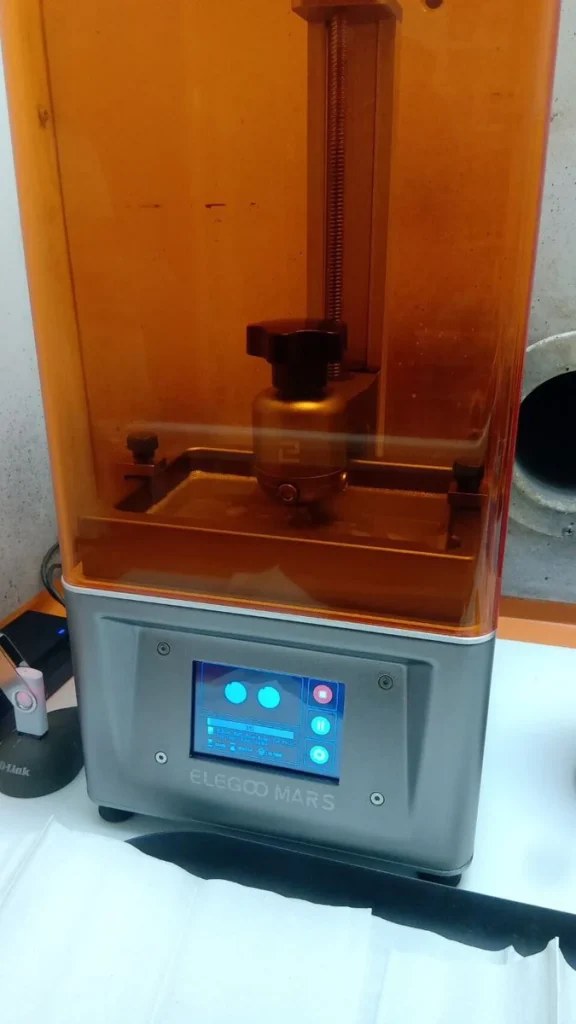
Start with the Standard entry for your printer and color in Elegoo’s resin settings guide. If your combination is missing, get matching guidance from Elegoo rather than borrowing Standard 2.0 settings.
Exposure time is how long the printer shines light on each layer. Printer light output, resin color, layer thickness, and temperature affect how long a layer needs under the light to harden, so a shared 405 nm wavelength doesn’t mean printers need the same exposure time.
Shake the bottle as directed before pouring. Elegoo’s general resin guidance recommends a printing environment around 25–30°C, or 77–86°F; follow any more specific instructions supplied with your bottle and printer.
Before filling the platform with figures, run a small exposure calibration print—a test model designed to help you adjust exposure time. Too little exposure can leave layers poorly bonded; too much can blur fine details. Follow the test model’s instructions to judge the result, then recheck when you change color or layer height and save your working settings.
Plan for three steps after printing: wash off uncured resin with a suitable cleaner such as isopropyl alcohol, let the model dry completely, then finish hardening it under ultraviolet light. Follow the resin and curing-equipment instructions for timing. The alcohol-washing example above doesn’t supply a universal wash or cure duration.
A dedicated wash-and-cure machine is convenient, but you still need cleaning liquid, containers, and a place to handle wet prints.
Standard resin can irritate skin and cause allergic skin reactions. Wear splash goggles and chemical-resistant gloves rated for the resin ingredients and your cleaning solvent; replace contaminated gloves promptly.
Arrange ventilation for printing, washing, and curing, and keep wash containers closed when possible. A mild smell doesn’t establish safe exposure. Keep resin and contaminated equipment away from children and pets.
Keep liquid resin and contaminated washing liquid out of sinks, toilets, and storm drains. Collect waste in suitable labeled containers and ask your local household hazardous-waste program how it accepts resin, used solvent, and contaminated supplies. Don’t assume that shining a UV lamp on dirty alcohol makes the whole liquid safe to discard.
Is Standard Resin Worth The Cost For Your Prints?
Standard sits in the budget resin category, but that doesn’t make it the cheapest sensible choice for every model. Its value is clearest when it gives you the display quality you need and you already have a working cleaning and curing setup.
For a first bottle, account for gloves, alcohol, wipes, waste containers, ventilation, and curing equipment. Those purchases can matter more to your starting budget than a small difference between resins. Washing also creates waste you’ll need to manage each time you print.
Count the resin used by supports and unsuccessful prints, too. There’s no dependable failure-rate figure for original Standard that lets you calculate a fixed allowance. A sensible first step is to buy a smaller quantity and print a representative model before ordering in bulk. Choose something with the thin features and textures you expect to make regularly.
If handling is your concern, compare Standard with ABS-Like 3.0 in the same bottle size and color. ABS-Like 3.0 is designed for toughness, and the limited reported testing makes it worth considering. You still shouldn’t assume that switching will make your particular figure survive a fall.
If solvent washing is the obstacle, Elegoo Water Washable changes that part of the job by allowing water cleaning. It still needs curing and careful handling, and resin-contaminated water still needs proper disposal. Choose it because that workflow suits you, not because “water washable” means you can rinse prints under a household tap.
Should You Buy Elegoo Standard Resin?
Buy original Standard if your priority is detailed display models, you can handle delicate parts carefully, and you’re prepared to wash, dry, and cure every print. Beige has a useful reported example of miniature detail, though it doesn’t promise the same result from every color or printer.
Keep using it if your own finished models already meet your needs. Consider ABS-Like 3.0 if handling matters more, and a suitably tested material for parts that must carry weight or bend. The uncertainty about Standard’s durability limits what I’d recommend it for; it doesn’t prove it’s a poor resin.


