Hatchbox ABS Review
Lower commitment with an ABS-ready setup; budget more if you need an enclosure and emissions controls.
Our verdict
I’d choose one spool of Hatchbox ABS for small practical parts whose fit and behavior I can check, provided the printer and workspace are ready for ABS. For ordinary household holders and brackets, I’d start with PETG: Hatchbox’s potential for a glossy finish comes with more work to control warping.
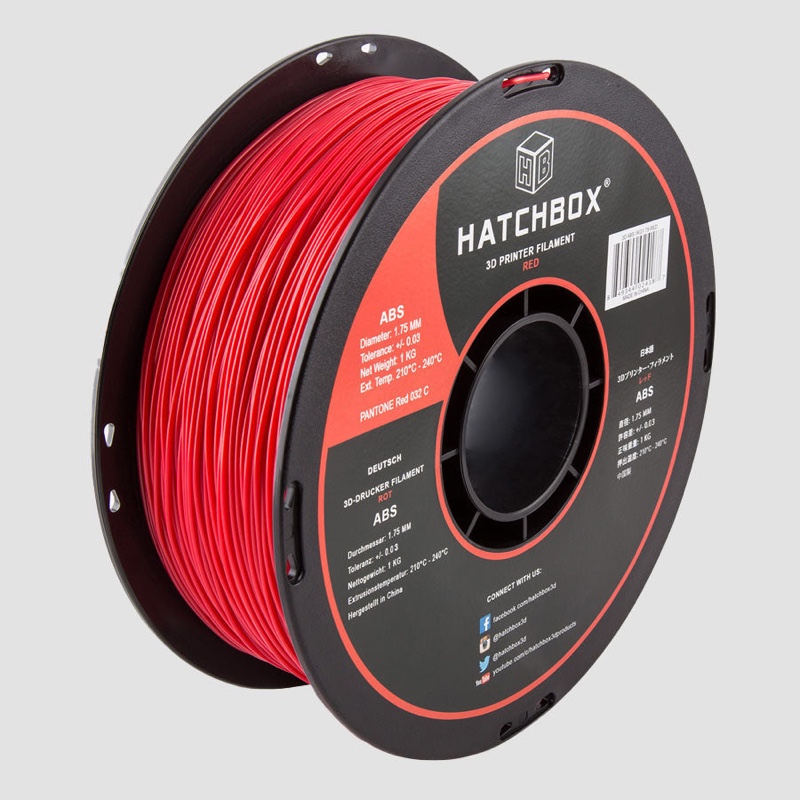
Best atSmall indoor knobs, covers and prototypes that you can evaluate on an ABS-ready setup.
Less suited toOpen-printer setups, prolonged sunlight, or loaded parts needing a documented working-temperature limit.
The Key Specs
| Reviewed spool | Gray ABS, 1.75 mm, 1 kgCheck both filament diameter and your printer’s ABS support before ordering. |
|---|---|
| Nozzle and bed | 210–240°C nozzle; 80–100°C bedUse these manufacturer ranges as starting points, then follow your printer and build-plate instructions. |
| Printer setup | Enclosure, heated bed and compatible build surfaceControlling uneven cooling helps limit corner lifting; a heated bed alone may not prevent it. |
| Workspace | Plan emissions controlsInclude a ventilated enclosure or local exhaust in the setup; a heat-retaining cover alone does not establish fume control. |
| Diameter accuracy | Advertised ±0.03 mmThis describes the filament strand, not the accuracy of your finished holes or joints. |
| Working limits | No supported application-specific heat or load ratingCheck the finished part’s requirements; printing temperature is not a safe service-temperature limit. |
Which Spool And Color Should You Choose?
- Gray, 1.75 mm, 1 kg spool
- Choose this documented variant if gray suits the part and your printer accepts 1.75 mm ABS.
- A different available color
- Choose for the finished appearance, then check settings and fit again; Hatchbox notes that settings can vary with color.
Budget For ABS Setup And Storage. Allow for an enclosure, emissions controls and build-surface preparation specified by your plate maker. Keep a storage bag and desiccant for opened filament, and budget material and time for small fit checks, adjustments and failed prints.
More Handling And Compatibility Details
| Finish | A glossy appearance is possible; inspect flatness and fit separately. |
|---|---|
| Storage | Return opened filament to a bag with desiccant; Hatchbox also suggests a lidded tub out of direct sunlight. |
| Color changes | Recheck settings and closely fitting features when changing spools or colors. |
| Before a large assembly | Print a small section containing the actual holes, tabs or joints, then let it cool and check the fit. |
I’d consider Hatchbox ABS if you already have an enclosed printer and want to make practical parts you can check before relying on them. It can produce a glossy finish, but getting a print to stay flat takes more care than with PLA or PETG. I’d choose PETG first for ordinary household holders and brackets unless you have a specific reason to use ABS.
ABS is a plastic often chosen for toughness and heat resistance. Those general strengths make Hatchbox a candidate for replacement knobs, covers and prototypes. They don’t tell you how hot your particular part can get or how much weight it can hold.
Getting Your Printer Ready For Hatchbox ABS
Check more than the filament diameter before ordering. Hatchbox’s gray ABS listing specifies 1.75 mm filament on a 1 kg spool. Your printer must accept that diameter and filament from other brands, but it also needs suitable heating, a compatible build surface and an enclosure. Check its manual for ABS support and operating limits, including whether it can run inside an enclosure.
Hatchbox recommends a 210–240°C nozzle and an 80–100°C heated bed on its ABS material page. These are starting ranges, not a complete set of settings for every printer. The nozzle melts the plastic; the bed helps keep the bottom of the print warm and attached. If you’ve seen a 55–85°C bed recommendation elsewhere, use Hatchbox’s own range as your reference.
For the build surface, follow your printer or plate maker’s ABS instructions. For example, Prusa specifies glue stick on its smooth or powder-coated PEI sheets; PEI is the coating on those plates. On smooth PEI, glue can protect the surface by helping the finished part release instead of sticking too firmly. A different plate may need different preparation.
An enclosure helps limit uneven cooling. As ABS cools, it shrinks, which can pull the corners away from the bed—a problem called warping. A lifted corner can ruin the fit even if the printer finishes the job. Keep drafts off the print, and don’t assume a heated bed alone will prevent lifting on larger parts.
A reported 2019 test used True Orange Hatchbox ABS on a Prusa i3 MK3S. It used the print-preparation software PrusaSlicer’s 0.15 mm Quality and Generic ABS profiles, modified to 225°C nozzle, 100°C bed and 25% cooling fan from layer three. Its small boat model needed an enclosure to finish.
That setup is a useful example, but the report doesn’t fully specify the plate or printing speeds. It isn’t a universal preset.
Plan where the fumes will go, too. Printing can release tiny particles and gases. Use a ventilated enclosure or local exhaust that captures emissions near the printer, with fresh air supplied to the room. The arrangement needs to remove emissions without creating drafts around the print that encourage uneven cooling.
HEPA filters capture particles; filtering gases requires suitable gas-and-vapor filters as well. A cover that keeps heat in doesn’t necessarily keep fumes out of your room. A faint smell doesn’t prove the air is clean, either. Keep the printer away from where you spend long periods sitting or sleeping.
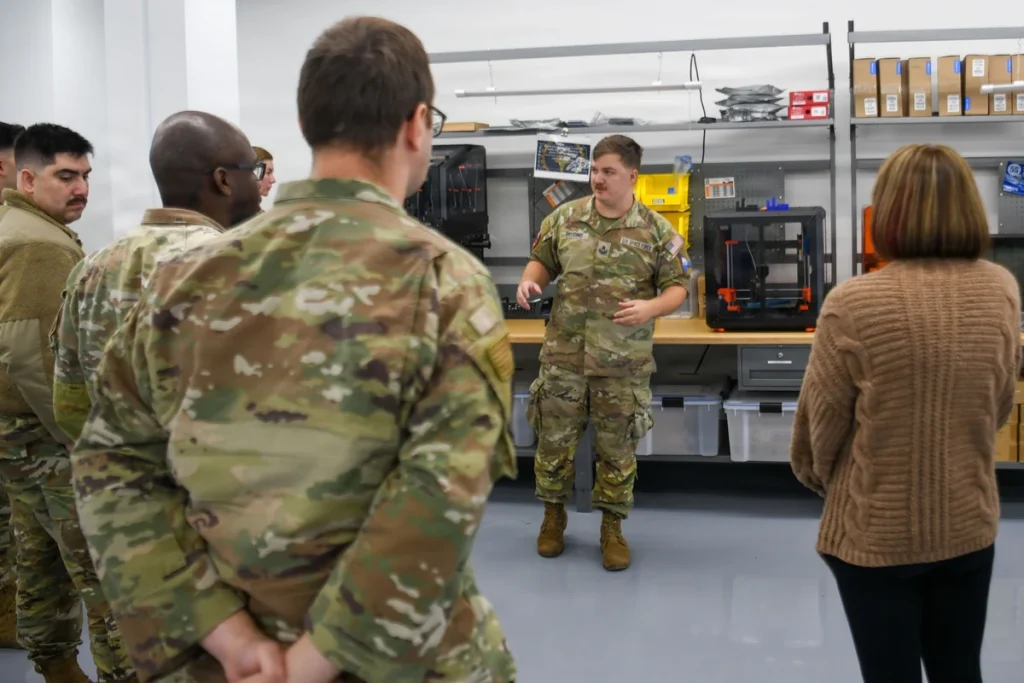
What Hatchbox ABS Can Handle In A Finished Part
The strongest reason to consider ABS is a job where an easier material falls short. Perhaps a replacement knob gets knocked around, or a cover sits somewhere warm. Hatchbox is an option to consider, but think about how much weight the part must hold, how hot it gets and what happens if it breaks.
A 2024 university study shows how print direction can affect Hatchbox ABS. It tested natural-color, 1.75 mm filament on a Prusa Mini+ with a 0.4 mm nozzle, 0.15 mm layers and a 255°C nozzle setting. All samples used 100% infill—the setting intended to fill the inside solid—and straight-line internal paths.
The printer builds a part by laying plastic in layers on top of one another. Samples pulled in the direction that separated those layers had less than half the average tensile strength of the other two print orientations. Tensile strength measures resistance to being pulled apart.
The samples had no treatment after printing. Their 255°C printing temperature exceeds Hatchbox’s current recommended range. These results don’t give you a suggested temperature or a strength rating for today’s gray spool.
For a bracket, choose its position on the bed with the expected force in mind: avoid an orientation where that force pulls the stacked layers apart. Adding more plastic inside doesn’t remove those joins; even the study’s solid-filled samples were weaker in that direction. A pulling test also doesn’t establish how well a part survives a drop or repeated bending.
Heat claims need the same care. The 210–240°C printing range is not a safe working-temperature range. The plastic is meant to flow through the nozzle at those temperatures. A finished part has to stay rigid enough to do its job, often while carrying weight for hours or longer.
Hatchbox’s FAQ says technical property data isn’t available. Without a supported working-temperature limit for the specific filament and application, don’t buy it on a promise that it will survive a hot car or support weight beside a heat source. For a part whose failure could hurt someone, choose a properly rated component.
Outdoor use is another reason to look elsewhere. Ordinary ABS can become brittle under sunlight. Hatchbox’s general durability claims don’t establish weather resistance for a particular color or spool.
What To Expect From Hatchbox ABS Print Quality
Hatchbox ABS can look good, but appearance and accurate fit are separate questions. In the 2019 True Orange test, successful models had glossy surfaces and clear detail. The boat still warped slightly after enclosure use.
An excavator model needed an adhesive and a raft—extra printed layers beneath the model to help it stay attached and supported. It still showed some warping and splits between printed layers, though its moving joints worked smoothly. That spool produced good-looking parts, but it took adjustment. One test can’t tell you whether other colors or batches will behave the same way.
For a visible cover or knob, a glossy finish may be exactly what you want. For two pieces that must bolt together, start by checking their shape and dimensions. A smooth wall doesn’t prove that the base is flat, the holes are correctly spaced or the layers will hold under load.
Hatchbox advertises ±0.03 mm filament-diameter accuracy on the gray product page. That describes the strand fed into the printer. It is not a promise that a printed hole, lid or bracket will be within 0.03 mm of its design. Cooling shrinkage and printer settings still affect the finished dimensions.
Before printing a large assembly, make a small section with the actual holes, tabs or joints you need. Let it cool, then measure it and try the matching screws or pieces. If it doesn’t fit, adjust the design or settings and repeat that small section. This gives you more useful information than a decorative model that happens to look tidy.
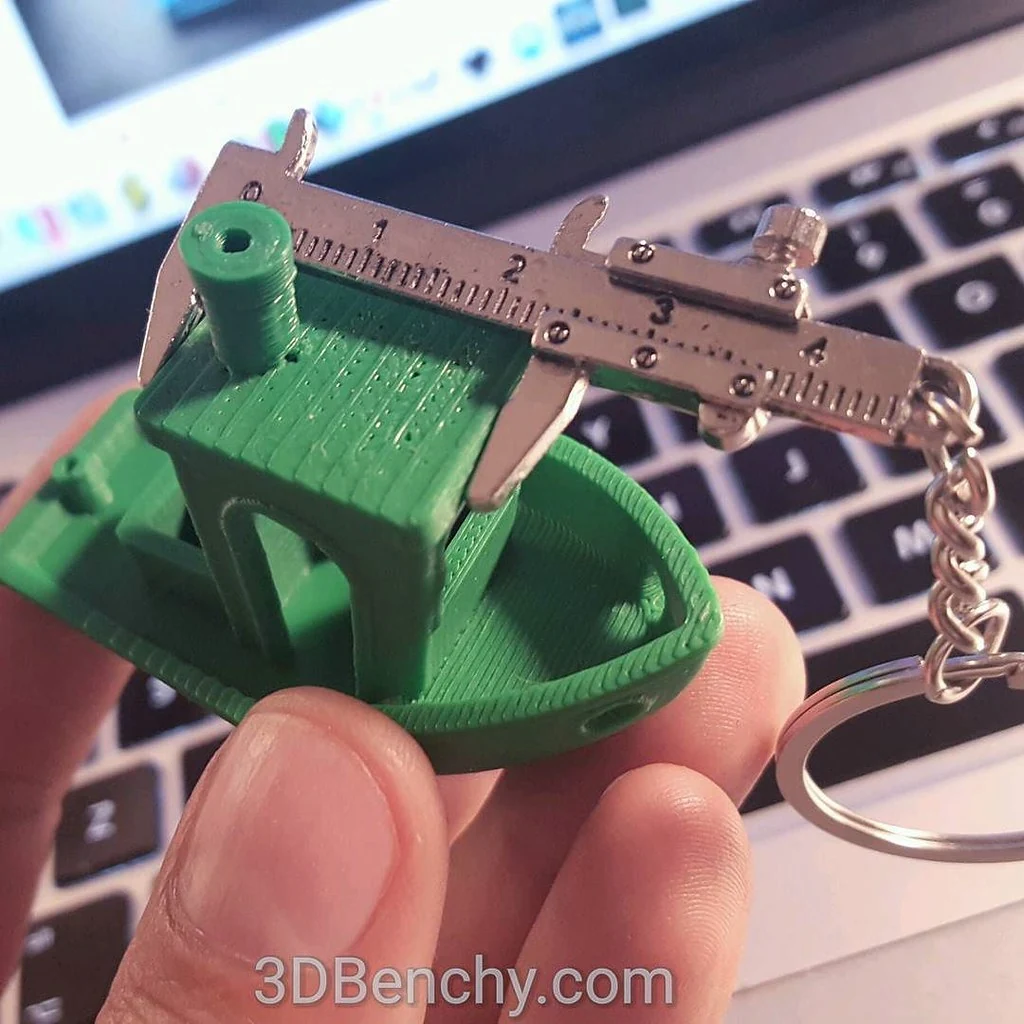
Check again with a new spool if the pieces need to fit closely, especially after changing color. Hatchbox itself notes that settings can vary with color. Keep opened filament dry, as its storage guidance recommends, and don’t assume a sealed bag proves the filament is dry.
Is Hatchbox ABS Worth The Extra Printing Effort?
The cost of a spool is only part of Hatchbox ABS’s value. Whether it’s worth buying also depends on the setup it needs and what an easier material can already do for you.
PLA remains a sensible choice for desk organizers, display pieces and models used to check a design’s shape. It is easy to print and resists warping, although heat and impact can limit its usefulness. You don’t need ABS simply because the object has a practical purpose.
PETG is the closest useful alternative for many household parts. It generally warps less than ABS and works well for holders and similar objects that need some toughness. It can leave fine strings between features and stick too firmly to an unsuitable plate, so it still needs the right settings and surface. But if PETG already handles the temperature and knocks your part sees, I’d stay with it.
For Hatchbox ABS, include the cost of preparing your printer and workspace in the decision. An enclosure, emissions controls, failed prints and time spent adjusting settings all count. If those arrangements are already in place, trying one spool is a much smaller commitment. If you need them solely for a single replacement cover, buying a finished replacement may make more sense.
Check the exact diameter and color available before planning a batch; a product listing doesn’t guarantee every variant is ready to order. Hatchbox’s own store doesn’t ship internationally, so buyers outside the United States need another seller. Compare equivalent spool sizes and include shipping when judging value.
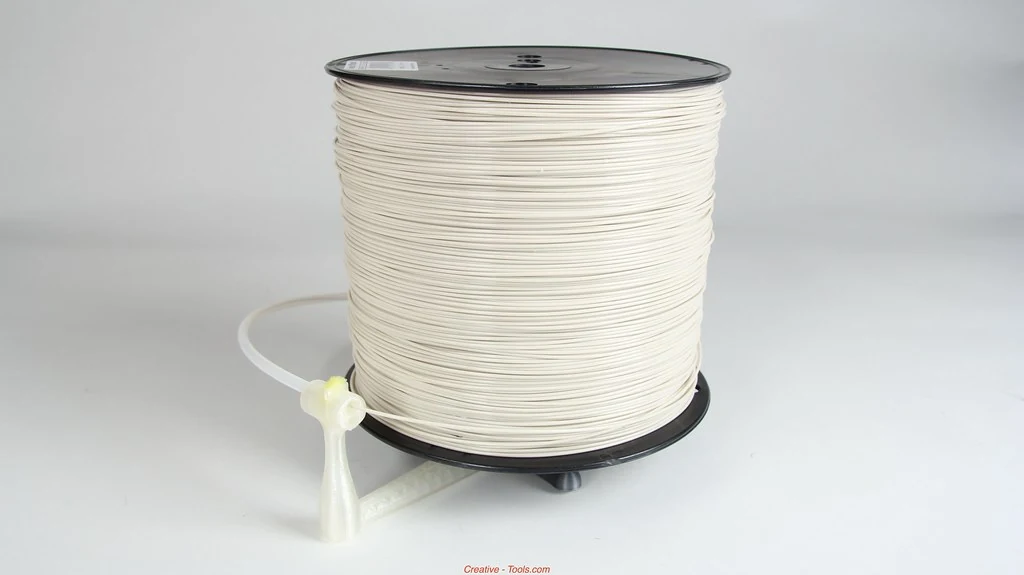
Also check the seller’s return terms before opening the bag. Hatchbox’s stated routine return policy covers unused, sealed items within 30 days. Don’t assume it offers an open-spool trial if ABS turns out to be unsuitable for your setup.
When Hatchbox ABS Makes Sense For You
I’d buy one spool if your printer is ready for ABS, you have emissions controls in place, and you want to develop a practical part whose fit and behavior you can check. A replacement knob or removable cover is a more reasonable first project than a large, heavily loaded bracket. Treat those examples as projects to evaluate, not guaranteed applications.
Prepare your setup first if you have an open printer, an uncertain bed surface or nowhere suitable to manage emissions. Filament settings won’t fix every hardware or workspace limitation. Sort those out before committing to a long print.
For prolonged sunlight or a part that must carry weight in heat, look for documented properties that match the job. Hatchbox’s ABS label alone doesn’t establish those limits.
Your next step is to pick one small, useful part and write down what it must withstand. Check your printer’s ABS instructions against that requirement. If both make sense, start with a short print containing the part’s most important joint or mounting feature, and confirm that it fits before making the whole thing.


