Jessie Premium PETG Review
Generally less than Prusament PETG for a comparable 1 kg spool.
Our verdict
I’d try one spool of Jessie Premium PETG for colorful everyday hobby parts. It offers US-made filament for generally less than Prusament, with Jessie presets for supported PrusaSlicer setups. Allow time to check finish and fit; for a deadline, I’d keep using a filament and settings that already work on your printer.

Best atColorful everyday hobby parts when you are comfortable checking the first prints.
Less suited toDeadline work on untried settings, or demanding parts that need established strength, heat resistance or all-day reliability.
The Key Specs
| Material / diameter | PETG, 1.75 mmChoose PETG specifically; Jessie PLA and Elixir are separate materials, and this filament does not fit 2.85 mm systems. |
|---|---|
| Spool size | 1 kg of filamentCheck the reel dimensions separately before using an enclosed feeder. |
| Made in | USA reason to choose it if domestic manufacture matters to you; origin alone does not establish print quality. |
| Slicer starting point | Jessie PETG presets in PrusaSlicerUse the preset matching your printer and nozzle, then check a small print. |
| Base preset temperatures | 245°C nozzle; 85°C first-layer bed, then 90°CPrinter-specific profiles can differ; confirm your printer supports the matching settings. |
Which Spool Should You Buy?
- First 1 kg spool
- Choose the PETG color you want and check finish, fit and a representative longer print before buying several rolls.
Budget For Storage And Setup. Allow for sealed storage and desiccant, filament used in setup prints, and shipping. A glue-stick release layer is needed if you use Prusa’s smooth PEI sheet; follow the plate maker’s PETG instructions for other surfaces.
Also consider: Prusament PETG. Costs more, but provides individual spool manufacturing measurements, including filament diameter and roundness.
More Handling And Compatibility Details
| Spool fit | Compare the reel’s width, outer diameter and center opening with your holder or feeder; 1.75 mm filament does not establish AMS compatibility. |
|---|---|
| Flow limit | Keep the matching preset’s Max volumetric speed limit in place initially so the slicer can limit the demand on the hotend. |
| Storage / drying | Keep the spool sealed with desiccant. Ask Printed Solid for drying temperature and time suitable for both Jessie PETG and its reel. |
| Build surface | Prusa recommends powder-coated sheets for PETG; its smooth PEI sheet needs a glue-stick release layer. |
| Before a large job | Check a small section for fit, then try a longer print similar to the intended project before buying multiple rolls. |
I’d try Jessie Premium PETG if you want a US-made filament in bold colors and can spend a little time checking your first prints. Printed Solid sells it in 1 kg spools, generally for less than Prusament PETG. Jessie-specific PrusaSlicer presets—ready-made groups of print settings—give supported printers a useful starting point.
The main drawback is that you may still need to adjust the settings, and the available print results don’t establish consistent performance over long jobs. I’d try one spool for everyday hobby parts. If you want published measurements for your individual spool, Prusament is the closer fit.
Check That Jessie PETG Fits Your Printer
PETG is a type of printing plastic often used for practical parts such as holders and clamps. Check that you’re ordering PETG: Jessie PLA and Elixir are separate materials, even when their colors look similar.
The Jessie Premium PETG discussed here uses 1.75 mm filament. That’s the diameter of the plastic strand, not the nozzle opening. Don’t buy it for a printer that requires 2.85 mm filament.
Your printer needs to support PETG temperatures at both the nozzle and heated bed. For reference, the base Jessie preset uses a 245°C nozzle and an 85–90°C bed; printer-specific versions can differ. Check your printer’s documented operating limits before using those settings.
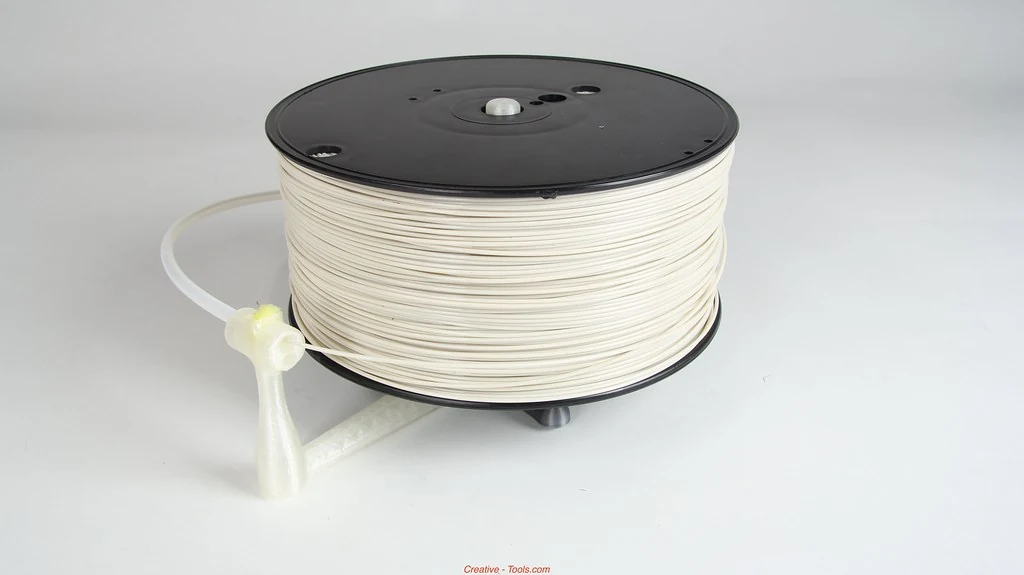
Spool fit needs a separate check, especially with an enclosed automatic feeder such as a Bambu AMS. The 1 kg label tells you how much filament you’re buying, not the reel’s dimensions.
Confirm the current reel’s width, outer diameter and center opening with Printed Solid, then compare them with your holder or feeder’s requirements. Filament diameter alone doesn’t establish feeder compatibility.
What To Expect From Jessie PETG Prints
Pure Cyan has shown promising results for colorful hobby prints. In a reported hands-on test, it made a picnic glass holder on an Ender 3 Pro with little reported stringing—the thin plastic threads sometimes left between separate parts of a model. That shows Jessie can produce an attractive, completed object on that printer.
It doesn’t tell you how many attempts were needed. The report doesn’t give the slicer version, exact printing settings, drying history or job duration. Its listed temperature ranges aren’t a record of the temperatures used for that object. Treat the result as an example of what’s possible, rather than a promise of the same finish straight out of the bag.
Longer jobs deserve a separate judgment. One Pure Cyan owner praised the color but reported repeated clogs several hours into large prints on a Prusa MK3. The report doesn’t establish the cause, and it doesn’t document temperatures, drying or retraction settings. Retraction is the brief pullback of filament that helps reduce dripping while the nozzle moves.
That owner’s experience doesn’t establish how often Jessie clogs across other spools or printers. One successful glass holder doesn’t settle long-job reliability, either. Neither supports calling the whole line trouble-free or unreliable.
If your planned part has a fitted lid, screw holes or pieces that slide together, print a small section of that design first. Check whether the pieces actually fit; good color doesn’t prove accurate dimensions.
For a large project, try a longer print similar to what you plan to make before buying several rolls. A neat-looking sample doesn’t tell you enough about a job that will occupy the printer all day.
Getting Jessie PETG Set Up On Your Printer
Start by looking for Jessie PETG in PrusaSlicer, the software that turns a model into printer instructions. Choose your actual printer and nozzle configuration first. Official settings include Jessie variants for the MINI, MK4S, XL and CORE One, but that doesn’t mean every feeder or tool-changing configuration has the same coverage.
The base preset specifies 245°C for the nozzle throughout, with the bed at 85°C for the first layer and 90°C afterward. Some profiles for high-flow nozzles, which can melt plastic faster, use 250°C. These are documented starting settings, not universal requirements or temperatures from the Pure Cyan test.
Use the matching preset instead of copying a temperature from another printer. A Prusament or Prusa PETG preset isn’t automatically interchangeable just because the names are related.
Leave the matching profile’s Max volumetric speed limit in place initially. It caps how much plastic the printer is asked to melt each second. The slicer slows printing when needed to stay within that limit, helping the printer keep up with the plastic required.
A thicker layer needs more plastic at the same printing speed and line width. That’s why one speed recommendation in millimeters per second wouldn’t cover every print, printer and nozzle.
Check the build surface before starting. Prusa recommends powder-coated sheets for PETG because it can stick too strongly to smooth PEI, a common print-surface coating. If you use Prusa’s smooth PEI sheet, its instructions call for a glue-stick layer to help the print release. For other plates, follow that plate maker’s PETG instructions.
Keep the spool sealed with desiccant, the moisture-absorbing packets used in filament storage. Moisture can contribute to stringing and blobs, but those symptoms alone don’t prove that a Jessie spool is wet.
Before drying Jessie, ask Printed Solid for a temperature and time that suit both the filament and its reel. Don’t assume Prusament’s drying instructions cover Jessie.
Without a matching Jessie preset in your slicer, use your printer maker’s PETG guidance as the starting point and allow time for a small test print. Change one setting at a time so you can tell what helped.
Is Jessie PETG Good Value For Your Prints?
Jessie generally costs less than Prusament PETG for a comparable 1 kg spool, and it may have the color you’re after. Printed Solid also confirms that it makes Jessie Premium filament in the US. If buying US-made filament matters to you, that’s a reason to consider it. It doesn’t, by itself, prove better printing.
Prusament PETG is the most useful alternative if you’d pay more for information about the spool you’re buying. Prusa publishes manufacturing measurements, including filament diameter and how round the strand is. That gives you something concrete to inspect. It doesn’t guarantee that every finished part will fit or that a print won’t fail.
Both have PrusaSlicer support, so choosing Jessie doesn’t necessarily mean building settings from scratch. The extra manufacturing information is a clear reason to pay more for Prusament. Whether it will also save you time adjusting settings is less certain.
Compare equivalent colors and quantities, and include shipping when deciding what to order. If you already have PETG that prints your parts reliably, a cheaper spool is worth switching to only if the saving matters enough to justify trying new settings. Buying one roll keeps that experiment manageable.
Should You Try A Spool Of Jessie PETG?
Jessie makes sense for everyday hobby prints if its colors appeal to you and you’re comfortable checking the first few parts. Beginners can try it, too, provided their printer supports the settings and they check the build plate and spool fit before loading it.
Choose Prusament instead if access to individual spool measurements matters more than spending less. For a deadline, I’d stick with a filament and settings that have already worked on your printer.
Jessie’s reported results support a trial purchase, not an assurance about load-bearing strength, sustained heat exposure or all-day reliability. Don’t select it for a demanding part solely because PETG is commonly used for functional prints. Start with a part that’s easy to replace, check its finish and fit, and let that result guide whether you buy another spool.


