Protopasta Black Recycled PLA Review
Case costs less per kilogram than individual recycled-black spools.
Our verdict
I’d start with one spool for everyday prototypes, display models or parts I plan to paint. Reused manufacturing scraps are the appeal; possible sparkle and differences between batches make it less suited to matching unpainted pieces across repeat orders.

Best atModels, painted parts and early shape-and-fit prototypes where ordinary PLA is suitable.
Less suited toRepeat orders that must look identical, or working parts that need documented heat resistance.
The Key Specs
| Recycled feedstock | Protopasta’s own production wasteReuses manufacturing scraps; the recycled percentage and overall environmental benefit are not quantified. |
|---|---|
| Finish | Black, with possible sparkleTry a small print before committing to visible, unpainted parts. |
| Batch matching | Consistency promised within a batchAsk about a shared batch for matching pieces; repeat orders are not guaranteed to match. |
| Filament diameter | 1.75 mmCheck that your printer uses this diameter before ordering. |
| Starting profile | Generic PLA; 220°C nozzle, 55°C bed, 6 mm³/s flow limitThese are manufacturer starting recommendations; tune a small print on your machine. |
| Spool packaging | Plastic sides around a cardboard core since June 2026Older cardboard stock may still ship; confirm the spool version and feeder fit with the seller. |
Which Coil, Spool Or Case Should You Buy?
- 50 g coil
- Smallest commitment for checking the finish; you need a way to hold and feed the unspooled coil.
- 1 kg spool
- My first choice for trying normal handling and several prints before stocking up.
- Six 1 kg spools
- Lower cost per kilogram once you like the material and expect to use six separate rolls; a case does not guarantee matching batches.
Allow For Feeding And Delivery. A sample coil needs a suitable holder. Older cardboard spools may need an adapter under your feeder maker’s guidance; check that any added rim fits. Include shipping when comparing equivalent quantities.
More Material And Handling Details
| Higher-flow starting point | Protopasta also pairs 240°C with 12 mm³/s and a 55°C bed; check your printer’s temperature capability. |
|---|---|
| Heat treatment | Heat-treatable HTPLA is a separate material; no specific heat rating is established for Black Recycled PLA. |
| Food contact | Protopasta says it has not obtained food-safe certification. |
| Between prints | Keep the filament end secured, and check that the spool turns freely on an external holder. |
I’d try Protopasta Black Recycled PLA if you print everyday prototypes, models or parts you’ll paint. It puts the company’s manufacturing scraps back to work, and a reported CR10s print gives an encouraging example of smooth printing. I’d start with one spool before buying a case.
The main reservation is the finish: black can include sparkle, and matching a later batch isn’t guaranteed. That’s easy to accept for a mock-up, but less useful for matching a set of finished products.
The packaging has also changed since the reported complaints about cardboard spools. Protopasta switched to plastic sides in June 2026, although older stock can still come on cardboard.
What Goes Into This Black Recycled PLA
PLA is a common 3D-printing plastic; filament is the strand your printer melts and deposits to build a part. Protopasta says this filament comes from waste generated by its own filament production. That gives you a reason to choose it for its reused material, but the company doesn’t specify a recycled percentage or quantify the environmental benefit.
The company blends the material thoroughly before making filament, a process it calls “fully compounded.” Think of mixing the ingredients throughout a whole batch so you don’t get separate patches of different material as you work through a roll. Protopasta promises consistency within that batch; it doesn’t promise that your next order will look identical.
Black pigment covers the underlying colors, but glitter can still show through. Treat that as part of the appeal if you like a little sparkle, rather than expecting a completely plain black finish.
For a painted model, that distinction may barely matter. For an unpainted replacement panel sitting beside an older print, it matters much more. Print a small sample and compare it in the lighting where the finished piece will sit.
If you’re making several matching pieces, ask whether the seller can supply one batch. A case alone isn’t a promise of matching batches.
How Black Recycled PLA Prints And Where To Start
One reported print used this exact filament for Bugman_140’s Clyde the Horse on a Creality CR10s. The accompanying hands-on assessment described smooth printing. That supports trying it for models, but it doesn’t establish a failure rate, measured accuracy or strength. The report lists a 195–225°C nozzle range and a 60°C bed; it doesn’t identify a complete profile used for the horse.
Protopasta recommends the Generic PLA preset in your slicer—the software that prepares a model for printing. Its material table includes RPLA, this filament’s product-code prefix, in its group of PLAs without fibers. It specifies a 55°C build plate, the surface the print sits on, and two nozzle-temperature/flow combinations: 220°C at 6 mm³/s and 240°C at 12 mm³/s.
That flow limit describes the maximum volume of melted plastic the printer should push out each second. Look for a slicer setting measured in mm³/s, such as maximum volumetric speed. It limits printing speed when necessary to keep the amount of plastic within the selected rate; it isn’t the nozzle’s travel speed in mm/s.
For a first print, I’d select Generic PLA and set the nozzle to 220°C, the flow limit to 6 mm³/s and the bed to 55°C. These are manufacturer starting recommendations, not independently measured speed results for this black blend. Your printer must also support the chosen temperature.
Keep that preset’s cooling and your printer’s normal retraction settings initially; retraction pulls filament back to reduce drips between printed areas. Print a small piece with the details you actually need, then adjust one setting at a time.
Protopasta’s separate getting-started guide gives older machines with 0.4 mm brass nozzles a 195–225°C nozzle range and 50–60°C bed. That doesn’t make 225°C a universal ceiling: the material table pairs higher heat with higher flow. Match the guidance to your setup instead of combining unrelated settings.
If you’re fitting two parts together, print their connection first. A clean-looking model doesn’t tell you whether your particular holes, tabs and joints will fit. Save the settings that work with that sample before moving on to the full model.
Black Recycled PLA Spools Have Changed
The older hands-on report criticized corrugated cardboard edges that wore quickly and the lack of holes for securing the loose filament end. Those observations apply to the spool reviewed; they don’t establish a widespread failure rate.
Protopasta’s August 2026 announcement says production switched in June to plastic sides around a cardboard core. It describes the new spools as compatible with Bambu’s AMS automatic filament feeder. Check which version the seller is sending if packaging affects your choice.
For older cardboard stock, Protopasta documented a reduction from roughly 203 mm to 200 mm outside diameter so the original Bambu AMS lid could close. Don’t assume those dimensions describe every newer plastic spool. With a tight holder or automatic feeder, confirm the outside diameter, width and center-hole size for the spool you’ll receive.
For cardboard spools, the manufacturers’ advice differs: Protopasta says its compatible spools work without modifications, while Bambu recommends an adapter to reduce slipping and debris. Follow your feeder’s guidance, and make sure any added rim fits inside it.
On a simple external holder, check that the spool turns freely. Keep the filament end secured between prints so it can’t slip under another winding and cause a tangle.
Which Prints Suit Black Recycled PLA?
I’d choose it for display models, terrain, desk organizers and early prototypes used to check shape or fit. Protopasta’s own FAQ points buyers toward Recycled Black PLA for practical prints where color matters less, including pieces that will be painted. Those are sensible jobs for a material whose finish can vary.
Think about what the prototype needs to tell you. A mock-up can show whether a handle feels comfortable or whether a cover fits its opening. It doesn’t automatically tell you how a final part will behave under repeated bending, heat or sustained weight. Choose the final material around the conditions it must withstand.
Don’t assume heating a finished print will make this blend suitable for hotter conditions. Protopasta sells it as PLA, without a specific Black Recycled PLA heat rating. Its separate HTPLA materials are formulated for heat treatment after printing to improve heat resistance; that capability isn’t established for this recycled blend.
For parts near heat, carrying substantial weight or exposed to chemicals, choose a material with documented performance for that job. A smooth-looking model gives you no measure of those properties.
For food contact, Protopasta says it hasn’t obtained food-safe certification. Don’t use a successful shape or fit check as evidence that a part is suitable for contact with food.
Is A Black Recycled PLA Spool Or Case Worth Buying?
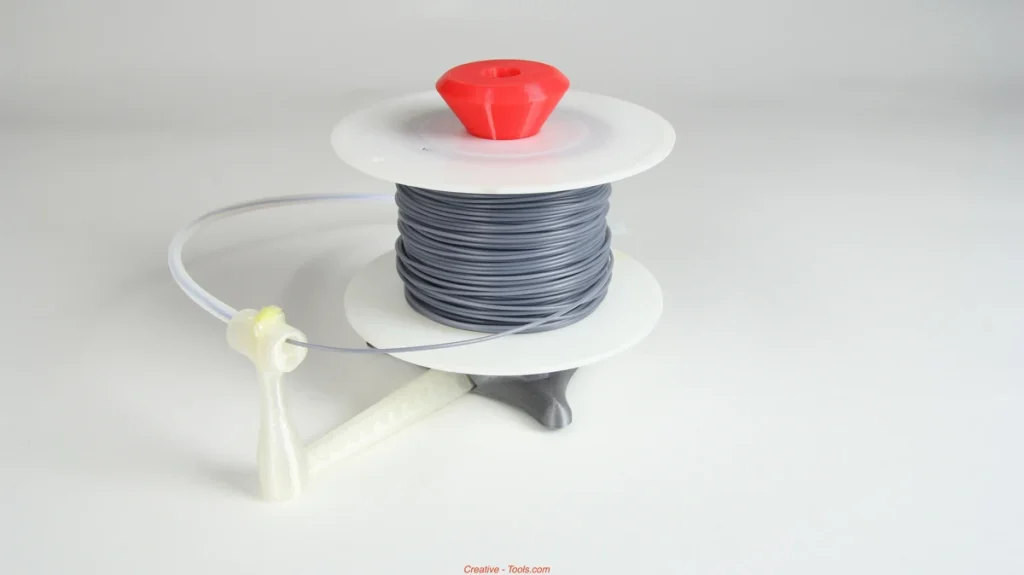
The official listing offers 1.75 mm filament as a 50 g coil, a 1 kg spool or a case of six 1 kg spools. Check your printer’s required filament diameter first. The case contains separate rolls, so you don’t need a holder for a single oversized six-kilogram spool.
A coil is the smallest commitment if you mainly want to see the finish, but it comes without a spool, so you’ll need a way to hold and feed it. A full spool is the more useful trial for judging normal handling and several prints.
Protopasta’s case costs less per kilogram than buying its individual recycled-black spools. That makes sense once you know you like the material and expect to use six rolls.
Against ordinary black PLA, decide whether reuse and possible sparkle are things you want. Protopasta’s Black PLA–Premium Basic PLA is the closest plain-black alternative in the same range. At the sample size, the recycled 50 g coil costs less than its equivalent basic-black coil. That sample comparison doesn’t establish which full-spool purchase will cost you less after shipping.
For another recycled option, 3D-Fuel offers ReFuel in separate Standard PLA+ and Tough Pro PLA+ versions, including 1 kg rolls. Its color is unspecified, which makes it a less direct substitute when you specifically want black.
Don’t assume either brand is always cheaper. Compare the same quantity and material version, including shipping, before ordering.
Should You Choose Protopasta Black Recycled PLA?
Choose a trial spool if you want reused manufacturing material for models and everyday prototypes, can accept some sparkle, and are comfortable checking a small print before starting a larger job. Move to a case when you’re happy with the finish, feeding and results on your machine.
Choose plain black PLA if sparkle would spoil the appearance you want. If repeat orders need to match exactly, ask the supplier whether it guarantees that match. And if heat resistance or a demanding working part is the reason you’re buying, choose a material with test data that supports that use. Black Recycled PLA makes the most sense when ordinary PLA is already suitable for what you want to print.


