Prusament ASA Review
Premium ASA · generally more per kilogram than Polymaker ASA
Our verdict
I’d choose Prusament ASA for outdoor covers and heat-exposed housings when I have a suitable printing area and a use for its spool records. The premium buys useful manufacturing data; it does not establish stronger parts or fewer failed prints. For everyday indoor functional parts, I’d start with PETG.

Best atOutdoor workshop parts where UV resistance and individual spool records are useful.
Less suited toOrdinary indoor models, or printing spaces without suitable warmth and emissions control.
The Key Specs
| Outdoor use | Prusa describes it as UV stableA sensible candidate for exposed covers; the ASA label does not establish a service life. |
|---|---|
| Heat under load | 93 °C heat deflection; 86 °C at the heavier test loadThese test figures are not continuous-use temperature ratings for your part. |
| Printing temperatures | 255–265 °C nozzle; 105–115 °C bedCheck that your printer can sustain both, and start with its Prusament ASA profile. |
| Large parts | An enclosure is needed for demanding large printsUneven cooling can lift corners; holding warmth and controlling emissions are separate requirements. |
| Spool records | Individual manufacturing measurementsUseful for repeat-job records and troubleshooting, without proving finished-part strength. |
| Filament quantity | Prusa Orange listing: 800 gCompare net filament mass; older reviews describe 850 g spools. |
Which Color And Spool Should You Buy?
- Prusa Orange, 800 g NFC
- Choose this listing for orange parts; check net mass when comparing it with older 850 g stock.
- Other ASA colors
- Choose the appearance your project needs and check the exact listing’s mass; outdoor lifetime is not established for every color.
Budget For Printing And Handling. Allow for an enclosure for large parts, suitable emissions capture or evaluated particle-and-gas filtration, and a compatible build sheet. Glue stick is specified for Prusa smooth PEI and textured sheets. Brims, supports and fit checks also consume filament.
Also consider: Polymaker ASA. Its standard 1 kg option generally costs less per kilogram. A useful comparison if you already need ASA; the lower cost does not establish better strength or reliability.
More Compatibility And Handling Details
| Diameter / nozzle | 1.75 mm filament, ±0.04 mm tolerance; an ordinary brass nozzle is suitable. |
|---|---|
| Build sheet | Prusa recommends satin; a brim may help. Let the sheet cool before removing a print. |
| Part cooling | Technical-sheet range: 0–50%, depending on geometry. Start with the profile for your printer. |
| OpenPrintTag | Rewritable NFC material information; Prusa says its app can read it offline. Check support before expecting automatic printer recognition. |
| Finishing | Sanding is possible; chemical smoothing rounds edges and removes fine detail, which matters for fitted parts. |
I’d consider Prusament ASA if you print parts that need to cope with sunshine and heat, and you have somewhere suitable to print them. ASA is a plastic sold as filament—the thin strand your printer melts and builds into an object, one layer at a time. Its resistance to sunlight and heat is the main reason to choose it over easier materials.
I’d recommend it for outdoor covers, housings and similar workshop projects where Prusa’s material guidance and spool records are useful. The biggest reason to hesitate is the setup: keeping the print warm, managing emissions and checking that the finished part is strong enough all take effort. A tidy surface doesn’t prove that its layers have bonded well.
For ordinary indoor functional parts, PETG is the more practical starting point.
Prusament ASA For Hot And Outdoor Parts
Sunlight is a good reason to consider Prusament ASA. Prusa describes it as suitable for outdoor use and UV stable, meaning it resists damage from the ultraviolet light in sunshine. That makes it a sensible candidate for a garden sensor cover or an exposed equipment housing.
Heat resistance also helps, but the number needs explaining. Prusa’s technical sheet lists a heat deflection temperature of 93 °C, about 199 °F, in a standardized test of bending under load. With the heavier of two specified test loads, the figure falls to 86 °C. Neither number promises that every ASA part will hold its shape indefinitely at that temperature.
A reported oven test used supported Prusament samples with a nut weighing down their centers. ASA began sagging around 110 °C and failed around 120 °C. PLA and PETG began giving way around 60 °C and 80 °C respectively.
Treat that as a comparison within that short test, not permission to use ASA continuously at 110 °C. A thin mounting tab carrying weight all afternoon has a different job from a briefly heated sample. If a small amount of bending would stop your part working, check that it still works under the heat and load it will actually face before relying on it.
Nor does UV resistance tell you how many years your print will last outside. To predict that, you’d need results for the color, climate, exposure and load you have in mind. You can’t put a replacement date on a print from the ASA label alone.
PETG remains an option for less demanding outdoor parts; it isn’t restricted to indoor use. It also warps less—changes shape less as it cools—which helps with larger prints. Ordinary PLA makes more sense for indoor models and checking whether a design fits. If sunshine and heat aren’t part of the job, ASA’s extra printing demands are harder to justify.
What Your Printer Needs For Prusament ASA
Your printer must support the material’s temperatures throughout a print. The nozzle melts the filament, and the heated bed is the platform the part is printed on. The current Prusa Orange product page specifies a nozzle at 260 ±5 °C and a heated bed at 110 ±5 °C. Prusa’s general ASA guide starts the bed at 105 °C for the first layer, then uses 110 °C.
Begin with the Prusament ASA profile, a preset group of settings for your exact printer, in the slicer—the software that prepares its printing instructions.
This is 1.75 mm filament, and Prusa recommends an ordinary brass nozzle. You don’t need a hardened nozzle just because ASA is intended for functional parts. On another brand of printer, confirm its temperature limits and ASA instructions; matching the filament diameter alone isn’t enough.
Plan on an enclosure, a housing around the printer that helps keep the print warm, for large parts. ASA contracts as it cools, and uneven cooling can pull corners away from the bed. A small cover succeeding on an open printer doesn’t tell you whether a broad housing will stay flat.
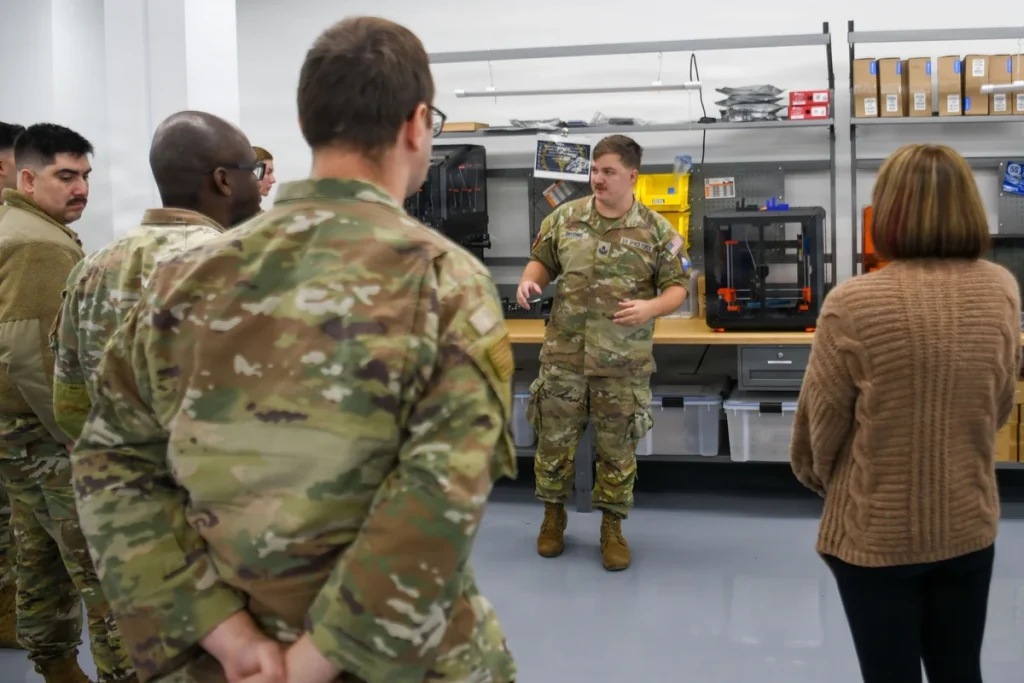
Prusa also offers a draft-shield setting, which prints a wall around the object to shelter it. That’s useful draft protection, but it doesn’t replace an enclosure for demanding large prints.
Part cooling means blowing air over the newly laid plastic with the printer’s fan. Prusa’s technical sheet allows 0–50% fan speed, depending on the shape. Cooling helps unsupported edges and spans set before they sag, but too much can cause warping or layer separation.
Large shapes without those features may print better with part cooling turned off. Use your printer’s profile first; the same fan percentage can produce different airflow on different printers.
The build sheet, the removable surface on the heated bed, matters too. Prusa recommends its satin sheet for this filament and doesn’t routinely require glue for ASA on it. ASA has less grip on satin than on smooth PEI, another sheet coating, so it may need a brim. This thin border around the print’s base adds contact area to help hold the edges down.
For Prusa’s smooth PEI and textured sheets, follow its material guidance to use glue stick. On smooth PEI, glue forms a separating layer to help prevent the print from gripping strongly enough to damage the coating during removal. Let the sheet cool to room temperature before removing the part. Don’t use acetone on satin or textured coatings.
Finally, an enclosure that holds warmth doesn’t necessarily keep emissions out of the room. ASA printing releases particles and chemicals; less smell doesn’t mean the air is safe.
Use a suitable work area with equipment that captures emissions at the printer, such as a ventilated enclosure exhausting outdoors, or a filtration system evaluated for capturing both particles and gases before returning air to the room. A HEPA filter catches particles; gases and vapors need appropriate additional filters. Keep room ventilation from blowing drafts over the print.
If you can’t provide both the printing conditions and emissions control, I’d postpone buying ASA. The spool is only one part of getting ready to use it.
Prusament ASA’s Finish And Strength Between Layers
Prusament ASA can produce an appealing surface, but judge appearance and strength separately. In a 2020 reported comparison, orange ASA printed with a matte finish and clean detail on a stock MK3S at 260 °C, using 20% part cooling, mainly without an enclosure.
The same comparison’s matching hooks reached roughly 57 kg of load when printed flat, versus 17 kg upright. An enclosure reaching only about 30 °C raised the upright result to roughly 20 kg. Those loads broke the test pieces; they aren’t weight ratings for your hook.
The useful lesson is about how you place a part on the bed. A printer lays down plastic in stacked layers. If a force pulls those layers apart, the bonds between them become especially important.
For a bracket, think about how its arm will be pulled or bent once mounted. Choose an orientation that puts less reliance on those bonds, even if another orientation would make the visible face neater.
You may need supports—temporary printed material beneath otherwise unsupported sections—to use that orientation. Supports can leave rougher surfaces where they touch the part. For something carrying a load, that’s a reasonable trade if it lets you print in a more suitable direction. For a decorative cover, the visible surface may deserve more priority.
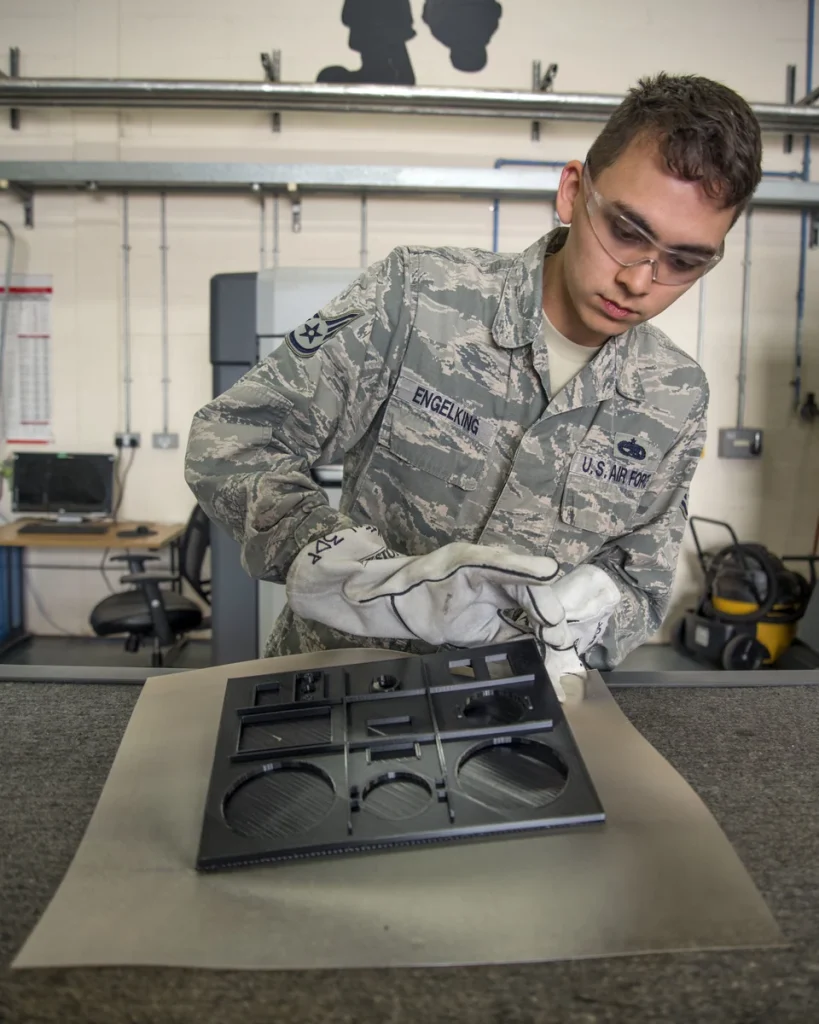
Impact resistance answers another question. The 2020 comparison used an Izod test, striking notched samples with a swinging hammer. ASA absorbed more impact energy than the tested PLA and PETG. That doesn’t establish impact resistance in every printing direction.
Stiffness means how much a part resists bending; failure strength is how much force it can take before giving way. Resistance to a sudden knock is different again. You might accept some bending in a protective cover but find the same movement unacceptable in a guide that must hold something straight. Choose for that job, rather than looking for one material to win every strength category.
For a fitted ASA assembly, print and check the important joint before committing to the whole batch. Leave enough room for the pieces to fit together, and check the actual printed dimensions. A smooth wall tells you little about whether a lid will close or a screw hole will line up after cooling.
I wouldn’t use the old hook results to declare every current spool weak, or assume a newer enclosed printer fixes everything. Different colors, settings and machines need their own checks. For parts whose failure would cause harm or damage, these examples aren’t enough to approve the design.
ASA can also be sanded or chemically smoothed. Prusa warns that smoothing rounds edges and removes small details. I’d avoid making that an automatic finishing step for closely fitting parts.
What You Get For Prusament ASA’s Price
Check the quantity before comparing spool prices. The current Prusament ASA Prusa Orange listing contains 800 g of filament and includes an NFC tag for storing material information. Older reviews describe 850 g spools. Use the mass on the product you’re ordering, rather than assuming every Prusament spool contains a kilogram.
Polymaker ASA is a useful alternative to compare if you already know you need ASA. It was previously called PolyLite ASA; Polymaker says the rename didn’t change the formula.
Its standard 1 kg option generally costs less per kilogram than Prusament’s 800 g option. Availability varies by color, so check the version you want. The lower price doesn’t establish better strength or printing reliability.
What might make Prusament worth paying more for is the information attached to your spool. Prusa lets you look up manufacturing measurements through its spool-check system, including diameter, length, weight and how round the filament is. That’s useful if you keep records for repeat workshop jobs or need to investigate a problem with a particular roll.
For this ASA listing, the stated diameter tolerance is ±0.04 mm: the filament can be up to 0.04 mm thicker or thinner than its nominal 1.75 mm diameter. Don’t substitute Prusament’s broader ±0.02 mm claim, which applies to most of its materials rather than every product. The spool measurements are more informative than judging how neatly the filament is wound.
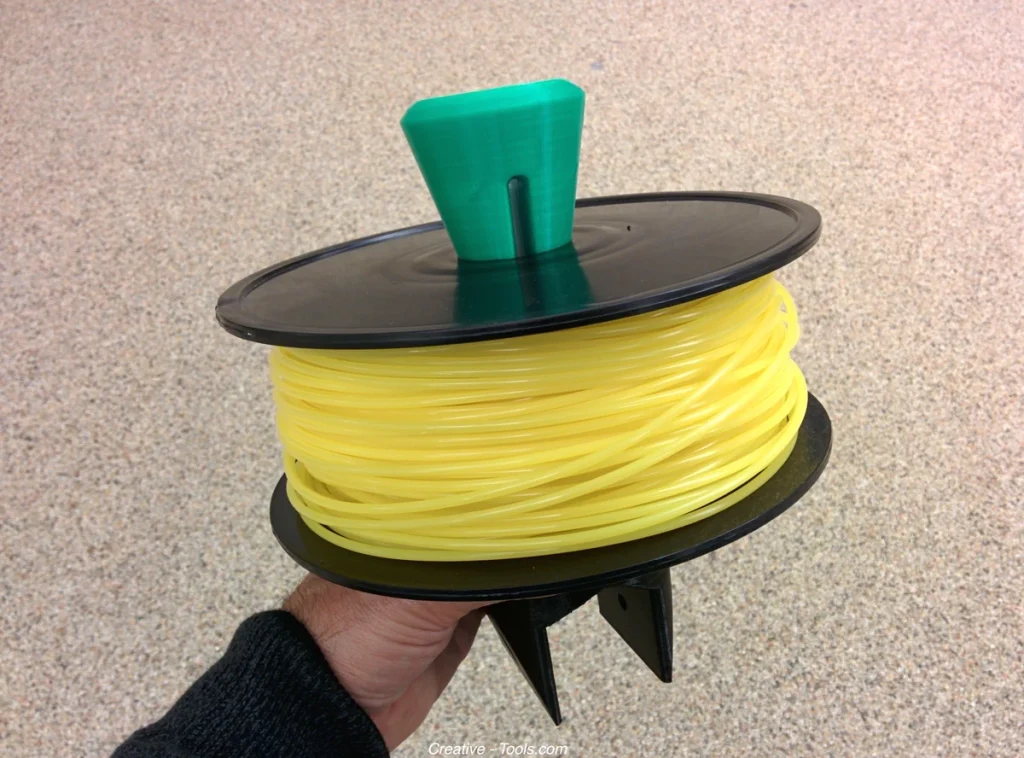
Still, manufacturing records don’t establish that you’ll get fewer failed prints than with another ASA. They don’t measure the strength of your finished part, either. I’d pay extra for access to those records if I expected to use them; I wouldn’t budget for savings from fewer failures without evidence from comparable repeat jobs.
The redesigned spool’s tag is called OpenPrintTag. It uses NFC, the short-range wireless technology that lets a compatible phone read it when held nearby, and its information can be rewritten. Prusa says you can read it with its mobile app without a cloud connection.
Treat that as a convenience, and check support before expecting your printer to recognize it automatically. It doesn’t change the material’s printing requirements.
Buy Prusament ASA if you need outdoor or heat-resistant parts, have a suitable printing area and value its documented settings and spool data. Skip it for ordinary indoor models, where PLA is simpler, or choose PETG for many everyday functional parts with less warping. If another ASA already works well for your jobs, I’d switch only if those records and conveniences would be useful to you.


