Prusament PETG Clear Review
Premium filament; Clear sits alongside ordinary colored Prusament PETG.
Our verdict
I’d choose Prusament PETG Clear for translucent covers and experimental light diffusers when I value spool manufacturing records and supported presets. I wouldn’t pay its premium solely expecting a clearer window: the finished view still needs a small print check.

Best atTranslucent covers, lightly loaded housings and light diffusers where a sharp view through the part is unnecessary.
Less suited toWindows that must show fine detail clearly from the first print.
The Key Specs
| Appearance | Expect translucencyCheck a small section at the intended wall thickness, orientation and lighting before printing the whole part. |
|---|---|
| Filament size | 1.75 mm PETGYour printer must accept this diameter and support PETG temperatures. |
| Nozzle / bed | 250°C ±10°C / 80°C ±10°CUse the matching Prusament PETG preset; these starting temperatures are not a verified transparency recipe. |
| Manufacturing checks | Stated ±0.02 mm diameter tolerance; per-spool measurementsYou can inspect production consistency, but these checks do not establish better optical clarity. |
| Build surface | Satin or textured Prusa sheet recommendedUse a glue-stick separation layer on Prusa smooth PEI; follow other plate makers’ PETG guidance. |
| Moisture handling | Prusa drying guidance: 55°C for six hoursUse temperature-controlled equipment and store dry afterward; check the spool design before heating. |
Which Spool Or Sample Should You Buy?
- 1 kg NFC spool
- Choose the full spool when you need filament and its spool together; scanning the NFC tag is optional.
- 900 g refill
- Choose it when you already have the redesigned compatible spool; it contains less material than the full 1 kg spool.
- 25 g sample
- Choose it for a small visibility trial if your slicer’s material estimate fits within the sample.
Allow For Drying And Build-Plate Care. Allow for suitable drying equipment and dry storage, plus filament for appearance trials. Prusa satin and textured sheets need isopropyl alcohol for cleaning; smooth PEI needs a glue-stick separation layer. A refill requires a compatible spool.
More Handling And Compatibility Details
| Nozzle / enclosure | Standard 0.4 mm brass nozzle recommended; an enclosure is not required for ordinary PETG printing. |
|---|---|
| Spool before drying | The redesigned NFC spool needs no extra preparation. Older black spools with cardboard centers need Prusa’s securing screw before drying; leave it fitted until empty. |
| NFC | Optional material-information scanning with a compatible phone and the Prusa app. |
| Walls and clarity | Choose enough perimeters for the job, then assess visibility; reducing walls solely for clarity can compromise the part. |
| Heat and outdoor use | General PETG properties do not establish a Clear part’s loaded service temperature, outdoor lifetime or suitability as a protective guard. |
I’d consider Prusament PETG Clear for a practical part that needs to let light through, if you’re happy with a cloudy view. I’d consider it for a translucent cover or light diffuser. I’d skip it for a window that must show small lettering clearly without experimenting first.
PETG is a plastic used in filament printers, which build objects from layers of melted plastic. Prusa sells this Clear variant as 1.75 mm filament, including a 1 kg NFC spool. Its NFC tag lets you read material information with a compatible phone and the Prusa app; scanning it is optional. The word “Clear” doesn’t guarantee a clear finished part.
How Much Can You See Through Prusament PETG Clear?
Think of the difference between a frosted bathroom window and a clear window. Both let light through. Only one lets you see detail easily. That’s the difference between translucent and transparent, and it’s the first decision to make before buying this spool.
Ordinary clear-filament prints can look cloudy because small gaps between the lines of plastic scatter light. The plastic may be clear, but the printed structure gets in the way. Internal fill, called infill in printing software, also matters: it’s the pattern of plastic inside a part. A hollow cover and a solid block aren’t equivalent tests of clarity.
One owner reported printing Prusament Clear boxes with a 0.4 mm nozzle and standard Prusament PETG settings. Walls measured at 0.84 and 1.18 mm showed visible blemishes, while a 0.44 mm wall printed in spiral vase mode looked cleaner. Vase mode makes one continuous outer wall.
The report doesn’t include controlled lighting or light-transmission measurements. It doesn’t tell you how thin your wall needs to be to see through it clearly. Don’t remove walls your part needs just to improve the view, or assume that 100% internal fill will solve cloudiness: gaps between lines still matter.
Print a small section with the intended wall thickness and the same orientation on the print bed. Check it under the lighting you’ll actually use, with the object or lettering at its intended distance behind the wall. Seeing a light turn on is a much easier requirement than reading a display through a cover.
Does Prusament Clear Suit The Part You Want To Print?
I’d put removable dust covers, lightly loaded housings and experimental light diffusers on the shortlist. These are jobs where a custom shape can matter more than a sharp view through the plastic. For a diffuser, check whether you like how the finished sample spreads the light before printing the whole thing.
Prusa describes its PETG as less brittle, more flexible and more heat resistant than PLA, another common printing plastic. Those properties make PETG worth considering for parts that get handled or flexed. They don’t tell you how much weight a particular Clear bracket can carry, or how long a thin clip will last.
For a stronger part, Prusa recommends adding perimeters—the lines that form its outer walls—because these walls provide much of a print’s strength. Internal fill can still help a part resist being compressed. Choose enough material for the job, then judge whether you can still see what you need to see.
General PETG heat resistance doesn’t tell you how hot your finished housing can get while still doing its job. A part near a heat source needs evidence for its actual temperature and load. The documentation also doesn’t tell you how long Clear will last outdoors or establish its suitability for a protective guard.
If your part is a room-temperature decoration with fine detail, PLA may be the easier choice. If you don’t need light to pass through, ordinary opaque PETG removes the need to tune transparency at all.
What To Check Before Printing Prusament Clear
Your printer needs to accept 1.75 mm filament and support PETG temperatures. The Clear product page recommends a standard 0.4 mm brass nozzle, a nozzle temperature of 250°C ±10°C and a bed temperature of 80°C ±10°C. An enclosure isn’t required for ordinary Prusament PETG printing.

In PrusaSlicer, the software that prepares models for printing, use a Prusament PETG preset matched to your printer and nozzle. If none is available, ask your printer maker for a suitable PETG starting profile: material settings can differ by printer.
Prusa’s general PETG help page gives different starting temperatures from the Clear listing. Use the matching preset rather than mixing numbers from different guides. These are ordinary printing settings, not a verified Clear transparency recipe.
The build plate—the surface your part prints on—deserves attention because PETG can stick too firmly. Prusa recommends satin or textured sheets. Clean these Prusa sheets with roughly 90% isopropyl alcohol while they’re cold, and let them cool before removing the print. Their surface texture also leaves a finish on the underside of the part.
If you use Prusa’s smooth PEI sheet, apply the recommended glue-stick separation layer first; it helps prevent the print from damaging the coating when removed. Follow the plate maker’s PETG instructions for other surfaces.
Moisture can cause bubbles, rough surfaces and stringing: thin threads left between parts of the print. Prusa’s drying guidance for PETG is six hours at 55°C. Use equipment that holds that temperature without exceeding it, and store the filament dry afterward.
Check the spool before drying. The redesigned NFC spool needs no extra preparation, but older black spools with cardboard centers can loosen above 45°C. Prusa specifies a screw securing the sides together before drying those spools; it must stay fitted until the spool is empty.
Cooling also involves a tradeoff. More cooling can help preserve detail and reduce oozing, while less cooling can improve bonding between layers. Keep the preset’s cooling settings for your first sample. Changing temperature, cooling and speed together makes it harder to tell which change helped.
Expect some setup work if appearance matters. A preset that produces a sound part doesn’t necessarily produce the view you want through it.
Is Prusament Clear Worth The Cost For Your Prints?
Prusa positions Prusament as a premium filament, with Clear priced alongside its ordinary colored PETG. The documented benefits include a stated diameter tolerance of ±0.02 mm and access to manufacturing measurements for each spool. You can check how closely the filament’s thickness stays within specification, rather than relying only on the label.
Those checks are useful, but they don’t establish better transparency, fewer failed prints or a cleaner finish than another clear PETG. I wouldn’t pay extra solely expecting a clearer window. The stronger reason to choose this spool is that you value its manufacturing records and supported printing presets.
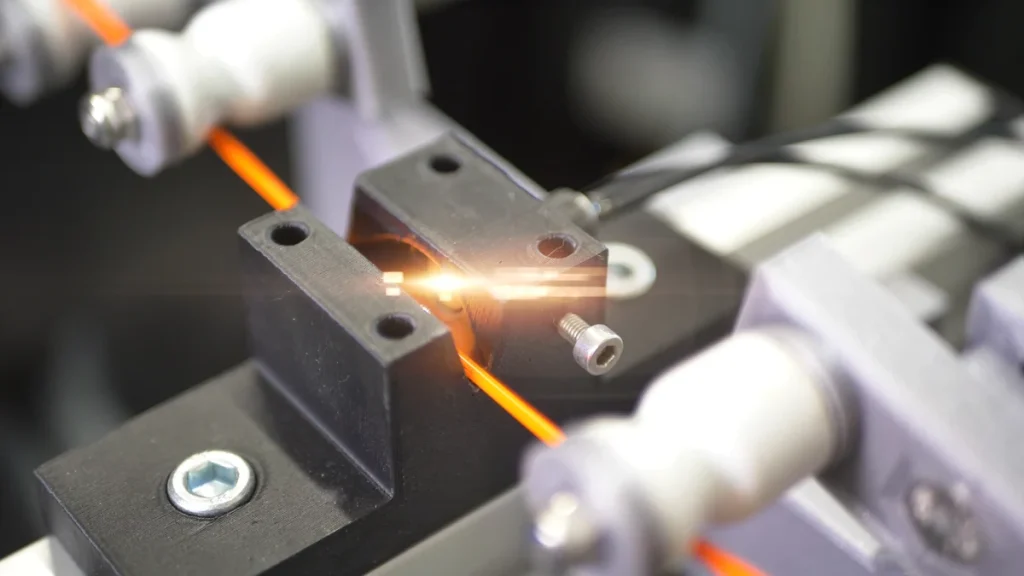
Check the packaging when comparing options. The 900 g refill contains less filament than the 1 kg full spool; Prusa recommends using it with the redesigned spool. A 25 g sample is also listed; it may be enough for a small visibility test if your printing software’s material estimate allows it.
Buy Prusament Clear if a translucent result suits your part and you’re willing to test its appearance. Skip it if sharp visibility is essential from the first print. For that job, design the printed frame around a separate clear panel with optical properties specified for your needs.


