Prusament PETG Review
Premium over budget PETG; Jessie costs less in the US comparison.
Our verdict
I’d choose Prusament PETG for practical parts when its spool records, color controls and documented profiles justify paying more. Allow for some flexibility, stringing and moisture management; I wouldn’t pay the premium expecting stronger parts or fewer failures by default.

Best atUseful household and workshop parts where some flex is acceptable and material traceability matters.
Less suited toTiny details, maximum indoor rigidity, or rough prototypes already served well by cheaper PETG.
The Key Specs
| Material / spool | Standard PETG · 1.75 mm · 1 kgUse a compatible heated-bed printer; a Prusa machine is not required. |
|---|---|
| Diameter control | Prusa guarantees ±0.02 mm; individual spool recordsCheck manufacturing variation by QR code or spool ID. This is not printed-part accuracy. |
| Print temperatures | 240–260°C nozzle · 70–90°C bedStart with the matching Prusament profile and check your printer’s temperature limits. |
| Build surface | Textured or satin sheet recommendedPETG can damage a surface through strong adhesion; smooth PEI needs the recommended release layer. |
| Part behavior | Some flexibility; less crisp tiny detail than PLAChoose by the part’s need to bend or stay rigid, rather than a generic strength claim. |
| Moisture handling | Sealed storage; Prusa drying guidance: 55°C for 6 hoursBudget for desiccant and suitable drying equipment if moisture affects print quality. |
Which Spool Or Refill Should You Buy?
- 1 kg spool in your chosen color
- I’d start here and print a small example of the intended part before buying several spools. Choose the new locking spool if you plan to use current refills.
- 900 g refill for the new locking spool
- Choose this when you already own a compatible spool. Compare cost per kilogram; old cardboard-core refills do not fit the new spool.
Budget For Storage And Bed Preparation. Allow for sealed storage, desiccant and possible filament drying. A suitable print sheet or the recommended glue-stick release layer may be needed. Include a compatible reusable spool when buying refills, and compare shipping totals.
Also consider: Jessie Premium PETG. A lower-cost choice for US buyers. Try it on your intended part before assuming it matches Prusament’s finish or mechanical behavior.
More Material And Handling Details
| Review scope | Standard Prusament PETG; V0, Ultraglow and clear variants are outside this verdict. |
|---|---|
| Nozzle / enclosure | A normal brass nozzle is suitable; Prusa recommends 0.4 mm. An enclosure is not required for standard PETG. |
| NFC spool | New locking spools carry rewritable OpenPrintTag. Automatic recognition requires compatible hardware and software; printing does not require the tag. |
| Older spool drying | Black spools with cardboard centers need Prusa’s screw reinforcement before drying above 45°C. New locking spools do not need it. |
| Heat and sustained loads | The listed 68°C heat-deflection temperature is a test result, not a continuous-use rating. This review does not establish suitability for hot, constantly loaded or safety-critical parts. |
I’d consider Prusament PETG if you print useful household or workshop parts and want a spool with accessible manufacturing records and well-documented settings. I’d pay extra for those conveniences, especially on a Prusa printer. I wouldn’t pay extra expecting every part to be stronger or every print to succeed.
Expect some PETG drawbacks: thin strings of plastic between features, less crisp tiny details than PLA filament, and a need to manage moisture and how firmly prints stick to the bed. This review covers standard Prusament PETG. The V0, Ultraglow and clear variants aren’t part of the verdict.
What You Get With A Prusament PETG Spool
The standard spool holds 1kg of 1.75mm filament. Prusa guarantees a diameter tolerance of ±0.02mm, meaning the strand should stay between 1.73mm and 1.77mm thick. That describes the filament going into your printer; it doesn’t promise that a printed hole or bracket will be accurate to 0.02mm.
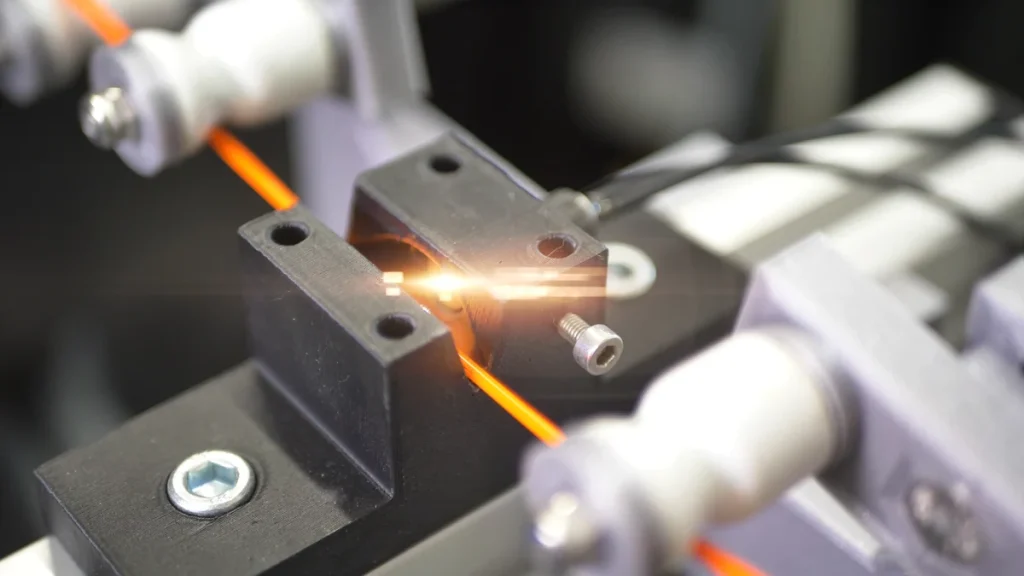
Prusa says it measures filament thickness in two directions during production and saves the results. That also checks how round the strand is. Scan the spool’s QR code or enter its ID to inspect the production record, including diameter variation, weight and length. These are measurements published by the manufacturer, rather than an independent check of every spool.
That information is useful when you’re trying to make repeatable parts. If a print changes unexpectedly, having a record for the material gives you something concrete to check.
Prusa also documents color checks during manufacturing. If you’re making several visible pieces for one project, that’s a more relevant benefit than it would be for a hidden spacer.
There’s a limit to what those records establish. Tight filament dimensions don’t prove that Prusament produces fewer failed prints than another properly made PETG. Nor do they establish identical mechanical performance across colors and batches. I’d treat the quality controls as a reason to choose the brand, without turning them into a promise about your finished part.
Current NFC-labeled spools use the design introduced in October 2025, with a plastic center and sides that unlock for refilling. They carry OpenPrintTag, a rewritable tag that stores material information. NFC is the short-range wireless technology that lets a compatible phone read the tag with the Prusa mobile app.
Automatic recognition by a printer requires compatible hardware and software. You can still print the filament without using the tag.
If you plan to buy refills later, choose the new locking spool. The new refills contain 900g, and Prusa recommends pairing them with these spools. Old refills with cardboard centers don’t fit the new spools.
How Prusament PETG Prints And What To Adjust
In a reported 2020 test, Jet Black printed well on an unmodified Prusa MK3S with default profiles, a 250°C nozzle and 30–50% cooling. Prints were glossy with some strings; small tips and unsupported spans looked less clean than PLA’s. Results on other printers may differ.
For a first spool, start with the current Prusament PETG profile for your printer and nozzle. A profile is a saved group of printing settings. Prusa’s product guidance specifies a 240–260°C nozzle and a 70–90°C bed. Its generic PETG guide gives somewhat different temperatures, so use the guidance for Prusament and your machine rather than mixing numbers from different profiles.
You don’t need a Prusa printer. You need a machine that accepts 1.75mm filament, supports the required temperatures and has a suitable heated print surface. Check your printer’s limits before copying the settings, particularly if you’ve previously printed only PLA.
Standard PETG doesn’t require an enclosure to keep a print from warping as it cools. A normal brass nozzle is suitable; Prusa recommends a 0.4mm opening.
Bed choice matters because PETG can stick firmly enough to damage the surface when you remove the part. Prusa recommends its textured or satin sheets for PETG.
If you use smooth PEI, the plastic coating used on many print beds, apply the recommended glue-stick layer before printing. The glue forms a barrier between the PETG and PEI, helping the part release without peeling off the bed’s coating. For another manufacturer’s plate, follow that plate’s PETG instructions.
Cooling involves a compromise. More airflow helps small features hold their shape and improves bridges—the strands printed across gaps without support underneath. Too much cooling can weaken the bonds between layers. Start with the profile’s fan settings before changing them to chase either appearance or strength.
Store the spool in a sealed bag or box with desiccant, the moisture-absorbing packets used for dry storage. If moisture is affecting print quality, Prusa recommends drying PETG at 55°C for six hours. Use equipment that can hold that temperature.
Older black spools with cardboard centers need Prusa’s screw reinforcement before drying above 45°C to keep the spool from coming apart. The new locking spools don’t need that preparation.
Strings can form when plastic keeps oozing from the nozzle as it moves between features. Retraction briefly pulls filament back during those moves to limit that flow.
If a dry spool still leaves strings, adjust nozzle temperature and retraction one at a time. A lower nozzle temperature can reduce stringing, but stay within the recommended range. Start from your printer’s profile and check the result after each change so you know what helped.
For speed, keep the profile’s maximum volumetric speed initially. This limits how much plastic the printer tries to melt each second. Thicker layers and wider lines need more plastic at the same movement speed.
There’s no established advantage for standard Prusament PETG over high-flow PETG when both are printed at the same speed. A profile with faster settings isn’t proof of stronger or cleaner parts.
How Prusament PETG Handles Bending, Impacts And Heat
Prusament PETG makes sense when some bending is acceptable and you want a part that can give under pressure. But think about what failure means for your project. A clip that bends during installation and a bracket that must keep two parts aligned have different needs. A bracket can stop doing its job before it breaks.
Stiffness describes how much a part resists bending. Strength describes how much stress it can withstand before yielding or breaking. Stretching before breaking is another property, and resistance to a sudden hit is another again. “Strong filament” doesn’t answer all four questions.
The same reported comparison found PETG less stiff than Prusament PLA. Under slowly increasing load, flat PETG hooks stretched instead of snapping, but carried less peak load than PLA. Upright PETG hooks failed much earlier than flat ones.
Where possible, position your print so the load won’t pull apart the layers of plastic stacked to build it. Orientation matters, and the test hooks’ results don’t establish how much weight your own parts can hold.
In a separate impact test using samples with a notch cut into them, PETG outperformed PLA but trailed ASA.
Prusa’s own impact results show why the shape of the test piece matters. Samples without a notch didn’t break within the test equipment’s capacity, while notched samples did. A notch concentrates stress in one place. That helps explain why a part with a sharp cutout may handle a knock differently from one without it.
Prusa also used a different impact test method, so its numbers can’t be compared directly with the reported results above.
Heat needs similar care. Prusa lists a heat-deflection temperature of 68°C, about 154°F, under its stated ISO 75 test conditions. That measures bending under a specified load as temperature rises; it isn’t a continuous-use temperature rating for every print.
The reported 2020 comparison’s oven experiment showed sagging around 80°C. The load and test setup affect the result, so this doesn’t establish 80°C as a suitable working temperature.
Long-term creep—gradual bending under a constant load—remains a separate question. Neither a short breaking test nor a warming experiment establishes how your bracket will behave after months of holding something. If a part must stay straight while holding weight or getting hot, look for results that match that use.
Prusa describes PETG as suitable for outdoor use, but that doesn’t establish years of durability for your particular color and part. If prolonged sun exposure is the main requirement, consider ASA, which Prusa specifically identifies for UV resistance. It needs more demanding printing conditions, including an enclosure for large parts and appropriate ventilation.
For a small indoor part where crisp detail and rigidity matter most, PLA may be the better choice.
Is Prusament PETG Worth Paying More For?
I’d pay more for Prusament when its manufacturing records, color controls and available profiles are useful to the project. For example, keeping the spool ID and settings with a design makes sense if you expect to print replacements later. You have a documented starting point when it’s time to make another one.
The case is weaker if you’re printing rough prototypes and your existing PETG already gives you acceptable parts. Switching brands has to solve a problem you actually have. The evidence doesn’t establish that Prusament’s premium pays for itself through less waste, longer-lasting parts or fewer failed overnight prints.
Jessie Premium PETG is a cheaper alternative to consider for US buyers. Its black 1kg spool is listed below Prusament Jet Black’s 1kg spool at the same US seller. That makes it a useful cost comparison with equal amounts of filament and both spools included.
That price comparison doesn’t establish that Jessie matches Prusament’s finish or mechanical behavior. Try it before assuming it will behave the same way in your parts.
Compare the total for the quantity you actually need. Prusament is available through US inventory as well as Prusa’s main store, so you don’t have to assume an overseas order.
Shipping charges and free-shipping thresholds can change which order costs less. A cheaper spool from one store can be a worse deal after shipping, while adding unwanted filament to qualify for free shipping still increases what you spend.
Refills need another adjustment. A 900g refill contains less filament than a full 1kg spool, so compare cost per kilogram and include a compatible reusable spool if you don’t own one.
For your first PETG purchase, I’d start with one spool in the color you need. Print a small example of the actual part before ordering several more. That lets you decide whether the finish, amount of cleanup and part behavior suit your work.
Should You Buy Prusament PETG For Your Parts?
Buy Prusament PETG if you want to make practical parts, can accommodate some flexibility, and value being able to look up how your spool was made. It’s a reasonable first PETG on a compatible printer, especially when you have a matching Prusa profile and an appropriate print sheet. Allow for dry storage, possible drying and a little tuning.
Choose based on the requirement that matters most. If you mainly want cheaper everyday PETG, Jessie is worth considering. If the part needs sharp miniature details or must resist bending indoors, look at PLA. If prolonged outdoor exposure drives the choice, look more closely at ASA and what your printer needs to use it.
For a hot, constantly loaded or safety-critical part, this review doesn’t establish suitability. Find material and design evidence that covers the intended conditions before committing to a spool.
If you already have cheaper PETG that meets your needs, there’s no demonstrated reason here to replace it.


