Rust-Oleum Painter’s Touch 2X Ultra Cover Review
Not necessarily less expensive overall: primer, overspray and extra coats affect project cost.
Our verdict
A useful choice for small decorative repaints and awkward shapes that are hard to brush. Choose the exact color and sheen for a supported, properly prepared surface, and leave time for drying and the recoat window.
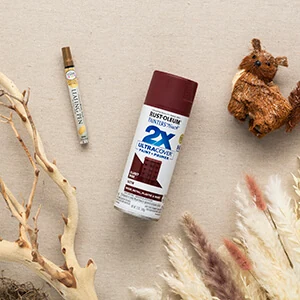
Best atSmall decorative projects where aerosol application helps reach edges, curves and recesses.
Less suited toHeavily used tabletops, difficult plastics and projects that must go straight back into service.
The Key Specs
| Formulation | Solvent-based enamelGloss uses acrylic-modified alkyd; satin lists that resin plus alkyd. These sprays are different from water-based craft acrylics. |
|---|---|
| Surface fit | Wood, metal, wicker and most plasticsTest a hidden spot; some polyethylene items may resist adhesion. |
| Coverage reference | 8–12 sq ft per 12 oz can for gloss and satinAllows 15% material loss at the recommended film thickness; extra coats and overspray affect the project total. |
| Preparation | Separate primer especially recommended on bare wood and metalPaint-and-primer labeling does not remove the need for cleaning, sanding or recommended primer. |
| Recoating | Within one hour or after 48 hoursFor documented gloss, satin and Flat Black, at 70°F and 50% humidity; being dry at 24 hours does not reopen this window. |
| Plastic adhesion | Five to seven days for maximum adhesion and durabilityAllow more than the touch-dry time before judging how well the coating holds. |
Which Color And Finish Should You Buy?
- Gloss or high gloss
- Choose for shine; confirm that your desired color comes in that finish.
- Satin or semi-gloss
- Choose the desired sheen deliberately; satin black gives a softer sheen than gloss black.
- Flat or ultra matte
- Choose for less reflection; black primer is a separate purchase.
Budget For Surface Preparation And Spraying. Allow for recommended primer, sanding and cleaning supplies, masking and overspray protection, gloves and eye protection, and enough paint for light coats. Follow the can’s respiratory-protection instructions. Buy a compatible clear finish only if the project needs it.
More Formulation And Handling Details
| Drying milestones | Documented gloss, satin and Flat Black: touch-dry in 20 minutes, handle in one hour, fully dry in 24 hours at 70°F and 50% humidity; cooler conditions need longer. |
|---|---|
| Spraying conditions | 50–90°F and below 65% relative humidity; use outdoors or in a well-ventilated work area, away from ignition sources. |
| Technique | Hold 10–16 inches away and apply at least two light coats a few minutes apart. |
| Use limits | Gloss and satin exclude galvanized steel and surfaces that may exceed 200°F. Outdoor suitability does not establish immersion suitability; keep colored 2X off food-contact surfaces. |
| Storage and tip care | Keep away from heat, sunlight and ignition sources, never above 120°F. Wipe the tip before storage; remove a clogged tip and rinse with mineral spirits as directed. |
Rust-Oleum Painter’s Touch 2X Ultra Cover is worth considering for a picture frame, small furniture piece or decorative repaint when you want solid color without brush marks. Its appeal is straightforward: plenty of colors and finishes, an aerosol that reaches awkward shapes, and compatibility with several common materials. The catch is that easy spraying doesn’t remove the need for preparation or careful timing.
This review covers the US colored aerosol paints. Separate 2X primers and clear finishes have different jobs. I’d choose the colored paint for a small, properly prepared project; I’d be more cautious with a heavily used tabletop, difficult plastic or anything you need to put straight back into service.
Which Painter’s Touch 2X Can Fits Your Project?
Start with the full product name, color and finish on the can. Painter’s Touch 2X comes in gloss, high gloss, semi-gloss, satin, flat and ultra matte versions, but that doesn’t mean every color comes in every finish. Black gloss paint, flat black paint and black primer aren’t interchangeable purchases.
The gloss aerosol uses an acrylic-modified alkyd resin: a solvent-based enamel, rather than the water-based acrylic you might associate with craft paint. The satin technical sheet lists acrylic-modified alkyd and alkyd resins. Don’t transfer cleanup or drying instructions from Painter’s Touch brush-on paint to these sprays.
The colored sprays are intended for wood, metal, most plastics, wicker and other listed surfaces. “Most plastics” matters: Rust-Oleum specifically warns that paint may not stick well to some polyethylene items, including storage containers. Test a hidden spot before committing to the whole object.
The paint-and-primer label doesn’t promise that you can skip separate primer. Rust-Oleum especially recommends its 2X primer on bare wood and metal to help the paint stick and hide the surface underneath. Include that step in your budget where it’s recommended.
A separate primer prepares the surface for paint. Gloss Clear adds a transparent finish; it won’t cover an unwanted color. Choose the sheen you want in the colored paint first, then decide whether your project actually needs a compatible clear topcoat.
What Finish and Coverage Can You Expect From 2X?
Expect to build the color with light coats. The “2X” claim compares coverage with similar matching colors of other Rust-Oleum general-purpose sprays. Rust-Oleum describes twice the solids per container compared with products such as Quick Color and Touch ’n Tone. It isn’t a promise of twice the coverage of every competing brand, or a finished job in one coat.
For the documented gloss and satin sprays, Rust-Oleum gives practical coverage of 8–12 square feet per 12-ounce can at the recommended dry coating thickness, allowing for 15% material loss. That’s a planning reference, not a guaranteed finished furniture area. It doesn’t specify how many passes your particular color change will need.
Measure every face you intend to paint, including legs, edges and backs. A flat panel and an open wicker chair won’t use paint equally efficiently. Absorbent material, overspray and additional coats can increase consumption. Don’t turn someone else’s “two cans did the job” into your shopping list without knowing their area, surface preparation and coat count.

One reported hands-on comparison gives a useful, limited picture of the finish. Dark-green gloss 2X sprayed well and looked glossier than several other gloss paints on an old wooden coffee table. But the table’s existing finish wasn’t scuff-sanded before painting. The unprimed 2X section scratched easily after seven days, except where wear had already exposed bare wood. After 46 days, it still scratched more than the primed sections.
That test used repeated applications during one session, with a further application after 20 minutes; temperature and humidity weren’t reported. It supports taking preparation seriously, but it doesn’t establish a coverage winner or predict durability on correctly prepared metal or plastic.
For black, pick the finish deliberately: gloss for shine, satin for a softer sheen, or flat/ultra matte for less reflection. The dark-green result doesn’t tell you how evenly black covers the old color. Nor should you rely on a cap as an exact color match. Spray a sample using your intended primer and coats, let it dry, and check it beside the colors it needs to match. A fresh color alone won’t repair scratches or peeling paint underneath.
Preparing and Spraying Painter’s Touch 2X
Clean off grease, dirt and other contamination, rinse, and let the surface dry thoroughly. Remove loose paint and rust, then sand smooth or glossy finishes so the new coating can grip. If old paint may contain lead, establish how to handle it safely before sanding; ordinary preparation can release hazardous dust.
Prime where recommended, following that primer’s own topcoat timing. Test the planned paint layers in a hidden area, especially over an unknown old coating. If you’re painting something purple with Gloss Grape, follow these same preparation steps.
Use the spray at 50–90°F and below 65% relative humidity, avoiding windy or dusty conditions. Cover nearby surfaces against overspray. Shake for one minute after the mixing ball starts rattling and keep shaking periodically. Hold the can 10–16 inches away, move steadily, overlap each pass slightly and keep the distance consistent. Apply at least two light coats a few minutes apart. Trying to hide everything with one wet coat invites runs.
“Indoor/outdoor” describes where the finished object can be used. It doesn’t make an occupied room a suitable spray area. Use outdoors or a genuinely well-ventilated work area, with fresh air during spraying and drying. Keep away from flames, pilot lights, sparks and ignition sources. A household fan isn’t a substitute for ventilation equipment rated for flammable vapors.
Wear protective gloves and eye protection, and follow the can’s respiratory-protection instructions. If you develop eye watering, headache or dizziness, leave for fresh air.
Wipe the tip before storing. For a clogged tip, the instructions allow removing it and rinsing it with mineral spirits; don’t push a pin into the valve stem. Store unused cans away from heat, sunlight and ignition sources, out of children’s reach, and never above 120°F. Don’t puncture or burn them. Purple cans need the same care.
When Can You Recoat and Handle Painter’s Touch 2X?
The documented gloss and satin paints, plus the Flat Black label, give these times at 70°F and 50% relative humidity:
- Touch-dry: 20 minutes.
- Ready to handle: one hour.
- Fully dry: 24 hours.
- Another color coat or compatible clear coat: within one hour or after 48 hours.
- Maximum adhesion and durability on plastic: five to seven days.
Those milestones answer different questions. Being able to touch the paint doesn’t mean you should stack painted pieces or start using the furniture. And “fully dry in 24 hours” doesn’t open the recoat window at 24 hours. If you miss the first-hour window, plan to wait past 48 hours.

Cooler conditions need more drying time. If the coating remains tacky, don’t cover the problem with another coat. Check the application conditions, coat thickness and timing against your can’s directions. Rust-Oleum’s own guidance stresses light coats and the recoat window to prevent wrinkling; scattered complaints don’t establish a recurring product defect.
Clear spray needs extra care. Its separate instructions say a second coat can go on anytime, but also give a within-30-minutes-or-after-48-hours rule for a new finish. They don’t clearly explain that distinction. Don’t treat “anytime” as permission to clear-coat fresh colored paint whenever convenient.
For a compatible clear over a fresh colored finish, waiting past 48 hours fits both documents’ delayed-coat windows, provided the paint has dried properly. For a same-session job or additional clear coats, check both exact labels; if their wording conflicts, get Rust-Oleum’s confirmation for the products you have.
Where Painter’s Touch 2X Needs Closer Checking
Outdoor suitability doesn’t make 2X a waterproofing system. It’s reasonable to consider it for outdoor decor on a supported surface, but don’t use that as approval for constant water contact or immersion. A planter’s outside and the inside of a fountain are different jobs. Choose an explicitly suitable coating for submerged surfaces.
Plastic is another place to slow down. A successful color change doesn’t prove the paint will stay attached when the object bends or gets handled. Respect the polyethylene warning and the five-to-seven-day adhesion period. No useful universal lifespan follows from the indoor/outdoor label, and the clear spray’s UV-resistance claim doesn’t establish how long gloss will last outdoors.
The colored gloss and satin instructions exclude galvanized steel and objects whose surface may exceed 200°F. That rules out treating this as a general solution for hot equipment. Don’t assume an ordinary primer overrides a stated exclusion.
For a car, being suitable for metal doesn’t mean the paint will work over the car’s existing finish or withstand road use. I wouldn’t choose colored Painter’s Touch 2X for a whole-car refinish, or its Gloss Clear to restore a car’s finish without confirmation from Rust-Oleum. Automotive Acrylic Enamel 2X is a separate line; choose an automotive coating system matched to the actual repair.
Keep colored 2X and Gloss Clear off food-contact surfaces. Rust-Oleum’s support guidance says they aren’t food-grade coatings. Letting them dry longer doesn’t turn a painted serving surface into an approved place for food.

Is Painter’s Touch 2X Worth Choosing?
Choose Painter’s Touch 2X for small decorative jobs when its exact color and sheen suit you, the surface is supported, and you can prepare it properly. The convenience is strongest on shapes that would be awkward to brush. Budget for primer, masking supplies and enough paint to build an even finish; “2X” alone doesn’t establish a cheaper completed project.
For broad, flat furniture surfaces where controlling overspray is inconvenient, Painter’s Touch Ultra Cover brush-on paint is a useful alternative. Its nonmetallic versions are water-based and the tools clean up with soap and water, though preparation and ventilation still matter.
The aerosol’s main compromise is the gap between quick application and a project that’s ready for use. If your deadline leaves no room for drying, testing or a missed recoat window, choose another approach.


