Siraya Tech Fast Review
Less than Fast Tough for equivalent Grey bottles in the US range.
Our verdict
I’d choose regular Fast Grey for miniatures I plan to paint and display. It costs less than Fast Tough, but thin weapons need careful handling and support marks can take work to finish.

Best atMiniatures and display figures that you plan to prime and paint.
Less suited toGaming pieces that travel frequently or have delicate parts exposed to knocks.
The Key Specs
| Reviewed material | Regular Fast ABS-Like, primarily GreyTough and Mecha are separate formulas; their properties do not carry over. |
|---|---|
| Surface finish | Grey can look shiny and partly translucent in thin areasJudge the cleaned, cured model and use a light coat of primer before painting. |
| Durability | Model-making resin, not a tough or engineering gradeProtect thin weapons and protruding details during handling and transport. |
| Printer fit | Primarily MSLA/LCD; DLP and laser SLA require an FEP/nFEP vatCheck tank material and third-party resin support, then calibrate a matching profile. |
| Washing | 95% ethanol or IPA; not water-washableAllow for solvent cleaning, careful support removal and complete drying before curing. |
Which Fast Resin Should You Choose?
- Fast ABS-Like Grey
- My starting choice for painted display miniatures. Try a small bottle and finish one model through primer before buying more.
- Fast Navy Grey
- Choose the matte appearance for unpainted models; Siraya specifies about 20% longer exposure and warns that it settles faster.
- Fast Tough
- Consider this separate, more expensive formula when resistance to handling damage matters more.
- Fast Mecha
- Consider this separate formula for model joints and other moving surfaces where wear matters.
Budget For Cleaning And Finishing. Allow for cleaning alcohol, suitable gloves, eye protection, ventilation and contaminated-waste handling. Finishing also needs a soft-bristle brush, support-cutting tools, UV curing equipment, sandpaper and primer; some support pits may need filler.
Handling, Storage And Compatibility
| Printing temperature | Siraya recommends above 20°C / 68°F. |
|---|---|
| Mixing | Mix the bottle thoroughly and stir resin that has been sitting in the vat. |
| Starting supports | Siraya suggests Chitubox Medium for small prints and Heavy for large prints. |
| Post-cure guidance | For regular Fast, Siraya specifies 395–405 nm UV light for 1–2 minutes after complete drying; lamp conditions still matter. |
| Storage | Keep the bottle away from direct light and extreme temperatures. |
I’d consider Siraya Tech Fast ABS-Like if you want to print miniatures, paint them and put them on display. Grey can produce attractive models, and Siraya provides useful setup guidance.
The main catch is that a good-looking print isn’t necessarily a miniature you can knock around without breaking it. Thin weapons deserve particular care, and removing supports can take patience.
I’d choose base Fast for display figures before choosing it for an army that travels every week. Most of the observations below concern Grey; Navy Grey, Fast Tough and Mecha need their own settings or expectations.
Which Siraya Tech Fast Bottle To Choose
Look for Fast ABS-Like, with Grey selected. Base Fast remains in Siraya’s current range alongside Fast Tough and Fast Mecha. The shared Fast name can make shopping confusing, especially when product descriptions discuss several formulas together.
“ABS-like” refers to ABS, a plastic used for molded parts. Fast is a light-cured resin, so the label doesn’t guarantee the same flexibility or resistance to knocks as a molded ABS part.
Fast Tough is a separate formula designed for greater impact resistance. Mecha targets wear where moving surfaces rub together, such as model joints. Those properties don’t automatically belong to regular Fast.
Even the base colors aren’t interchangeable. Navy Grey has a matte finish, settles faster and needs about 20% longer light exposure per layer than regular Fast, according to Siraya. Choose it for that finish, but don’t assume Grey’s printing settings will work unchanged.
Fast Grey’s Detail Before And After Primer
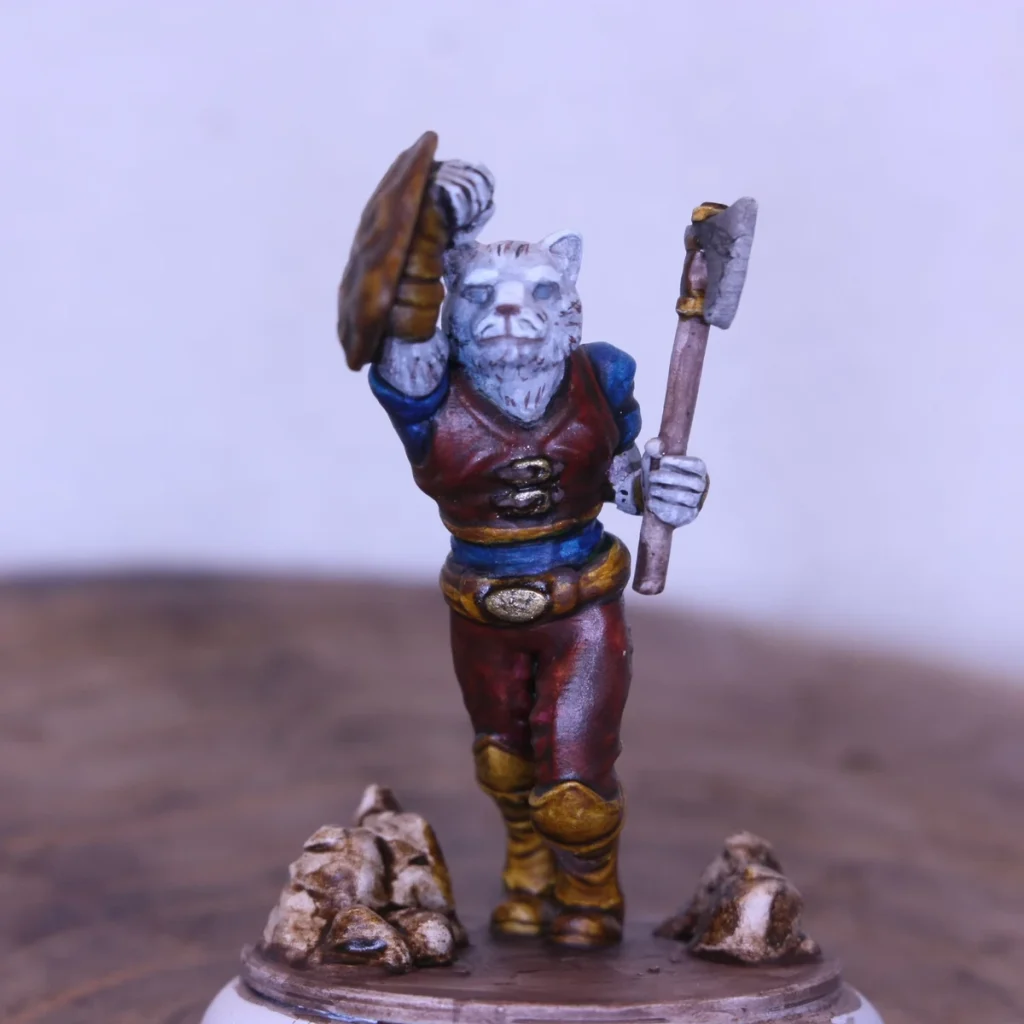
Fast Grey can look shiny rather than matte. That matters when you’re judging a tiny face or the folds in a cloak: reflections can make features harder to see even when the printer has reproduced them. Thin areas can also let some light through, making details harder to judge.
One owner comparison on a Phrozen Sonic Mini 4K described Fast Grey as lighter and shinier than Elegoo ABS-like Grey. Both used 0.05 mm layers, but exposure and lifting settings differed substantially.
The owner liked both results and expected primer to make them harder to distinguish. That was an expectation, not a documented result after priming, and it doesn’t establish equal detail or a speed advantage.
In a separate Grey trial on a Qidi printer converted to a monochrome screen, printed model parts reportedly fitted together without sanding the joints. Support marks still needed attention. That’s encouraging for display models, though it doesn’t prove every small feature prints accurately on another machine.
For your own miniature, judge the cleaned, cured surface first, then inspect it again under a thin coat of primer. Primer gives paint a suitable base and helps you spot marks that need work. Keep it light: a thick coat can fill fine recesses. It won’t restore a feature that failed to print.
Grey therefore makes sense if you’re painting anyway. If you want an attractive unpainted model, Navy Grey’s matte appearance may matter more to you than it would beneath paint.
How Carefully You Need To Handle Fast Miniatures
Treat base Fast as a model-making resin. Siraya markets it as non-brittle and capable of surviving accidental falls, but its own guide says it isn’t a tough or engineering resin. Surviving one knock doesn’t tell you whether a thin sword will hold up to regular use.
The Grey trial on the modified Qidi reported that a printed head survived a falling 500 g weight from 1.8 m. The workflow included a ten-minute post-cure, without enough lamp information to reproduce the result. A compact head surviving that incident tells you little about a spear, ankle or outstretched finger.
One owner reported Fast Grey details breaking after drops onto a hard floor. That doesn’t establish a failure rate: cure conditions, drop heights and dimensions weren’t controlled. It does give a practical reason not to interpret “non-brittle” as “unbreakable.”
For display figures, handling them by the base and protecting protruding parts is a sensible tradeoff. For gaming pieces that get packed, unpacked and passed around, I’d consider Fast Tough first. Siraya designs it for greater impact resistance, although that still isn’t a guarantee for every miniature.
Adding a flexible resin such as Tenacious is another possibility Siraya supports. It also means measuring a mixture and calibrating it. If you’re new to this, start with a single formula rather than making blending your first troubleshooting job.
Getting Fast To Print On Your Machine
Fast is designed primarily for MSLA/LCD printers, which use a screen to shape the light that hardens each layer. Siraya also lists projector-based DLP and laser SLA printers as compatible, provided the resin tank uses FEP or nFEP release film.
This thin plastic sheet lets each hardened layer peel away from the tank bottom. Check both the tank material and the printer’s rules for third-party resin before buying; the light wavelength alone doesn’t settle compatibility.
Siraya’s profile download page covers many Elegoo, Anycubic, Phrozen and other printers. A profile is a saved group of printing settings. Match the printer, resin color and slicer—the software that prepares models for printing—then check the layer height before importing it.
Start with the supplied layer height and print a small calibration model to check the settings before printing a full batch. Layer exposure is how long the printer shines light through each layer. Too little can leave features or supports only partly formed; reducing it simply to save time can spoil the print.
In the modified-Qidi trial, the tester tried progressively shorter exposures but settled on 1.5 seconds after results got worse at shorter settings. That number belongs to that setup.
Siraya recommends printing above 20°C/68°F, mixing the bottle thoroughly and stirring resin that has been sitting in the vat, or resin tank.
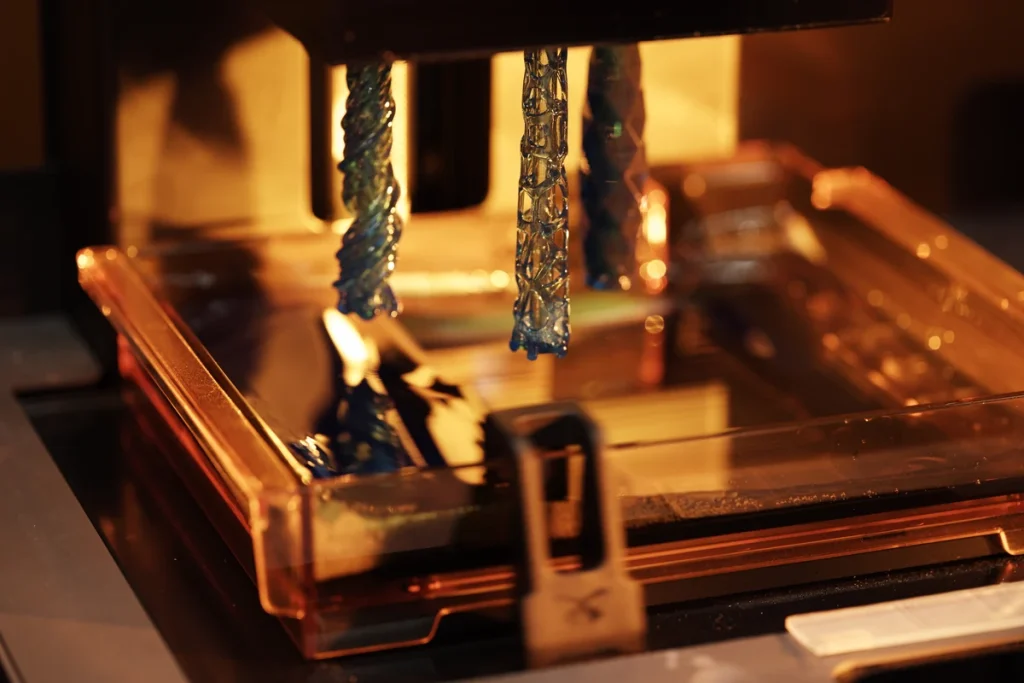
Its support starting points are Chitubox’s medium preset for small prints and heavy for large ones. Supports are the temporary branches holding your model during printing; they need to hold without making removal unnecessarily destructive.
If you switch to thinner layers, recalibrate. Don’t assume a successful 0.05 mm setup proves a 0.02 mm one. And don’t buy on the name Fast alone: layer count, lifting movements and pauses all contribute to the time before a print finishes.
Cleaning And Curing Fast Before Painting
Fast still needs a workspace equipped for handling liquid resin and cleaning solvents. Wear eye protection against splashes and gloves suitable for both liquid resin and your cleaning solvent, and provide ventilation during printing, washing and curing. Low odor wouldn’t remove those requirements. Keep contaminated liquid out of drains and follow local waste-disposal guidance.
Let excess resin drain back into the vat before washing. Easy runoff is useful, but it doesn’t tell you how easily supports will come off. One Fast Grey owner specifically reported difficult support removal; the modified-Qidi trial also needed support marks sanded away. Neither supports a promise of effortless cleanup.
For regular Fast, Siraya specifies 95% ethanol or isopropyl alcohol (IPA), with a soft-bristle brush and about four minutes of cleaning. Base Fast isn’t water-washable. Work gently around delicate details, and don’t confuse a permanent sheen with leftover liquid resin.
After washing, cut awkward support connections individually instead of wrenching the whole cluster away from a thin limb. Removing supports before the final cure is one approach used in the Grey trial; it isn’t a guarantee of mark-free removal.
Let the model dry completely after washing. Siraya says to wash and dry again if it remains sticky, then post-cure with 395–405 nm UV light for one to two minutes.
That’s the manufacturer’s guide, not proof that every lamp delivers the same cure. Ensure the light reaches the surfaces, and don’t borrow an unrelated resin’s timing. This final cure is separate from the layer exposures inside the printer.
After curing, check the support attachment points: raised nubs may need careful sanding, while pits may need filling before primer. Using wet sandpaper helps reduce dust; collect the residue for proper disposal.
Store the bottle away from direct light and extreme temperatures.
When Siraya Tech Fast Is Worth Choosing
Base Fast is worth considering when painting and displaying models is your main aim, your printer has suitable settings, and you’re prepared to clean up support marks. Buy a small bottle first, print one of the miniatures you actually want to make, and finish it all the way through primer. That will tell you more about whether it suits your hobby than a successful calibration plate alone.
For equivalent 1 kg Grey bottles in Siraya’s US range, regular Fast costs less than Fast Tough. Paying more for Tough makes more sense when handling damage is your main concern; it doesn’t automatically buy a better painted finish or less sanding.
If alcohol washing is the obstacle, consider a water-washable resin category instead, while keeping the protective equipment and waste handling. If frequent drops are the obstacle, prioritize documented thin-part durability.


