SUNLU PETG Review
Worth a trial when it costs less than the PETG you already print successfully.
Our verdict
I’d try one spool of regular SUNLU PETG for organizers, covers and small hobby parts if you’re willing to dry it and tune the settings. I would avoid it when matching opacity, an even finish or documented performance under demanding loads is essential.

Best atEveryday practical prints where some setup work and cosmetic variation are acceptable.
Less suited toMatching display pieces or demanding applications that need documented performance.
The Key Specs
| Filament / spool | 1.75 mm; regular 1 kg spoolsCheck your printer’s filament diameter and your feeder’s spool fit. |
|---|---|
| Appearance | Shiny; opacity can varyCheck small samples from each roll before committing to matching visible parts. |
| Drying | 60–65°C for six to eight hours as a starting scheduleUse only if your spool and dryer support it; follow more specific roll instructions. |
| First print | Spool instructions and a suitable PETG profileSUNLU’s published settings conflict, so dry first, print a small sample and change one setting at a time. |
| Heat data | SUNLU lists 70±5°C heat deflection at 0.45 MPaA laboratory bending result is not a continuous-use temperature rating for your printed part. |
Which Color And Spool Should You Buy?
- One regular-PETG spool
- I’d start with the color you need and check the finish and fit on a small real project.
- Transparent colors
- Choose these when you want light transmission; ordinary color names do not guarantee full opacity.
- Refill or larger pack
- Check reusable-spool compatibility for a refill; buy more only after a single spool gives acceptable results.
Allow For Drying And Storage. Allow for a compatible filament dryer, sealed storage and desiccant if you do not already own them. A refill needs a compatible reusable spool. Your build plate may also require glue or a separating layer for PETG.
More Handling And Compatibility Details
| Reviewed grade | Regular SUNLU PETG; PETG 2.0, High Speed Matte, HF, PETG-G and PETG-CF are different products. |
|---|---|
| Diameter tolerance | SUNLU claims ±0.02 mm; this is a manufacturing specification, not an independent spool measurement. |
| Reusable-spool fit | SUNLU lists its third-generation spool at 200 mm diameter × 55 mm wide. Check older spools and larger rolls separately. |
| Storage | Store dried filament sealed with desiccant; sealed storage does not dry an already damp spool. |
| Build-plate care | Follow the plate maker’s PETG release instructions; PETG can grip smooth PEI strongly enough to damage it during removal. |
| Outdoor exposure | SUNLU’s technical sheet warns of possible UV yellowing; it does not establish the service life of your outdoor part. |
I’d try regular SUNLU PETG for everyday organizers, covers and small hobby parts if you’re willing to dry the spool and adjust a few settings. Owners have reported successful prints, including on Bambu printers with a generic PETG profile—a saved set of print settings for that material. The main compromise is appearance: you shouldn’t assume every color will be fully opaque or that fast prints will have an even shine.
I’d start with one spool in the color you actually need. It’s a reasonable next material to try after PLA, the easy-to-print plastic many beginners start with. It’s a less convincing choice if you need perfectly matching display pieces or dependable performance under heavy loads. Also, check the name carefully: regular PETG and SUNLU’s newer PETG products aren’t interchangeable.
Check Which SUNLU PETG You’re Buying
This review covers the filament sold as SUNLU PETG, without a High Speed Matte, HF, PETG-G or PETG-CF label. SUNLU also sells PETG 2.0, described as a revised formula with a matte finish. Results from the original material don’t establish how that version performs.
PETG is a plastic modified with glycol to make it easier to process. In hobby printing, it’s commonly chosen for practical parts that need some toughness and flexibility. That doesn’t make every PETG print stronger than every PLA print.
SUNLU lists regular 1 kg spools for US shipping, with both ordinary color names and explicitly transparent options. Check that your printer takes 1.75 mm filament, the diameter specified for this product. SUNLU claims a tolerance of ±0.02 mm, meaning that much variation above or below the stated diameter. That’s a manufacturing specification, not an independent measurement of every spool.
For a Bambu automatic filament feeder, or AMS, check the spool as well as the material. SUNLU specifies its third-generation reusable spool at 200 mm across and 55 mm wide, within the AMS 2 Pro’s listed size limits. Older spools and larger rolls need their own fit check. A refill also needs a compatible reusable spool.
What To Expect From SUNLU PETG Prints
Expect a shiny finish from regular SUNLU PETG. An owner who distinguished it from High Speed Matte reported uneven sheen as printing speed changed. Their printer, nozzle and color weren’t specified. Before printing a large visible panel, check a small sample at your intended speed and temperature.
Opacity—how completely the plastic blocks light—is a separate question from color. A spool can have a consistent blue shade and still let light through. Choose a transparent color if that’s what you want; don’t assume a color simply called white will always block light completely.
In one owner report, a 32-hour white-PETG print changed from opaque to translucent when the AMS switched spools. The owner identified both as the same SUNLU product, though the barcode numbers differed. Other owners described similar white-spool differences.
That supports checking replacement rolls for a matching project, but it doesn’t prove a particular formula change or tell you how often mismatches happen.
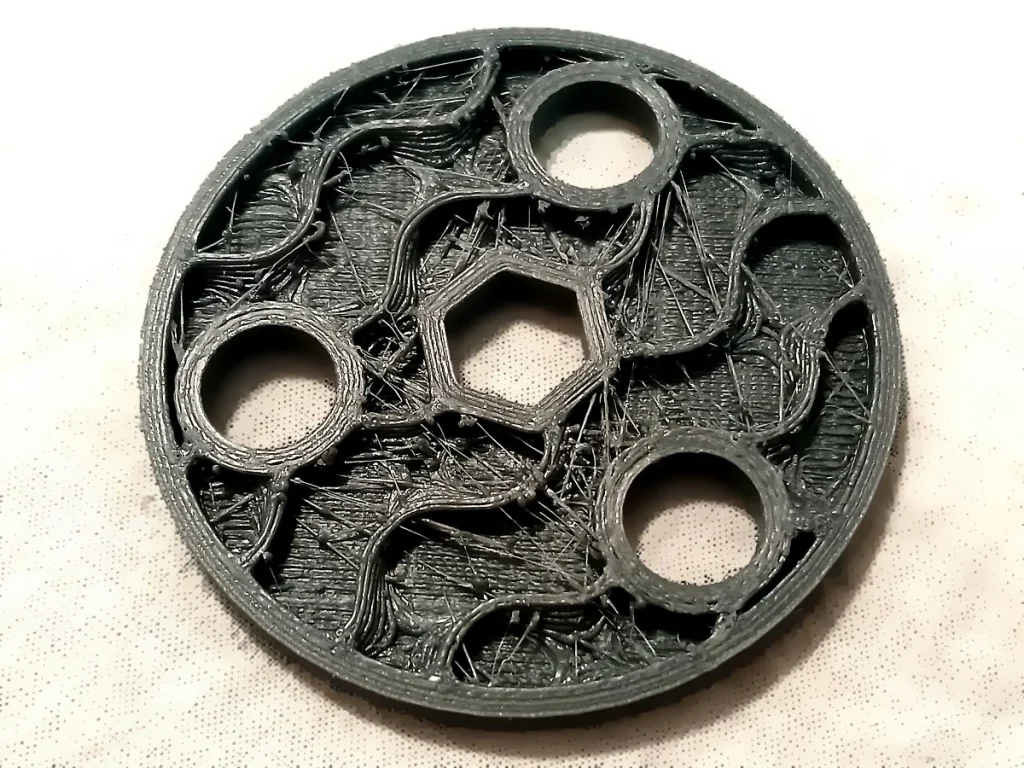
Stringing—the fine plastic hairs left between separate features—is another possible cleanup job. One owner of regular Transparent Purple reported worsening print quality a month after opening the spool and suspected moisture. Storage conditions and measured moisture weren’t supplied. Treat that as a reason to take storage seriously, not a one-month shelf life or proof that purple is a bad color.
There are encouraging reports, too. A P2S owner reported a successful small boat test in non-HF black PETG after drying, using Bambu’s generic settings. The drying duration wasn’t fully specified. That suggests the generic profile is worth trying, though one small print can’t establish reliability for long jobs.
For feeding, an experienced regular-PETG owner reported no thick spots that caused jams. That’s reassuring, but it doesn’t verify the advertised diameter tolerance or promise trouble-free feeding on every roll.
Getting Regular SUNLU PETG Printing Well
Start with the guidance on your spool and the PETG profile for your printer. SUNLU’s published instructions conflict: its regular-PETG product page lists a 240–260°C nozzle and a 60–70°C heated bed, while its broader usage guide suggests 220–250°C and 70–80°C. These aren’t one universal recipe.
If your spool’s label agrees, 240°C at the nozzle and 70°C on a compatible heated plate is a reasonable first trial at modest speed. Follow the plate maker’s PETG instructions about glue or a separating layer. PETG can grip smooth PEI, a common build-plate coating, strongly enough to damage it during removal; glue can help it release.
An older hands-on report described printing at roughly 225–235°C, with one later batch working around 215°C. The printer, color, speed and drying details weren’t tied to those observations. Those older numbers explain why advice varies, but shouldn’t override instructions for the spool in your hands.
Filament can absorb moisture from the air, which can contribute to stringing and a rough surface. A filament dryer removes absorbed moisture before printing.
For drying, SUNLU’s regular-PETG technical sheet specifies 60–65°C; its usage guide adds a suggested duration of six to eight hours. The store’s settings table instead says 50°C without a duration. I’d use the technical-sheet and usage-guide recommendation, provided your spool and dryer support it, and follow any more specific instructions supplied with your roll. This is a starting schedule, not a guarantee that every wet spool will be dry afterward.
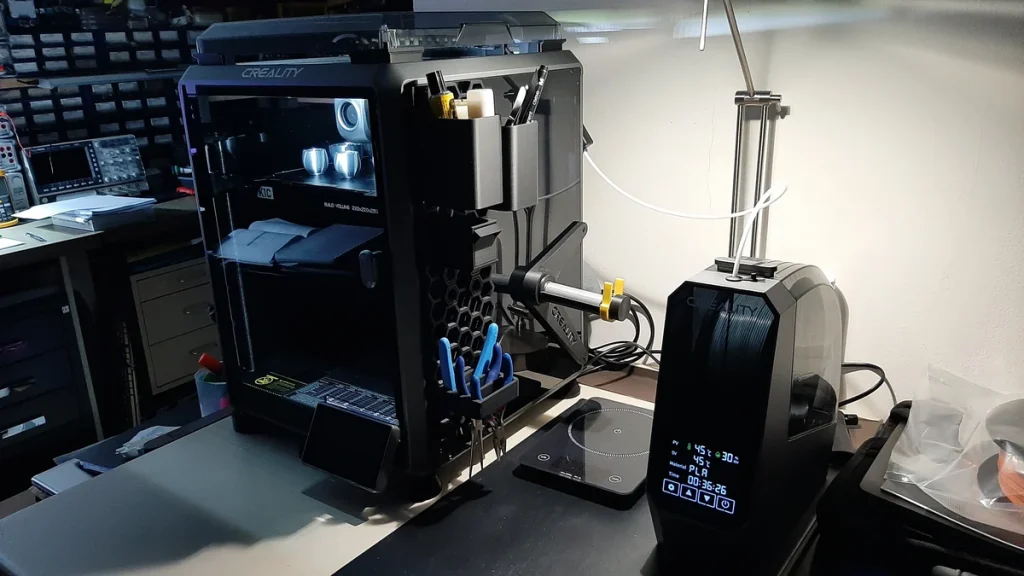
After drying, store it sealed with desiccant, the moisture-absorbing material packed in small bags. This helps keep it dry between uses; sealed storage alone isn’t a substitute for drying an already damp spool.
Bambu Studio is the software that prepares models for Bambu printers. Select a SUNLU PETG preset—a ready-made profile—if one is available for your exact printer and nozzle. Otherwise, start with Generic PETG, then save adjustments as a custom profile.
The SUNLU presets in Bambu Studio originated as community contributions, so the brand name alone doesn’t make one better than a generic starting point.
Keep the initial speed conservative. SUNLU’s general guide suggests around 40–60 mm/s. In Bambu Studio, also retain the starting profile’s maximum volumetric speed limit: it caps how much plastic the printer tries to melt each second. Raising the movement speed alone won’t remove that limit.
Dry first, print a small sample, then change one setting at a time. If the dry filament still strings, try lowering the nozzle temperature by 5°C, provided that stays within your spool’s recommended range. Print the same sample again to see whether there are fewer hairs.
Keep the printer’s default retraction initially—the short backward pull of filament that reduces oozing as the nozzle moves between features. Changing temperature, speed and retraction together makes it hard to know which adjustment helped.
Which Parts Can You Trust SUNLU PETG With?
I’d use regular SUNLU PETG first for drawer dividers, desk organizers, protective covers away from heat, and prototypes that let you check whether parts fit together. These are useful jobs where a cosmetic blemish or failed part is usually manageable. A small cable clip is also a more sensible first experiment than a bracket holding something valuable overhead.
SUNLU does publish mechanical data, but those numbers don’t rate your finished design. Its technical sheet uses printed samples made at 255°C, 150 mm/s and 100% infill—the interior completely filled with plastic. Your thinner, partly hollow part may behave differently, especially when force pulls the printed layers apart.
The sheet lists a heat-deflection temperature of 70±5°C under a specified test load of 0.45 MPa. That’s a laboratory bending test, not permission to use any SUNLU PETG part continuously at 70°C. Don’t choose it for a hot-car mount or a heavily loaded part just because PETG generally handles warmth better than PLA.
Outdoor use needs similar care. SUNLU’s technical sheet warns of possible yellowing under ultraviolet light. It doesn’t establish how long your particular part will retain its strength outdoors. For permanent sun exposure or contact with chemicals, you need evidence for that application.
For food contact, a PETG label isn’t enough. Suitability depends on the formulation, food, temperature and intended use. Without documentation covering the exact filament and finished item, I’d choose a purpose-made food-contact product for cups, utensils or food-storage containers.
Is Regular SUNLU PETG Worth Buying For Your Prints?
Regular SUNLU PETG makes the most sense when you’re printing practical objects and can tolerate some setup work. A slightly shiny organizer or a cover with a few removable hairs may meet your needs perfectly. If you already have drying equipment and sealed storage, trying it involves less extra expense.
I’d be more cautious if the finish matters as much as whether the part works. If you’re making matching white panels, check samples from every spool you’ll use. If you want a consistently matte surface, regular PETG isn’t the obvious choice. Another SUNLU product with PETG in its name may behave quite differently, so check its own print results before switching.
Compare the cost of the same amount of usable filament, with the same spool or refill format. If SUNLU costs less than the PETG you already print successfully, the saving may justify a trial. If the difference is small, keeping a material with settings and colors you already trust may be worth more than switching.
Coming from PLA, you also don’t need PETG for every project. If your current PLA already makes the indoor decorative pieces you want, keep using it. Try SUNLU PETG when you have a practical reason to explore a tougher, more flexible material and time to learn how it behaves.
My recommendation is to buy one regular-PETG spool before a bundle. Use it to print a small part from a real project, inspect the finish in the lighting where you’ll see it, and check that the parts fit. If it gives you acceptable results without repeated retries, buying more becomes an easier decision.
Skip it for now if you need a guaranteed cosmetic match or documented performance in a demanding application.


