Home/Sample
Eleven page features, rendered on real data
- Buy button in a sticky quick-facts box, repeated at the endentry page
- Alternatives and where the entry ranksentry page
- Variants table and known problemsentry page
- Provenance flag on every spec cellentry page, list table
- Also considered, and why notlist page
- What changed, datedlist page
- Inclusion criteria, method and how the site makes moneylist page
- Buyer-risk columns: noise, spares, offline slicing, warrantyprinter tables
- Cross-brand filament reference tablefilament lists
- Software entries: platforms, version, last commit, formatssoftware lists
- X vs Y page built from table rowsnew page type
Part 1 Entry page: Bambu Lab A1
Bambu Lab A1
Mid-range, often discounted; the AMS lite combo costs more
The A1 is a popular first printer because it handles many setup tasks automatically. Before each job, it checks the bed, adjusts filament flow and calibrates motor-noise reduction. Its reported 48 dB silent mode also puts it among the quieter machines in this list.
The open frame makes it a poor choice for ABS and ASA. The AMS lite leaves filament exposed to room air, where it can absorb moisture. Color changes also create waste: one owner test discarded 98 g of plastic to make a 51 g print. It is a practical way to try the hobby, and resale is an option if you decide printing is not for you.
Best at: Getting started with a quiet, easy-to-use printer.
Worst at: Materials beyond PLA, PETG and TPU.
Why: the buy link exists in data for all ten printers and the live entry template never renders it. The box on the right stays in view for the whole review; the link repeats at the end, as vpnMentor and Top10VPN do. Wording is “check current price”, never a number.
Specifications, with a source on every cell
| Build volume | 256 × 256 × 256 mmM |
|---|---|
| Frame | Open bedslingerM |
| Nozzle | 300 °C, stainless steel stockM |
| Bed | 100 °CM |
| Colors | 4 with the AMS liteM |
| Calibration | Automatic, every jobV |
| Camera | 1080p, low frame rateV |
| Firmware | Closed; cloud or LAN modeV |
| Noise | 48 dB in silent mode, Bambu’s figure {M}; no figure at normal speed? |
| Warranty | 2 years in the US from Bambu Store purchases; extruder 3 months; hotend, nozzle and build plates not covered {M}? |
| Noise | 49 dB printing PLAV |
| Warranty | 1 year ‡? |
M manufacturer specification V verified against an owner report or measurement ? unverified
Why: the site has no lab. Saying where each number came from is the honest substitute, and it answers the CLAUDE.md caveat that entries were written from general knowledge. 3DPut flags unverified cells; nobody else does.
Buy this instead if
You print ABS or ASA
Enclosed, same calibration, one tier up. The A1’s open frame is the only reason to skip it.
You want to fix it yourself
Open firmware, published schematics, spares sold for years. Costs more and does less on day one.
You are spending less
Budget tier, auto-levels, one color. Quality control varies unit to unit.
Why: hand-curated, three items, each with the condition that makes it the better buy. StackShare auto-generates alternatives and suggests Figma for Blender; curate, never generate. The “ranks in” list in the right rail is computed from the lists array, so it is already free.
Which A1 to buy
| Variant | Price | Build volume | Multicolor | Buy it when |
|---|---|---|---|---|
| A1 mini | $$$$$ | 180 × 180 × 180 mmM | – | Desk space is the constraint and every print fits in a hand. |
| A1 mini Combo | $$$$$ | 180 × 180 × 180 mmM | 4 with AMS lite | Small multicolor prints; the cheapest four-color setup sold. |
| A1 | $$$$$ | 256 × 256 × 256 mmM | Add AMS lite later | Most buyers. The AMS lite bolts on later if the hobby sticks. |
| A1 Combo | $$$$$ | 256 × 256 × 256 mmM | 4 with AMS lite | You already know you want color. Bundled costs less than adding it later. |
Why: buyers click the wrong SKU. RTINGS runs a “differences between variants” table on every review; “A1 vs A1 Combo” and “A1 vs A1 mini” are search queries this table answers on the page.
Known problems, with dates
- Heatbed cable recall. Bambu recalled early A1 units over a heatbed cable fault and shipped replacement beds; units sold since carry the revised cable.owner threads ↗
- Authorization firmware. Cloud and LAN access moved behind Bambu’s authorization layer; third-party slicers connect through Bambu Connect. Offline printing still works in LAN mode.owner threads ↗
- Purge waste on multicolor. One owner test turned a 51 g print into 98 g with purge. Budget roughly double the filament for four-color work.owner threads ↗
- Open spools. The AMS lite leaves spools in room air; PETG and TPU absorb moisture within days in humid rooms and print stringy. A dry box or dryer fixes it. ‡ sample wording
Why: Reddit has these in volume and no review site aggregates them. The pre-purchase question is “what goes wrong with this one”, and a dated list with links answers it without the site pretending to have tested anything.
Part 2 List page: Best 3D Printers 2026
Also considered, and why not
- Creality K1CEnclosed and fast for the money, but the Centauri Carbon 2 does the same job with four-color support at the same tier. ‡ sample reason
- Anycubic Kobra 3 ComboOwner threads through 2025 report hotends that cannot be serviced and support replies measured in weeks. ‡ sample reason
- QIDI Plus 4A heated chamber at a mid-range tier, dropped after a run of reported heater-bed wiring failures. ‡ sample reason
- Elegoo Neptune 4 ProSound budget bedslinger, outranked by the Ender 3 V3 SE only on spare-part availability. ‡ sample reason
- Anything under 200 mmCovered in the small printers list; this list ranks full-size machines only.
Why: the first question a reader asks a ranking is “why is the one I was looking at not here”. WebsiteSetup, Top10VPN and RTINGS all run this block; it is also the only way a list page ranks for the names it excludes.
What changed
- Table columns rebuilt around what buyers measure: enclosure, ABS capability, colors, calibration, repairs. Prices replaced with tiers.
- Prusa Core One replaced by the Core One+ at rank 4 after the August revision.
- Snapmaker U1 added at rank 5 once owner reliability reports passed six months. ‡ sample entry
Why: a dated changelog proves the list is maintained, which is the stale-listicle complaint readers make about All3DP and 3DSourced. RTINGS and All3DP both run one; Google reads dated change text as freshness.
How this list is made
To be listed, a printer must
- Be sold new by its maker in the United States today.
- Level its own bed. Manual leveling disqualifies.
- Have owner reliability reports covering at least six months.
- Have a documented spare-parts path, even if slow.
How the ranking is decided
Rank is this site’s judgment, weighted in this order: success rate reported by owners, materials it prints without modification, repairability, then price tier. Nothing is measured in a lab here; every number carries its source flag.
How this site makes money
Some retailer links pay a commission when you buy. Manufacturer links here do not. Nothing paid to be listed and no rank has ever been sold. A paid slot, if one is ever added, will carry the word “Sponsored” and sit outside the numbering.
Checked
Specifications against manufacturer pages and owner reports on September 1, 2026. Report an error.
Why: G2 prints inclusion criteria and a researcher name; TechGearLab prints its metric weights; NerdWallet runs one “how we make money” box on every list. Written once, rendered from one array, and it settles the affiliate-bias question readers now ask about every review site.
Buyer risk
| # | Printer | Noise | Spares | Offline slicing | Warranty |
|---|---|---|---|---|---|
| 1 | Bambu Lab P2S | 48 dB ‡? | Bambu store; nozzles and hotends stockedM | LAN mode; third-party slicers through Bambu ConnectV | 1 year ‡? |
| 2 | Bambu Lab X2D | 48 dB ‡? | Bambu store; nozzles and hotends stockedM | LAN mode; third-party slicers through Bambu ConnectV | 1 year ‡? |
| 3 | Bambu Lab A1 | 49 dBV | Bambu store; nozzles and hotends stockedM | LAN mode; third-party slicers through Bambu ConnectV | 1 year ‡? |
| 4 | Prusa Core One+ | 50 dB ‡? | Full catalog; schematics publishedM | Fully offline; any slicerM | 2 years EU, 1 year US ‡? |
| 5 | Snapmaker U1 | 52 dB ‡? | Snapmaker store; toolheads sold separatelyM | Klipper; any slicerM | 1 year ‡? |
| 6 | Elegoo Centauri Carbon 2 | 50 dB ‡? | Support ticket; owners report weeksV | Klipper-based; USB and LANM | 1 year ‡? |
| 7 | Prusa MK4S | 52 dB ‡? | Full catalog; schematics publishedM | Fully offline; any slicerM | 2 years EU, 1 year US ‡? |
| 8 | Bambu Lab H2D | 50 dB ‡? | Bambu store; nozzles and hotends stockedM | LAN mode; third-party slicers through Bambu ConnectV | 1 year ‡? |
| 9 | Creality Ender 3 V3 SE | 47 dB ‡? | Third-party parts everywhereV | SD card; any slicerM | 1 year ‡? |
Nothing matches both. Loosen one.
Why: the four questions r/3Dprinting asks before buying, and none of All3DP, Tom’s or 3DSourced answers any of them in a table. Tom’s writes “loud” without a number. The existing Repairs column already covers a fifth. Placeholder cells are flagged; the build cost is collecting the data, not the code.
Part 3 Filament lists
What each material needs
| Material | Nozzle | Bed | Enclosure | Drying | Nozzle material | Plate and adhesion |
|---|---|---|---|---|---|---|
| PLA | 190–230 °CM | 50–60 °CM | – | Optional; 50 °C, 8 hM | Brass | Textured PEI, no glue |
| PETG | 230–260 °CM | 70–85 °CM | – | Yes; 65 °C, 8 hM | Brass | Textured PEI; glue as a release layer on smooth plates |
| TPU | 200–240 °CM | 25–60 °CM | – | Yes; 70 °C, 12 hM | Brass, direct drive | Smooth PEI; slow |
| ABS | 240–280 °CM | 90–110 °CM | ✓ | Optional; 80 °C, 8 hM | Brass | Textured PEI; glue or ABS slurry against warping |
| ASA | 240–280 °CM | 90–110 °CM | ✓ | Optional; 80 °C, 8 hM | Brass | Textured PEI; UV-stable version of ABS |
| PA-CF | 260–300 °CM | 60–100 °CM | ✓ | Required; 80 °C, 12 hM | Hardened steel | Glue on PEI; dry as you print |
| PC | 260–310 °CM | 100–120 °CM | ✓ | Yes; 80 °C, 8 hM | Hardened steel | Glue on PEI; heated chamber helps |
Nothing matches both. Loosen one.
Ranges span the Prusa and Bambu material tables, September 1, 2026. Any single brand narrows them; the spool label wins. ‡ sample data
Why: Prusa’s table and Bambu’s guide are the two best material references online and each covers one brand. A cross-brand table with drying hours is the block every filament list on this site can share, and the “open-frame” chip answers the beginner’s real question: which of these can my printer do at all.
Part 4 Software lists
Slicers, with platforms and project health
| # | Slicer | Runs on | Version | Last commit | License | Opens |
|---|---|---|---|---|---|---|
| 1 | OrcaSlicer | WinMacLinuxWeb | v2.3 ‡ | 3 days ago ‡ | AGPL-3.0 | STL3MFSTEPOBJ |
| 2 | PrusaSlicer | WinMacLinuxWeb | v2.9 ‡ | 1 week ago ‡ | AGPL-3.0 | STL3MFSTEPOBJAMF |
| 3 | Bambu Studio | WinMacLinuxWeb | v2.2 ‡ | 5 days ago ‡ | AGPL-3.0 | STL3MFSTEPOBJ |
| 4 | Cura | WinMacLinuxWeb | v5.10 ‡ | 6 weeks ago ‡ | LGPL-3.0 | STL3MFOBJ |
| 5 | Kiri:Moto | WinMacLinuxWeb | rolling | 2 days ago ‡ | MIT | STL3MFOBJ |
| 6 | Simplify3D | WinMacLinuxWeb | v5.1 ‡ | closed source | Paid license | STL3MFOBJ |
Version and last-commit cells would be pulled from the GitHub releases API once a day and cached; the values shown are placeholders.
Why: operating system is the first exclusion filter a software reader applies, and “is this slicer still maintained” is the second. AlternativeTo shows stars, forks and last update; TAAFT shows a dated release. Cura’s slowing development in 2026 is visible in a last-commit date without a sentence of editorial.
Part 5 New page type: X vs Y
Bambu Lab A1 vs Prusa MK4S
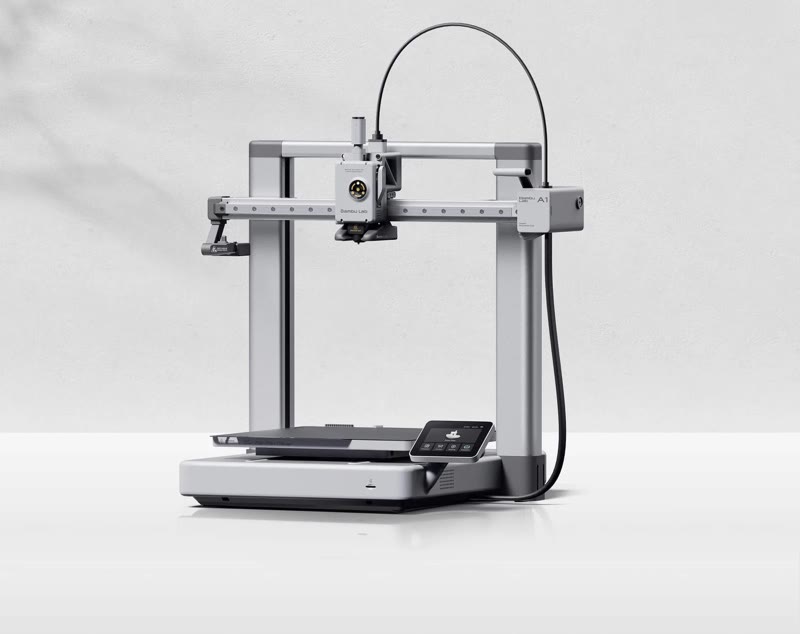
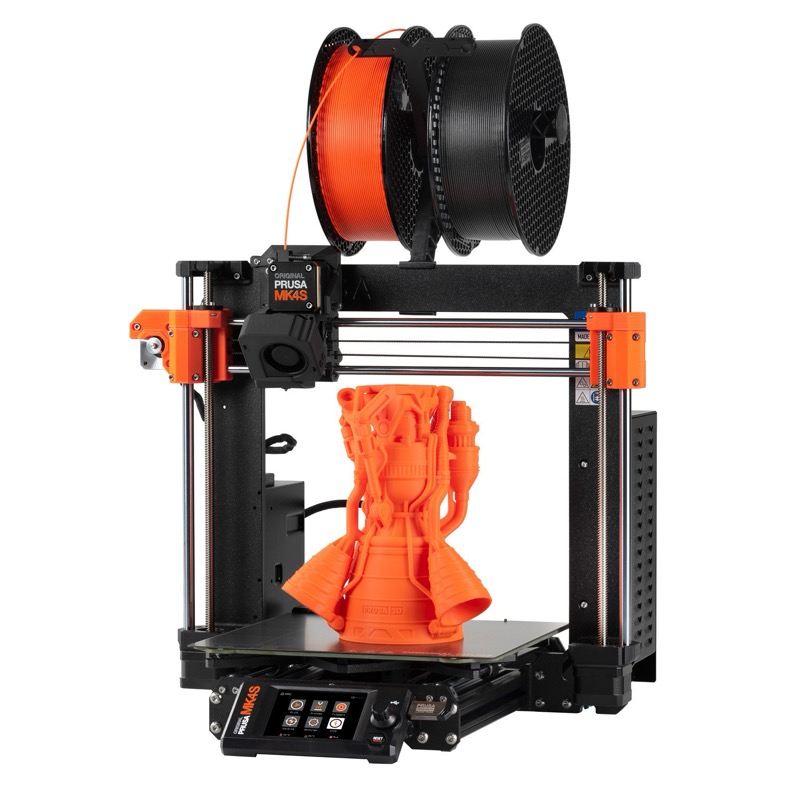
Same build class, opposite philosophies: the A1 calibrates itself on every job and belongs to Bambu’s closed ecosystem; the MK4S needs a little more from you and can be repaired on your bench for a decade.
| Bambu Lab A1 | Prusa MK4S | |
|---|---|---|
| Best For | ||
| Price | ||
| Build Volume | ||
| Enclosure | ||
| Materials | ||
| Multicolor | ||
| Calibration | ||
| Noise | ||
| Warranty | ||
| Main Drawback | ||
| Repairability | ||
| Worst at | Materials beyond PLA, PETG and TPU. | Speed and features for the price; printing demanding materials without an enclosure. |
Choose the A1 if you want the first print to work and the two hundredth to match it, at a mid-range price, and you can live with PLA, PETG and TPU.
Choose the MK4S if you want a printer you can still fix in five years, print without any account, and pay a tier more for it.
Why: every cell here is read from the existing table rows for the two printers; the only hand-written parts are the two verdict sentences. “Bambu A1 vs Prusa MK4S” and “OrcaSlicer vs PrusaSlicer” are queries with buying intent that SaaSHub and Slant generate pages for. Start with hand-picked pairs, not every pair.