Fiberlogy FiberFlex 40D Review
Less than MattFlex 40D in comparable 850 g listings.
Our verdict
I’d choose FiberFlex 40D for bendable covers, flexible tabs and cushioning prototypes that need some firmness. Plan to tune feeding, bed release and layer bonding with a small sample first. I’d pass if you need an especially soft feel or automatic feeding without an exact compatibility check.
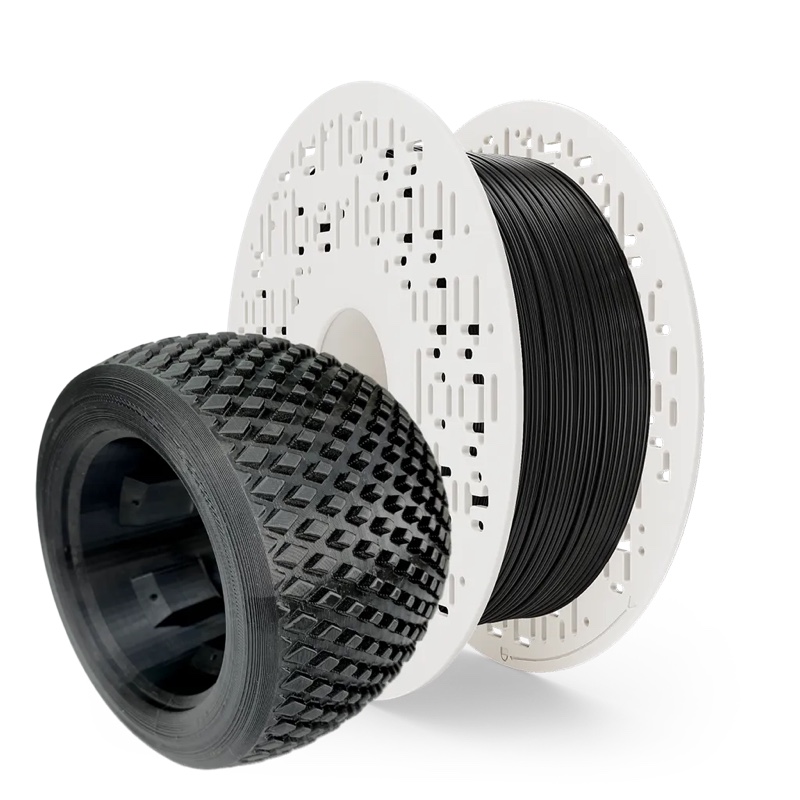
Best atFlexible prototypes whose thickness and infill you can adjust to get the feel you need.
Less suited toVery soft parts, unconfirmed automatic feeders, or seals needing documented long-term service limits.
The Key Specs
| Material / hardness | TPU · Shore 40DFirmer than FiberFlex 30D; wall thickness and infill still change how much a part bends. |
|---|---|
| Starting temperatures | 200–220°C nozzle · 70°C bedUse Fiberlogy’s starting guidance, then check bonding and release on a small print. |
| Print speed | Below 45 mm/s recommendedAllow time for slower printing; a historical fast tab print is not a reliable general profile. |
| Feeding | Check the complete filament pathI’d favor direct drive; a spool fitting an automatic feeder does not establish material compatibility. |
| Build surface | Tape or adhesive on smooth PEI/glass; adhesive on textured PEICheck your plate maker’s instructions and test removal before covering the bed. |
| Drying | 60°C for four hoursIdentify the spool before heating it and keep the filament dry between jobs. |
Which Diameter And Spool Should You Buy?
- 1.75 mm
- Choose this diameter only if your printer uses 1.75 mm filament; confirm the color and net spool weight.
- 2.85 mm
- Choose this diameter only for a printer designed for 2.85 mm filament; it is not interchangeable with 1.75 mm.
Allow For Drying And Bed Preparation. Allow for suitable filament-drying equipment and dry storage, plate-approved adhesive or masking tape, and filament used in small setup trials.
More Handling And Compatibility Details
| Cooling / enclosure | Fiberlogy specifies 50–75% part cooling; an enclosure is not required. |
|---|---|
| Spool weight | 850 g spools are discussed in the US purchase comparison; check net weight when comparing offers. |
| Spool heat tolerance | Early ABS versions of Fiberlogy’s newer spool need its preparation instructions before drying; use the identification guide. |
| Cleaning | Watch for powder buildup and clean printer components if it becomes substantial enough to affect feeding. |
I’d consider Fiberlogy FiberFlex 40D if you want bendable covers, flexible tabs or cushioning prototypes and don’t mind adjusting your printer settings. Its appeal is a useful middle ground: flexible material with more firmness than Fiberlogy’s softer 30D grade. The main drawback is setup. A successful print needs to stick to the print bed—the surface it builds on—then come off intact with its layers still joined.
I’d choose it for projects where you can print a small sample and adjust the design. I’d look elsewhere if you need guaranteed automatic feeding, an especially soft feel or a finished part with documented long-term sealing performance.
How Flexible Is FiberFlex 40D?
FiberFlex 40D is TPU, short for thermoplastic polyurethane: a plastic that softens for printing and can produce rubber-like parts. Its hardness is 40 on the Shore D scale. Shore hardness measures how much a material resists a test tip pressing into its surface. It doesn’t tell you how easily an entire printed object will bend.
The letter matters. Shore A and Shore D use different test arrangements, so don’t read 40D as 40A or assume it’s exactly equivalent to a filament labeled 95A. Within Fiberlogy’s range, 30D is the softer choice; 40D makes more sense when you want some firmness alongside the flexibility.
Your design matters, too. More outer walls and denser infill—the structure printed inside the part—generally make flexible prints harder to squeeze. Fewer walls and less infill let them give more.
A thin tab and a thick, nearly solid block won’t feel alike, even from the same spool. Try a small section with the thickness and internal structure you intend to use.
In a 2021 lab test, thin FiberFlex 40D strips with printed sensors gradually pulled less hard while held stretched. The measured stress (pulling force per unit area) fell 10.6% during a 30-second hold at 30% stretch on the third stretch-and-release cycle. That shows why you shouldn’t assume a stretched part will keep pulling with the same force.
The test used strips combined with sensor material; it didn’t establish a seal’s lifetime. Hardness and stretch-before-breaking figures won’t tell you how well your part will recover after months under load, either.
Can Your Printer Feed FiberFlex 40D?
First, buy the correct filament diameter. Fiberlogy lists both 1.75 mm and 2.85 mm versions; they aren’t interchangeable. Then check how your printer moves filament into the nozzle.
A direct-drive extruder has its feeding gears close to the heated nozzle. I’d favor that arrangement for a first attempt with FiberFlex 40D because it limits the distance the soft filament must be pushed.
A Bowden extruder pushes it through a longer tube, adding opportunities for it to compress or buckle. Bowden doesn’t automatically rule it out, but you shouldn’t expect a saved set of print settings from another printer to settle the setup.
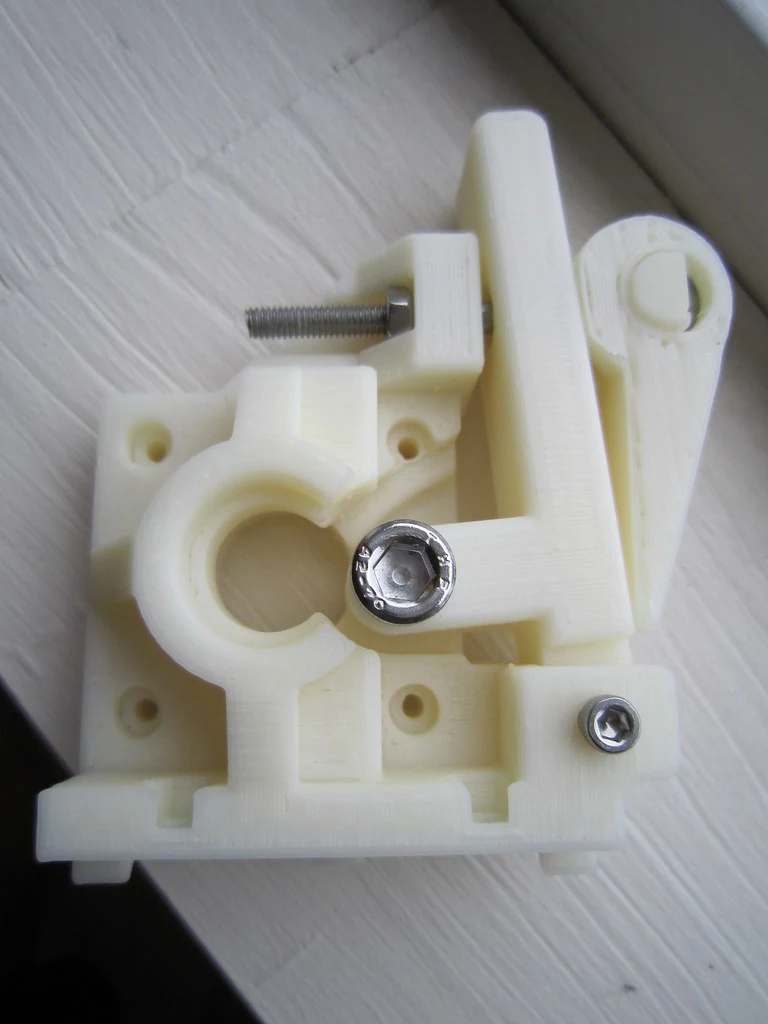
Even a suitable extruder needs the right grip. Excessive gear pressure can deform flexible filament and make it tangle. Follow your printer’s flexible-material instructions for adjusting that pressure; there isn’t one screw position that suits every machine.
Automatic feeding needs a separate check. Fiberlogy’s wording about its new spool system fitting Bambu Lab’s AMS automatic filament feeder doesn’t establish that FiberFlex 40D itself can pass through it. A spool can fit inside the box even when its filament won’t feed properly.
Bambu Lab’s AMS lite documentation excludes ordinary TPU. Fiberlogy’s spool wording doesn’t override that restriction. For a Bambu printer, plan around the printer’s supported external-spool route instead of assuming automatic loading will work. Bambu’s X1 guidance explicitly describes that route for TPU.
Other feeder models need their own compatibility check; a newer feeder isn’t automatically suitable. If automatic material changes are essential to your project, I’d skip FiberFlex 40D unless the equipment manufacturer confirms support for this exact filament and feeder. A spool adapter alone can’t provide that assurance.
Where To Start With FiberFlex 40D Settings
Fiberlogy’s current starting guidance is a 200–220°C nozzle, a 70°C bed, a part-cooling fan setting of 50–75% and a print speed below 45 mm/s. An enclosed chamber isn’t required.
For a first trial, I’d use about 20 mm/s, consistent with Prusa’s general flexible-filament advice, and adjust from there. That’s a cautious starting choice, not a tested FiberFlex profile for every printer.
Prepare the bed before printing. Fiberlogy specifies masking tape or adhesive on smooth PEI and glass, and adhesive on textured PEI. PEI is a common plastic coating on printer beds.
Use a preparation method approved for your particular plate. A separation layer, such as a suitable glue coating, keeps the print from bonding directly to the bed and can protect the PEI during removal.
Don’t choose this filament expecting to print reliably at 90 mm/s. A 2016 reported test reached that setting on a small, simple tab. It didn’t document the printer, nozzle size, layer height or how much plastic passed through the nozzle per second. That leaves too much unknown to predict detailed prints at the same speed.
The laboratory study used a BCN3D Sigma R19 at 15 mm/s, with a 230°C nozzle, 45°C bed and no retraction—the brief backward pull used to reduce oozing—for its TPU sensor structures. Those settings served an experiment combining materials and differ from today’s product guidance. They aren’t a reason to replace Fiberlogy’s starting temperatures or call 15 mm/s the material’s speed limit.
Fiberlogy specifies drying the filament at 60°C for four hours. Its English page labels this “curing,” but it means drying the filament, not heat treatment of the finished print. The 50–75% setting refers to the cooling fan, not storage humidity. Keep the filament dry between jobs, since absorbed moisture can make printing harder.
Check the spool before heating it. Fiberlogy says early ABS versions of its newer spool could come apart above 60°C and were replaced with polycarbonate.
Use the manufacturer’s identification guide to check which you have. If it’s an ABS spool, follow Fiberlogy’s preparation instructions before drying it. Don’t substitute a hotter generic TPU drying cycle.
FiberFlex 40D Print Quality And Bed Release
The reported results support useful flexible prints, but they also show why appearance alone isn’t enough. In the 2016 test, a detailed head model looked reasonable yet had weak layer bonding at a lower, unspecified nozzle temperature. A warmer retry improved the result, but the sample ran out before completion.
Both heads were damaged during removal from a cold bed with an unnamed removable adhesive surface. Heated glass and a raft—a printed base beneath the model—were proposed fixes, not demonstrated solutions.
For your own trial, check whether the printed layers stay joined when you bend the part. A tidy surface doesn’t make up for layers that peel apart. If bonding is poor, work within the manufacturer’s temperature range and check feeding and filament condition before committing to a larger print.
In a Prusa forum discussion, one owner described heavy stringing—fine strands left between printed areas—and poor adhesion on a satin sheet. A regular sheet then held too strongly.
The owner eventually reported good adhesion and release on satin with the bed set to 70°C for the first layer, alongside changes that included a hotter nozzle. Because several things changed, that doesn’t prove bed temperature alone solved it.
These are individual experiences, not a measured failure rate. Prusa recommends a separation layer for flexible material on its smooth and satin sheets. Its general guidance for its textured sheet permits printing without one, whereas Fiberlogy specifies adhesive on textured PEI.
Prusa’s advice covers flexible filaments generally; Fiberlogy’s is for this material. Don’t assume every textured surface will behave the same way.
I’d test removal with a small piece before covering much of the plate. Follow the plate maker’s cooling and removal instructions, and choose a setup that releases without tearing your part. Simply increasing adhesion isn’t the goal.
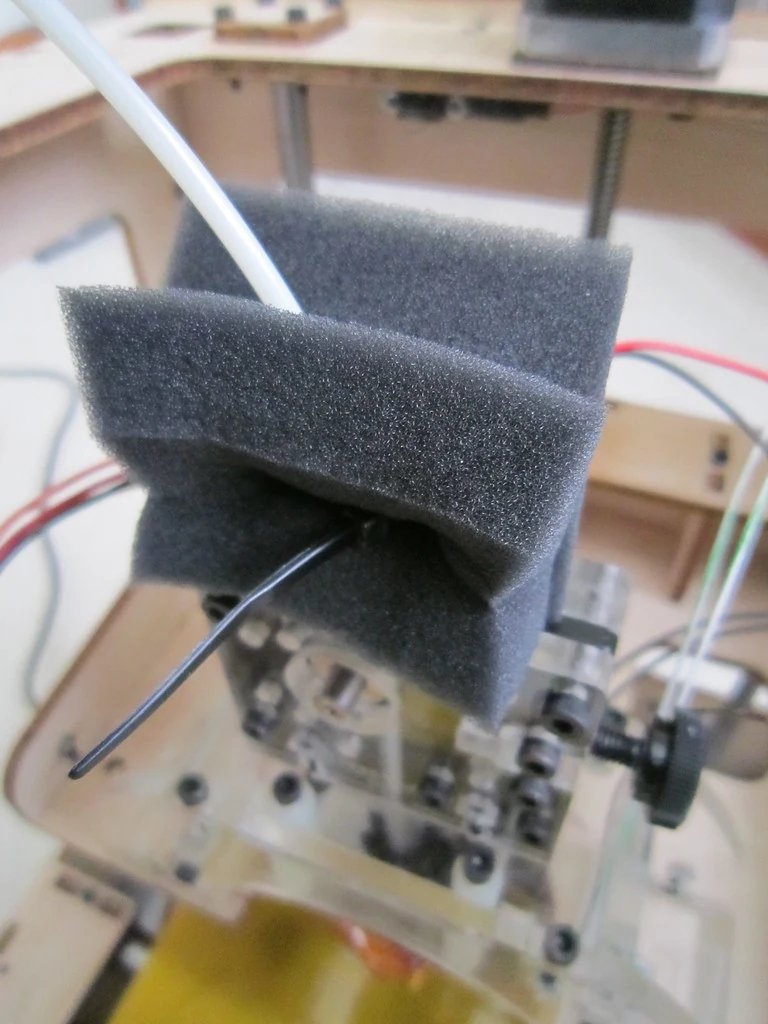
There’s also a maintenance consideration: Fiberlogy says this material can shed powder and recommends cleaning printer components if it builds up enough to interfere with feeding. Treat that as something to watch for, not evidence that every spool causes a feeding problem.
Is FiberFlex 40D Worth Buying For Your Parts?
FiberFlex 40D makes sense for a flexible prototype you can adjust and inspect. You can also choose a softer grade or a different surface finish within Fiberlogy’s range.
FiberFlex 30D is the closest alternative if your priority is softness. Fiberlogy calls for a direct-drive extruder for that softer material, so the change may demand more from your printer.
MattFlex 40D is the more relevant alternative if you like the hardness category but want a matte surface. Its finish gives you a reason to consider it; the shared 40D label doesn’t prove identical bending or printing behavior.
For US buyers, Narrow Path 3D lists FiberFlex 40D in 850 g spools. Its comparable 850 g MattFlex listing costs more, so standard FiberFlex is the cheaper choice between those listings if a matte finish doesn’t matter to you. Compare filament weight as well as spool price when shopping elsewhere, and confirm the color and diameter you need.
I’d pass if you need a ready-made profile with no tuning, automatic feeding that isn’t explicitly supported, or a seal with established service limits. If its firmer feel suits your part and your printer supports the feed path, I’d give it a try. Make successful bed release part of your first test.


