Atomic Filament PLA Review
Costs more than budget standard PLA; compare equivalent spool sizes and finishes.
Our verdict
I’d choose Atomic PLA for a particular color, silk sheen or translucent finish, with time for a small test print. I’d buy cheaper standard PLA for practice parts; paying more for Atomic does not establish a strength or heat-resistance advantage for the chosen variant.
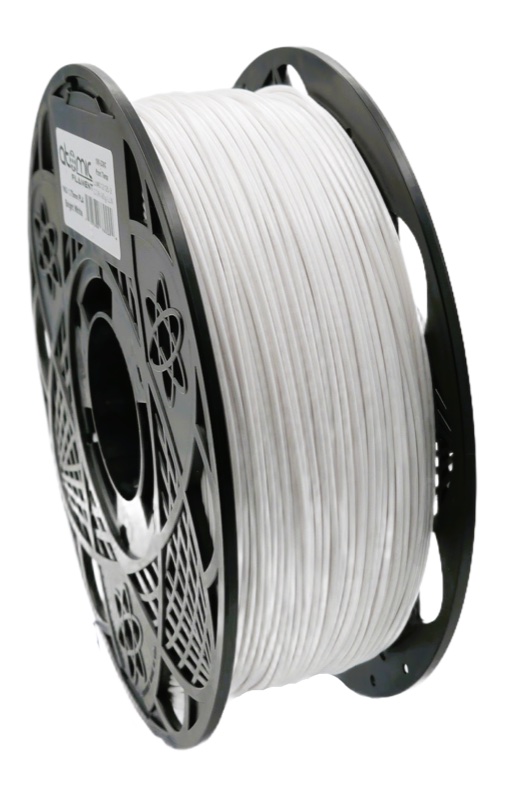
Best atUnpainted display models, silk surfaces and translucent lighting projects where the chosen finish matters.
Less suited toLow-cost practice prints, or projects needing demonstrated load-bearing strength or heat resistance.
The Key Specs
| Material choice | Opaque, modified silk and translucent PLAChoose the exact PLA variant; a shared color name on another plastic does not identify the same material. |
|---|---|
| Diameter / quantity | Majestic Brown, Silky Electric Blue v2 and Amethyst Violet: 1.75 mm, 1 kgMatch your printer’s filament diameter; selected 2.85 mm products do not cover every color. |
| Ordinary / clear PLA settings | Majestic Brown, Clear / Natural and Amethyst Violet: 190–230°C nozzleStart within the chosen product’s range and use a small print to tune your settings. |
| Silky Electric Blue v2 | 230°C nozzle, 60°C bed; 0.50–0.60 mm line width with a 0.4 mm nozzleFollow the silk-specific instructions; the specified line width matters for layer bonding. |
| Starry Night v3 | Minimum recommended nozzle: 0.35 mmSkip this variant for a 0.2 mm nozzle; test wall thickness because the appearance shifts from blue toward darker purple with more layers. |
| Current 1 kg spool fit | About 200 mm diameter × 66.7 mm wide; 50.8 mm center holeOuter dimensions support AMS 2 Pro fit, but the hole is smaller than AMS lite’s stated range. Confirm dimensions for older stock. |
Which Color And Spool Should You Buy?
- Ordinary opaque PLA, such as Majestic Brown
- The simpler starting point when you want a particular solid color.
- Silky Electric Blue v2
- Choose for sheen if you can follow its extra settings and allow a test print; older blue-spool reports do not validate v2.
- Clear / Natural or Amethyst Violet translucent PLA
- Consider for decorative panels or illuminated models; test the intended wall thickness and lighting first.
- Selected 3.5 kg spools
- Choose only with a suitable separate holder; these spools exceed the AMS 2 Pro’s stated size limits.
Budget For Storage And Test Prints. Allow for airtight bags or containers, desiccant packs and filament used in small settings and appearance tests. A 3.5 kg spool needs a suitably sized separate holder if you do not already have one.
More Handling And Compatibility Details
| Majestic Brown diameter variation | Atomic states average variation of ±0.02 mm; this is not a finished-part accuracy guarantee. |
|---|---|
| Clear / Natural color matching | Yellow/blue tint can vary between production lots; check material before making matching panels. |
| Full 1 kg spool weight | Approximately 1.26 kg including the 260 g empty spool; check holder capacity. |
| 3.5 kg spool dimensions | Approximately 305 mm diameter × 95 mm wide; allow space on a separate holder. |
| AMS lite mounting | Its stated center-hole range is 53–58 mm; Atomic’s published 50.8 mm hole does not support assuming a direct fit. |
| Storage | Keep spools in an airtight bag or container with desiccant; absorbed moisture can contribute to stringing. |
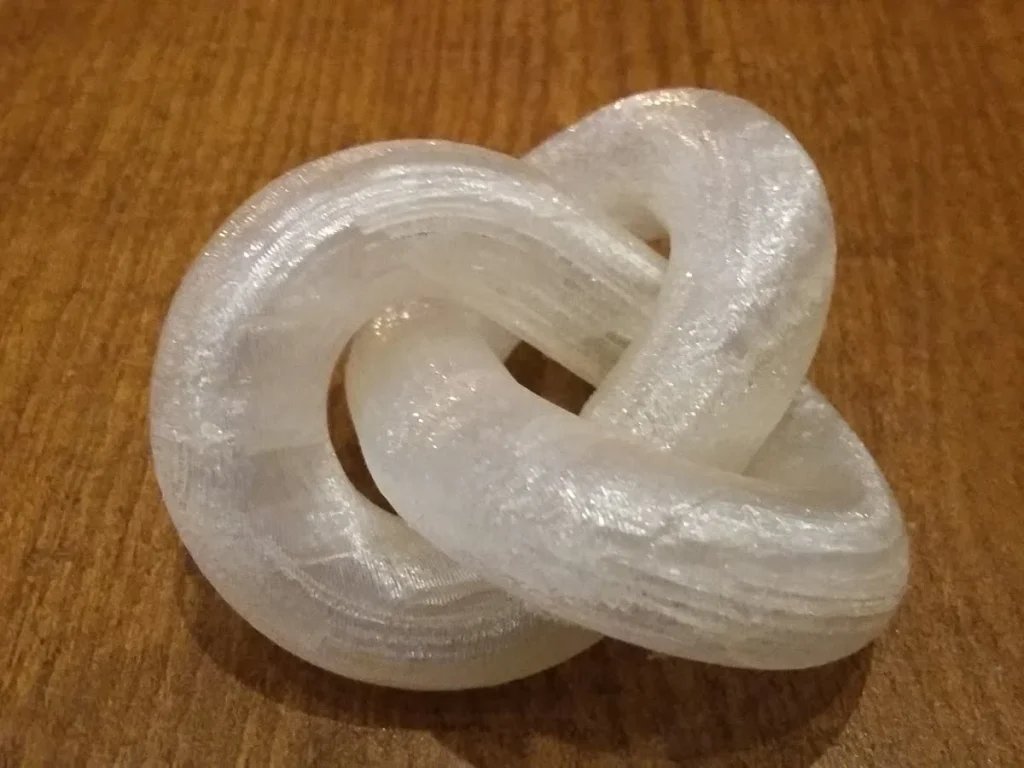
I’d consider Atomic PLA if you want the filament’s color or finish to be part of the finished object. Its strongest appeal is decorative: reported projects show attractive silk surfaces, clear panels and translucent models lit from inside. Those are good reasons to consider a particular color, especially for something you won’t paint.
The drawback is that “Atomic PLA” doesn’t describe one printing experience. Ordinary opaque PLA and modified silk need different treatment, and older success stories don’t necessarily describe today’s version. I’d consider Atomic for a finish you specifically want; for inexpensive practice prints, cheaper standard PLA is easier to justify.
Which Atomic PLA Are You Buying?
Start with the full product name. Majestic Brown is an ordinary opaque PLA option. Silky Electric Blue v2 is labeled modified PLA and has a glossy silk finish. Amethyst Violet Gemstone Translucent lets light through. Make sure the material says PLA: a matching color name on another plastic doesn’t make it the same product.
The current listings for these three specify 1.75 mm filament on 1 kg spools. Match that to the supported filament diameter in your printer’s specifications. Atomic also lists selected 2.85 mm products, but that doesn’t mean every color comes in both sizes.
Selected colors have larger 3.5 kg options. Check that your spool holder can accommodate one before ordering.
Treat the formulation claims cautiously. Majestic Brown’s page says no fillers or additives in its promotional text, yet its resin specification includes an Atomic additive package. That contradiction doesn’t establish a printing problem, but it rules out calling the product additive-free.
Majestic Brown’s stated average diameter variation of ±0.02 mm is Atomic’s specification for how much the filament’s thickness varies. It isn’t a promise that a printed hole or fitted lid will be accurate to that amount.
How Atomic PLA Looks In Finished Prints
For silk, an older hands-on account describes an original Silky Electric Blue vase whose surfaces caught the room lighting at different angles. Atomic supplied that blue spool; the account identifies its other projects as unsponsored. It shows what the older version could look like; it doesn’t establish how today’s v2 will look or print. Try v2 on a small piece before a large project.
The same account describes clear PLA used for a clock front, with the paths of the printed lines made part of the design. An Amethyst Violet Geode City model, printed at double scale, used internal LEDs. These examples support considering clear and translucent PLA for decorative panels and illuminated models.
Clear doesn’t mean you should expect a thick print to look like a glass window. Atomic itself qualifies its Clear / Natural product’s “no yellow hue” description: the yellow/blue tint can vary between production lots as it compensates for differences in the raw resin. If you need several matching panels, try a sample from the material you intend to use before committing to the whole set.
Wall thickness matters, too. For current Starry Night Translucent v3, Atomic says thin walls appear blue and additional layers shift the appearance toward darker purple.
Starry Night v3 also needs a nozzle opening of at least 0.35 mm under Atomic’s guidance. Choose another filament if you want to use a 0.2 mm nozzle.
For a lighted model, print a small section with the planned wall thickness and place your intended light behind it. For silk, inspect a curved test piece in the room where it will sit. These checks will tell you more about whether you like the result than a spool photograph. Attractive display prints don’t establish tiny miniature detail, measured transparency or strength.
Getting Atomic PLA To Print Reliably
Atomic specifies a 190–230°C nozzle range for Majestic Brown, Clear / Natural and Amethyst Violet PLA. Keep your starting profile—the saved settings your printing software applies—within that range. One temperature won’t necessarily suit every printer.
Silky Electric Blue v2 has more specific instructions: 230°C nozzle, 60°C bed, and 0.50–0.60 mm extrusion width with a 0.4 mm nozzle. The bed is the platform the print sits on. Extrusion width is a setting in your printing software for how wide each deposited line should be; it’s separate from the nozzle’s physical opening. Atomic calls that width critical for the layers to bond strongly.
Use these product-specific settings as your starting point. They take priority over Atomic’s FAQ statement that colors use nearly identical settings.
The older blue-spool report describes success without adjustments using SeeMeCNC profiles and also mentions good results on a Prusa MK2S. Those results don’t establish settings for current v2.
A 2021–2022 owner discussion reports improvement after switching from a Prusament profile to a generic PLA profile. One owner settled on 215°C for the first layer and 210°C afterward; another reduced stringing by dropping from 210°C to 200°C. Their exact colors and complete setups weren’t identified.
Stringing means fine plastic hairs left as the nozzle moves between printed sections and plastic continues to ooze out. For ordinary PLA, repeat a small test at temperatures 5°C apart within its specified range, keeping other settings unchanged. Compare the hairs, surface and whether the layers hold together. Don’t choose a temperature just because it leaves the fewest hairs if the part separates easily.
If stringing persists, review the retraction settings recommended for your printer. Retraction briefly pulls filament back between printed sections to reduce oozing.
Moisture absorbed by the filament can also cause stringing. Store the spool in an airtight bag or container with desiccant packs, which absorb moisture from the surrounding air.
The reports lack complete speed, drying and retraction details, so they don’t establish a universal recipe, guaranteed high-speed performance or a recurring Atomic defect.
Will The Atomic Spool Fit Your Printer?
Atomic’s current FAQ says its 1 kg rolls are AMS compatible. AMS is Bambu Lab’s automatic material system, which feeds filament and switches between spools. The particular version matters.
Atomic specifies a spool about 200 mm across and 66.7 mm wide, with a 50.8 mm center hole. The empty spool weighs 260 g, making a full 1 kg roll approximately 1.26 kg. Check that your holder has room for that width and diameter, that its mounting rod fits through the center hole, and that it can support the full weight.
Those outer dimensions fall within the AMS 2 Pro’s stated limits of 197–202 mm diameter and 50–68 mm width. That supports physical fit in the AMS 2 Pro. It doesn’t tell you which print temperatures and other settings to use; follow the instructions for your chosen PLA variant.
AMS lite needs a separate check. Bambu specifies a 53–58 mm center hole for its spool holders. Atomic’s published 50.8 mm hole is smaller, so the specifications don’t support assuming a direct fit. If you need it to mount without changes, choose a spool that meets the lite’s requirements.
These measurements apply to Atomic’s current AMS-compatible spool. For older stock, confirm the actual spool dimensions.
Atomic’s 3.5 kg spool is roughly 305 mm across and 95 mm wide, too large for the AMS 2 Pro’s stated limits. It needs a suitable separate holder.
Is Atomic PLA Worth Buying For Your Prints?
I’d buy Atomic when a particular finish suits the object: a sheen for a vase, a translucent shell for lighting, or a specific color for an unpainted model. The reported projects make that a reasonable purchase, provided you’re willing to make a small test and adjust the settings.
For ordinary opaque PLA, the case is more about finding the right shade than paying for a demonstrated performance advantage. Majestic Brown’s specifications and product description don’t establish that it prints cleaner, lasts longer or fails less often than cheaper PLA. Successful specialty prints can’t answer those questions for it.
Elegoo’s standard PLA is a useful cheaper alternative for practice models and early versions of a design. Reported hands-on use supports those jobs, though it also includes spool-winding complaints.
Elegoo is an option for saving on everyday prints, but those reports don’t establish a match for Atomic’s translucent or silk appearance. Compare equivalent 1 kg spools; bulk packs and specialty finishes change the cost comparison.
For load-bearing parts or objects exposed to heat, don’t pay more for Atomic on the assumption that premium branding means proven strength or heat resistance. The decorative examples and manufacturer promotion don’t establish those properties for your chosen variant. Missing tests limit confidence; they don’t prove the filament is weak.
If you’re buying your first spool from another brand, an ordinary opaque color is the simpler starting point. Choose Silky Electric Blue v2 when you want its sheen enough to follow its extra instructions and allow time for a test print.


