eSUN ABS+ Review
Less than eSUN PLA+ on eSUN’s US listing; setup adds cost.
Our verdict
I’d start with one spool of eSUN ABS+ for prototypes or lightly loaded parts if I already had an enclosed printer and suitable ventilation. I wouldn’t choose it as an automatic strength upgrade from PLA or PETG: confirm the formula and check layer bonding before committing to a batch.
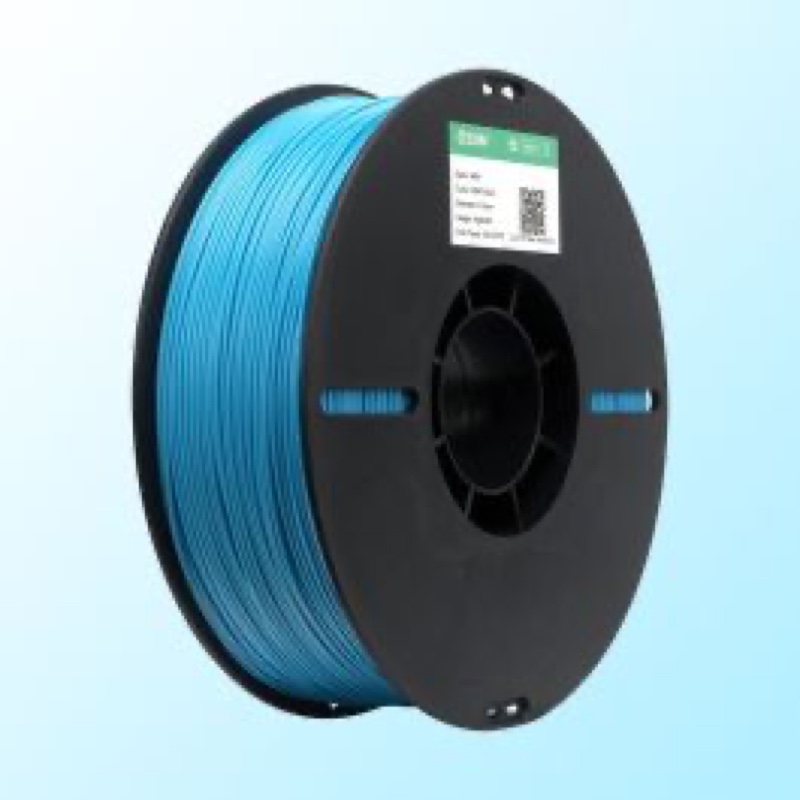
Best atPrototypes and lightly loaded parts on an enclosed printer, with time to tune and check the results.
Less suited toOpen printers, spaces without emissions control, and loaded parts whose long-term strength or heat resistance must be predictable.
The Key Specs
| Spool format | 1.75 mm · 1 kgCheck your printer’s filament diameter before buying. |
|---|---|
| Starting temperatures | 230–270°C nozzle · 95–110°C bedYour printer must support these ranges; stay within its approved limits. |
| Part cooling | 0% fan, per eSUNThis applies to the fan cooling the print; leave other cooling fans under normal control. |
| Workspace | Enclosure and suitable ventilationSteady warmth helps with shrinkage; a closed door alone does not control emissions. |
| Formula | Revised ABS+ announced in June 2026Ask the seller which formula is in stock; the ABS+ name alone does not identify it. |
| Layer bonding | Check the printed partAn attractive surface does not establish strength across layers. |
Which ABS+ Spool Should You Buy?
- One spool of standard ABS+
- I’d start here for prototypes or lightly loaded parts, confirming the formula before ordering.
- More spools or a different color
- Buy more after checking several representative parts; recheck the result when changing color or formula.
- ABS+HS / eABS+HS
- A separate high-speed grade. Its settings and results should not be carried over to standard ABS+.
Budget For Material Handling And Setup. Allow for an enclosure and emissions control if needed, a suitable filament dryer for damp spools, and extra material and time for tuning and failed prints.
More Handling And Compatibility Details
| Drying damp filament | The eBOX Pro guide gives 60–70°C for 4–12 hours for ABS/ABS+; follow the dryer’s and spool’s limits. |
|---|---|
| Slicer profiles | Use matching filament and process profiles for standard ABS+, your printer and nozzle. |
| Heat limits | eSUN’s revised-formula claim and product table differ. Neither heat-deflection figure establishes a continuous-use temperature for a loaded print. |
| Long-term loading | I wouldn’t choose ABS+ specifically to solve sagging or loosening without relevant current-formula data. |
I’d try eSUN ABS+ if you already have an enclosed printer, suitable ventilation and time to check how your parts hold up. I’d start with one spool for prototypes or lightly loaded parts. I wouldn’t buy it as an automatic strength upgrade from PLA or PETG.
The main drawback is uncertainty about layer bonding—the joins between the thin layers your printer stacks together. Older ABS+ could look excellent while splitting there. eSUN has since announced a new formula, but that doesn’t establish how every spool now on sale will behave. Your printer setup and the version you receive both matter.
Check Which eSUN ABS+ You’re Buying
The standard product is labeled ABS+, with 1.75 mm filament and 1 kg of material per spool on eSUN’s US-facing listing. Check that diameter against your printer’s requirements.
Don’t confuse it with ABS+HS, also called eABS+HS, the separate high-speed version. eSUN’s official HS page now marks that product discontinued, although listings remain. Its results and settings shouldn’t automatically carry over to standard ABS+.
Standard ABS+ has also changed. In June 2026, eSUN announced a new formula developed in 2025, promising better layer bonding and less warping. Ask the seller to confirm which formula their stock contains; the name ABS+ alone doesn’t tell you. If they can’t confirm it, don’t count on receiving the improvements.
Treat older experiences as evidence about those older spools. Neither their successes nor their failures prove what the revised material will do. Likewise, a good result with black filament doesn’t guarantee the same finish or strength in silver or white. “Plus” is a product name, not a strength grade.
Getting Your Printer Ready For eSUN ABS+
eSUN’s current starting guidance is 230–270°C at the nozzle, 95–110°C at the bed and 0% part cooling. The part-cooling fan blows on the print. Leave the printer’s other cooling fans under its normal control. Check your printer’s approved temperature limits before choosing settings within those ranges.
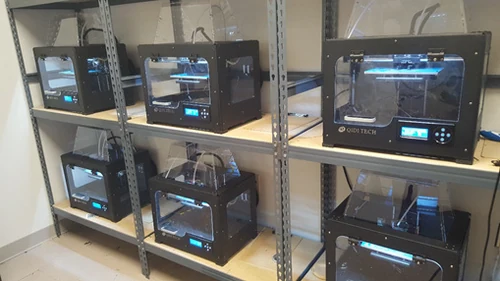
Plan on an enclosure that keeps the air around the print warm and steady. ABS shrinks as it cools, which can pull corners off the bed or open cracks between layers. An older hands-on report achieved good adhesion on an open printer, but that isn’t a dependable basis for buying ABS+ for one. A hot bed alone doesn’t keep the whole part warm.
In your slicer—the software that prepares a model for printing—look for a profile, or saved set of settings, for your material, printer and nozzle. Where a download includes both filament and process profiles, check both: temperature settings and printing speeds need to work together. Don’t import an HS profile simply because someone linked it in an ABS+ discussion.
For damp filament, eSUN’s eBOX Pro guide gives an ABS/ABS+ drying range of 60–70°C for 4–12 hours. Follow your dryer’s and spool’s limits. Drying can address moisture; it doesn’t guarantee strong layers.
Ventilation needs its own plan. Use a ventilated enclosure or extraction that captures emissions near the printer, preferably exhausting outdoors through a suitable system. HEPA filtration captures particles; gases need appropriate gas or vapor filtration.
A closed printer door and a mild smell don’t mean the room’s air is clean. If you can’t control emissions in your workspace, skip ABS+ for now.
What To Expect From eSUN ABS+ Prints
Older ABS+ has a real appeal if you like a matte finish. A hands-on report described strong bed adhesion at 100°C and a surface that hid small printing imperfections. It didn’t provide enough measured testing to promise those results across printers or colors.
Owner experiences show why appearance and strength need separate checks. In a Bambu Lab P1S discussion, a user printing silver ABS+ with a nonstandard nozzle (0.4 mm CHT) reported layers that separated easily, even after eight hours of drying at 70°C. Black ABS+ also failed with the Generic ABS profile, a preset for ABS generally.
Importing the suggested filament and process profiles improved appearance but left the parts weak. The linked download had HS in its filename, so the result doesn’t establish how standard ABS+ would perform with a matching profile.
Other owners in that discussion reported successful grey parts with Generic ABS settings and sturdy bonsai pots with eSUN profiles. The pot maker still needed to wash the plate before each print to restore adhesion.
Those older reports don’t prove there was a bad batch or one fix that works for everyone. They do show what to inspect: lifted corners, cracks, fit and whether layers separate with light handling. A smooth wall can still have weak joins underneath. Check a small part similar to what you want to make before committing to a long print, especially if you change color or formula.
How Strong Are eSUN ABS+ Parts?
How strong does your ABS+ part need to be? A cover that survives being dropped, a bracket that barely bends and a clamp that stays tight for months need different things from the plastic.
Layer bonding matters when a force tries to pull the printed layers apart. Changing which face of the model sits on the bed changes the direction of its layers relative to the forces it will face in use. Where possible, position it so the main pulling force runs along the layers rather than pulling them apart.
eSUN’s published ABS+ table reports lower strength across layers than along them. Its newer announcement claims improved bonding, but the documentation doesn’t clearly connect all the published values to the same formula. Those figures can’t tell you how much weight your particular part can safely hold.
Impact resistance describes how a part handles a sudden knock. It doesn’t tell you how much weight it can hold continuously.
eSUN promotes ABS+ for impact resistance, but its older technical sheet says the material-property figures came from injection-molded specimens. Those solid molded samples don’t have the layer joins of your print. A high impact number on a listing therefore isn’t proof that a thin printed mounting tab will survive a drop.
Stiffness is how much a part bends under force. A piece can bend without breaking and still be useless if that movement lets a lid open or moves something out of position. Don’t choose ABS+ solely because a description calls it tough; toughness doesn’t establish the stiffness your design needs.
Creep means slowly changing shape under a steady load. A clamp might feel firm when fitted, then gradually lose its grip. A quick bend or pull test won’t settle that question. Without results for the current formula under similar loads, I wouldn’t choose ABS+ specifically to solve long-term sagging or loosening.
Heat claims need the same care. eSUN advertises 89°C for the revised formula while its product table still gives 73°C. These are heat-deflection temperatures: they describe how hot a sample gets before bending a specified amount under a test load.
Neither figure tells you how hot your print can stay during prolonged use. eSUN’s older technical sheet leaves continuous service temperature unspecified. If you’re making a loaded part for a hot car or near a heat source, seek data for that combination of heat, load and time before relying on ABS+.
Is eSUN ABS+ Worth The Extra Setup?
If your PLA or PETG parts already do their job, keep using them. Changing material makes sense when you can name the problem you need to solve, such as a part losing its shape in heat, rather than simply wanting something labeled stronger.
PETG is the closest practical alternative for many hobbyists making everyday functional parts. It offers good layer adhesion and low warping, making it worth considering before taking on ABS+ setup. It still needs to handle the heat and forces your part will face.
If you already print ordinary ABS successfully, compare a small ABS+ part with your usual material before buying several spools. Look for a useful improvement in finish, fit or print success. Don’t assume the plus sign buys better strength.
The purchase price is only part of the cost. Allow for an enclosure and emissions control if you still need them, plus failed prints and tuning time. Before printing a batch of functional parts, check that more than one sample meets the demands of the job.


